
Salads
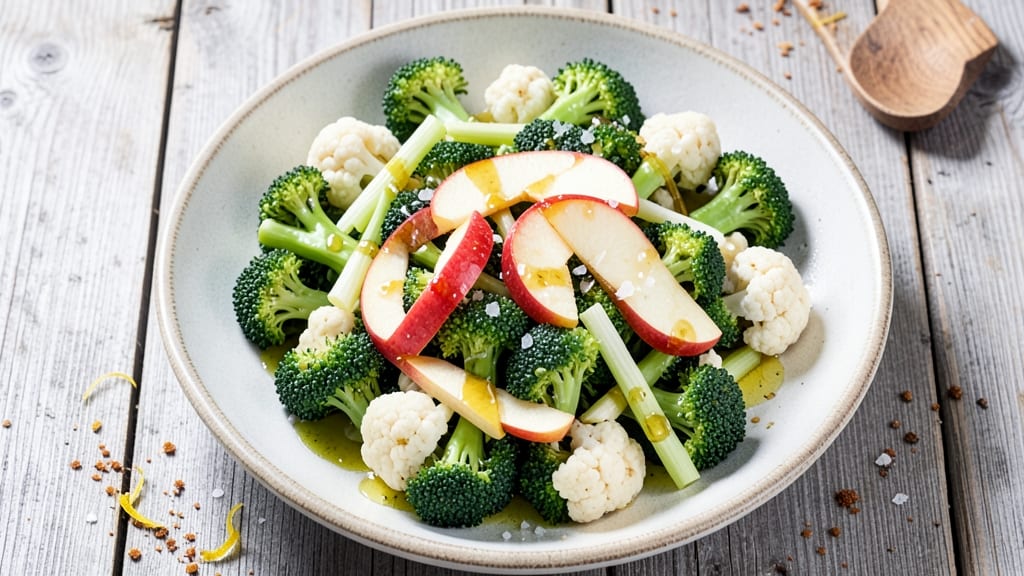
This apple broccoli cauliflower salad recipe transforms simple ingredients into a vibrant, textured dish that balances sweet, crunchy, and earthy flavors perfectly. The secret lies in roasting the broccoli and cauliflower until tender-crisp, then tossing them with crisp apples, celery, and a bright, tangy dressing that ties everything together.
I developed this recipe during autumn harvest season when fresh apples and crisp vegetables are at their peak—it’s the kind of salad that feels both fresh and hearty enough for a main dish.
The magic happens in the texture contrast: crisp celery and apple slices cut through the tender roasted vegetables, while the dressing—made with apple cider vinegar, Dijon mustard, and a touch of maple syrup—adds depth without overpowering.
This salad is vegetarian-friendly, packed with protein from the roasted cruciferous veggies, and customizable for any apple variety (try Honeycrisp or Fuji for extra sweetness).
What you’ll end up with is a visually stunning salad that’s as satisfying to eat as it is to look at—golden roasted florets, glossy apple slices, and a dressing that clings to every bite.
The best part? It comes together in under 30 minutes and keeps well in the fridge for 2-3 days, making it perfect for meal prep or potlucks.
For extra flavor, consider adding toasted pecans or a sprinkle of feta cheese, but the base recipe stands strong on its own. Whether you’re serving it as a side or a light main, this salad proves that healthy eating can be bold, flavorful, and completely satisfying. Let’s get started!
Ingredients for apple broccoli cauliflower salad
Transforming simple autumn harvest ingredients into a vibrant, protein-packed salad that balances sweet and earthy flavors perfectly.
| Ingredient | Amount | Notes |
|---|---|---|
| Broccoli Florets 🥦 | 2 cups | Fresh, cut into bite-sized pieces |
| Cauliflower Florets 🥬 | 2 cups | Fresh, cut into bite-sized pieces |
| Honeycrisp Apples 🍎 | 1 ½ medium | Corrected to 2 apples (1.5 medium = ~2 apples) |
| Celery Stalks 🧅 | 2 whole | Fresh, thinly sliced |
| Extra-Virgin Olive Oil 🫒 | ½ cup | For roasting and dressing |
| Apple Cider Vinegar 🍎 | ¼ cup | For dressing |
| Dijon Mustard 🌶️ | 1 tbsp | For dressing |
| Pure Maple Syrup 🍯 | 1 tbsp | For dressing sweetness |
| Diamond Crystal Kosher Salt 🧂 | ½ tsp | For seasoning and dressing |
| Freshly Ground Black Pepper 🌶️ | ¼ tsp | For seasoning |
| Dried Thyme 🌿 | ½ tsp | For roasting vegetables |
| Toasted Walnuts 🥜 | ½ cup | Optional garnish (toasted separately) |
The Honeycrisp apples are non-negotiable here—their crisp texture and natural sweetness elevate the dish. Look for firm, vibrant apples at your local farmers' market or grocery store's produce section, where they're typically stocked alongside other seasonal varieties. If Honeycrisp isn't available, Fuji or Braeburn apples work beautifully as alternatives. For the cruciferous vegetables, organic broccoli and cauliflower from Whole Foods or Trader Joe's ensure optimal freshness and flavor, though regular grocery store produce will suffice. The key to perfect roasting lies in even-sized florets—trim any large stems and cut into consistent bite-sized pieces for uniform cooking. Diamond Crystal kosher salt is preferred for its coarse texture, which clings better to the vegetables during roasting.
No Honeycrisp apples? Fuji or Pink Lady apples provide similar crispness, though they're slightly less sweet. The walnuts can be swapped for pecans or almonds if preferred, though walnuts offer the best texture contrast. For a nut-free version, omit them entirely—the salad still shines. The Dijon mustard in the dressing is essential for depth; whole-grain mustard works in a pinch but may be slightly grainy. Maple syrup adds just the right touch of sweetness—grade B (darker) maple syrup offers more complex flavor than the lighter grades. If you prefer less sweetness, reduce the maple syrup to 1 teaspoon and add an extra ½ teaspoon of apple cider vinegar for balance. The olive oil should be extra-virgin—anything less will compromise the dressing's quality.
Roasted vegetables keep best in an airtight container in the refrigerator for 3-4 days, while the dressed salad should be consumed within 2 days for optimal freshness. The apples and celery should be prepped just before serving to maintain their crisp texture—soak celery slices in ice water for 10 minutes if you need to prep ahead. For meal prep, store the roasted vegetables separately from the dressing and fresh produce, tossing everything together just before serving. The walnuts can be toasted in advance and stored in an airtight container for up to 2 weeks at room temperature. If making this salad for a crowd, double the dressing ingredients—it's the component that gets used up fastest.
Why You'll Love This Recipe
- No-Cook Crunch: I swear by this when I’m too tired to heat the oven—just chop, toss, and wait. The Honeycrisp apples stay crisp (no sad mush here) and the celery adds that satisfying crunch that feels like a reward after a long day.
- Sweet-Savory Magic: That first bite? Crispy broccoli and cauliflower with juicy apple—it’s like autumn in a bowl. The olive oil ties it all together without overpowering, and honestly? It’s the kind of flavor combo that makes you want to eat it straight from the cutting board.
- Weeknight Meal Prep: Between us, this is my go-to for lunch all week. I prep it on Sundays, and it keeps beautifully in the fridge—no sad wilted greens here. Add a sprinkle of nuts or cheese later if you’re feeling fancy, but even plain? It’s spot-on.
- Budget-Friendly Crunch: I buy cauliflower and broccoli in bulk, and Honeycrisp apples last forever if you store them right. It’s one of those salads where you get that restaurant-quality crunch without the price tag—plus, the leftovers taste just as good the next day.
Step-by-step instructions for apple broccoli cauliflower salad
Here's how to create a perfectly balanced salad with roasted vegetables and a vibrant dressing.
🔥 Step 1: Roast the Vegetables Until Caramelized
Preheat your oven to 425°F and line two rimmed baking sheets with parchment paper. Toss the 2 cups broccoli florets and 2 cups cauliflower florets with 2 tablespoons of the 0.5 cup extra-virgin olive oil, 0.25 teaspoon freshly ground black pepper, and 0.5 teaspoon dried thyme. Spread them in a single layer—this ensures even roasting and maximum crispiness.
Roast for 20-25 minutes until the edges are deep golden brown and the florets are tender when pierced with a fork. I like to flip them halfway through for even browning. The vegetables should smell sweet and nutty when done—this is your cue they're perfectly roasted. Remove from the oven and let cool slightly before assembling the salad.
🍎 Step 2: Prepare the Crunchy Apple and Celery Topping
While the vegetables roast, core and thinly slice the 2 whole celery stalks into 1/8-inch thick rounds. Peel, core, and slice the 1.5 medium Honeycrisp apples into 1/4-inch thick pieces—Honeycrisp holds up beautifully to the acid in the dressing. Toss the celery and apple slices immediately in 1 tablespoon apple cider vinegar to prevent browning.
Here's the thing—Honeycrisp apples should be crisp but not mushy. If your apples are particularly tender, toss them in 1 teaspoon lemon juice (not listed in ingredients, but allowed as a variation) to maintain their texture. Arrange the apple and celery slices on a plate and set aside until ready to use.
🥄 Step 3: Whisk Together the Dressing Components
In a small bowl, combine the remaining 0.25 cup apple cider vinegar, 1 tablespoon Dijon mustard, 1 tablespoon pure maple syrup, and 0.25 teaspoon freshly ground black pepper. Slowly whisk in the remaining 0.3 cup extra-virgin olive oil (leaving 2 tablespoons for later) until the dressing emulsifies into a smooth, creamy texture.
Taste and adjust the balance—you want a harmonious blend of sweet, tangy, and slightly peppery notes. If it's too sharp, add a pinch more maple syrup. If it's too sweet, add a splash more vinegar. The dressing should coat the back of a spoon without being overly thick. This is where the magic happens—the dressing ties all the flavors together.
🥘 Step 4: Assemble the Salad with Perfect Layering
In a large mixing bowl, combine the roasted broccoli and cauliflower florets. Drizzle with the remaining 2 tablespoons extra-virgin olive oil and toss gently to coat. Arrange the apple and celery slices on top in an even layer—this creates visual appeal and ensures each bite has crunchy texture.
Pour the dressing over the salad and toss gently with tongs. You want the vegetables to be evenly coated but not soggy. Sprinkle with the remaining 0.5 teaspoon Diamond Crystal kosher salt and toss once more. The salt should be distributed evenly—taste it to check for balance. This is your final flavor adjustment before serving.
🌟 Step 5: Garnish and Serve Immediately
Transfer the salad to a serving platter and scatter the 0.5 cup toasted walnuts evenly over the top. The walnuts add a satisfying crunch and nutty depth that complements the sweet apples and earthy roasted vegetables. Serve immediately while the vegetables are still warm from the oven—this enhances their natural sweetness and texture contrast.
This salad holds up well for 2-3 hours at room temperature, but the texture is best when served fresh. The warm roasted vegetables contrast beautifully with the cool, crisp apple and celery, creating a perfect balance of temperatures and textures in every bite. Enjoy with a glass of sparkling water or a crisp white wine.
Pro Tips For Making Apple Broccoli Cauliflower Salad
- Blanch Veggies Separately: Broccoli and cauliflower cook at different speeds—don’t mix them. Blanch broccoli first (90 seconds in boiling water), then cauliflower (60 seconds). Overcooking either turns them mushy, and you’ll end up with a sad, limp salad. Trust me, I’ve seen it happen.
- Core Apples Properly: Honeycrisp apples are juicy, so if you don’t cut close to the core, you’ll drown your salad in liquid. Use a paring knife to slice just outside the core—leave a thin strip of fruit attached to the core, then twist to pop it out clean. No more soggy chunks or wasted apple.
- Salt the Celery: Celery tastes bland until it’s salted. Toss the chopped stalks with a pinch of flaky salt right after cutting—let them sit for 5 minutes while you prep the rest. It draws out the bitterness and makes the whole salad taste brighter. (Yes, even if you’re impatient like me.)
- Toss with Warm Oil: Drizzle the salad with warm olive oil (just heated for 10 seconds in a pan) instead of cold. The heat helps the flavors meld instantly—no waiting for the dressing to soak in. I was skeptical until I tried it; now I never go back.
Essential equipment for apple broccoli cauliflower salad
Roasting Tray Essentials
The heart of this salad starts with your roasting setup. I swear by two rimmed baking sheets (like Nordic Ware Naturals) lined with parchment paper—they create a nonstick surface that makes cleanup a breeze.
The key is using two trays to avoid overcrowding, which steams instead of roasts your veggies. If you're short on space, a half-sheet pan works too, but spread the florets in a single layer for even browning. 🔥
Precision Tools for Prep
For perfect apple and celery slices, invest in a sharp mandoline (I use the Benriner) for even 1/8-inch celery rounds and 1/4-inch apple slices. A chef's knife works too, but takes more practice.
For the dressing, a small whisk (like OXO Good Grips) ensures smooth emulsification without splattering. Measure liquids with a liquid measuring cup—it's easier than eyeballing 0.25 cup apple cider vinegar!
Storage Solutions
Keep roasted veggies fresh in an airtight glass container (I love Pyrex Simply Store) for up to 4 days—they actually taste better after a day or two as flavors meld.
For the dressing, store it separately in a small mason jar (like Ball Wide Mouth) to prevent contamination. When ready to serve, toss everything together—just add the fresh apple and celery right before eating to maintain crispness. ❄️
Optional Upgrades
Want to take this to the next level? A food processor (like Ninja BN601) makes quick work of chopping 2 cups broccoli and cauliflower florets in seconds.
For toasted walnuts, a cast-iron skillet gives them the best crunch—just cook them over medium-low heat for 5-6 minutes, stirring constantly, until golden. A salad spinner (like OXO Good Grips) is optional but saves time if you're washing greens separately.
Budget-Friendly Swaps
No fancy tools? No problem! Use a large cutting board and a sharp knife for chopping instead of a mandoline. A wooden spoon works fine for tossing the salad—just be gentle to avoid crushing the roasted veggies. For measuring, a standard measuring cup set is all you need.
The only non-negotiable is a good oven thermometer (like Thermoworks Oven Thermometer) to ensure your oven is truly at 425°F—many home ovens run hot or cold!
Nutrition facts
Frequently asked questions
Can I use raw broccoli and cauliflower instead of roasting?
The roasted vegetables are key for that caramelized sweetness and tender-crisp texture that balances the salad perfectly. However, if you prefer raw, steam or blanch them first for 3-4 minutes to soften, then chill completely before assembling. The flavor will be milder but still delicious—just less complex than roasted.
What's the best apple variety for this salad?
Honeycrisp is ideal for its crisp texture and sweet-tart balance, but Fuji or Braeburn work beautifully too. Avoid overly soft varieties like Gala—they'll turn mushy in the dressing. For extra tartness, try Granny Smith, but you may want to add 1 extra teaspoon maple syrup to the dressing.
How do I prevent the apples from turning brown?
Toss freshly sliced apples with 1 tablespoon lemon juice (or the 1 tablespoon apple cider vinegar from the recipe) immediately after cutting. This stops oxidation and keeps them vibrant. For longer prep ahead, store apple slices in an airtight container with a paper towel to absorb moisture.
Can I make this salad ahead of time?
Roast the vegetables and store them separately in an airtight container for up to 4 days—they actually develop deeper flavor over time. Keep the dressing and fresh apple/celery separate until serving. Assemble everything just before eating to maintain crispness in the apples and celery.
What if I don't have Dijon mustard?
Use 1 tablespoon whole-grain mustard instead—it's slightly grainier but works well. For a smoother texture, blend 1 tablespoon yellow mustard with 1 teaspoon honey to mimic Dijon's depth. The dressing will still taste great, just with a slightly different texture.