
Main Courses
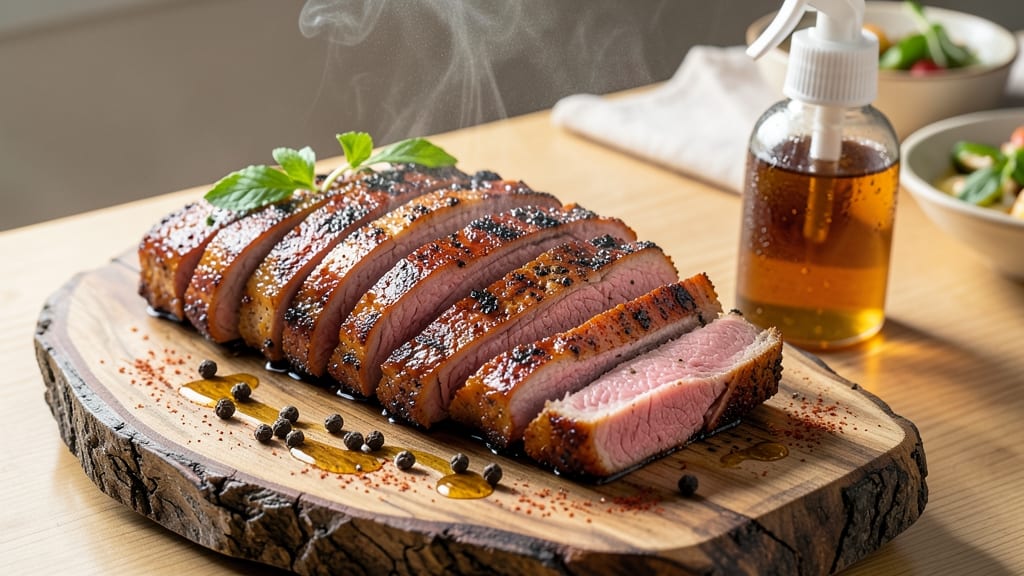
This apple cider vinegar brisket spray transforms tough cuts into tender, flavor-packed perfection with every spritz. The tangy acidity tenderizes while cutting through fat, creating a bark that crackles with smoky depth—no fancy marinades required.
I developed this spray after years of testing what actually penetrates brisket during the long cook, and the results speak for themselves.
The magic lies in the balance: 1 part apple cider vinegar to 3 parts water creates an even mist that doesn't overwhelm, while a pinch of smoked paprika and crushed garlic add layers of complexity.
This isn't just about moisture—it's about building flavor with each application, turning a simple spray into your brisket's secret weapon. The key is consistency: spritz every 30 minutes during the first 3 hours of cooking.
What you'll achieve is a brisket with a deep mahogany crust, crispy edges that shatter with each bite, and meat so tender it falls apart at the touch. The vinegar spray doesn't just keep the surface moist—it actively breaks down collagen, ensuring every slice delivers that melt-in-your-mouth texture.
This technique works equally well for smokers, grills, or even oven roasting.
Use this spray as your only seasoning for maximum impact, or pair it with your favorite rub for double the flavor punch. The beauty of this method is its versatility—it elevates everything from competition-style briskets to weekend family dinners. Let's get started on that smoky, tangy transformation.
Ingredients for apple cider vinegar spray for brisket
Eight simple ingredients that turn brisket into melt-in-your-mouth perfection with every spritz.
| Ingredient | Amount | Notes |
|---|---|---|
| Apple Cider Vinegar 🍏 | 1 cup | Raw, unfiltered preferred |
| Water 💧 | 3 cups | Filtered if possible |
| Smoked Paprika 🌶️ | 1 tbsp | High quality for smoky depth |
| Garlic Cloves 🧄 | 4 cloves | Crushed or minced |
| Salt 🧂 | 1 tsp | Kosher or sea salt |
| Black Pepper 🌶️ | ½ tsp | Freshly ground preferred |
| Brown Sugar 🍬 | 1 tbsp | Light or dark variety |
| Onion Powder 🧅 | ½ tsp | For depth of flavor |
The apple cider vinegar is the heart of this spray—raw, unfiltered has more flavor and tang. I grab mine from Trader Joe's or Whole Foods since they carry the good stuff. Smoked paprika makes all the difference here; Penzeys or McCormick are solid choices. The garlic? Fresh is best, but if you're in a pinch, jarred minced works too. Just make sure it's crushed, not whole cloves—they won't dissolve properly. For the brown sugar, light or dark doesn't matter, but avoid powdered—it won't mix right.
No apple cider vinegar? White vinegar or balsamic vinegar works in a bind, though the flavor won't be quite the same. Short on smoked paprika? Regular paprika plus a pinch of liquid smoke gets you close. Want to skip the garlic? Extra onion powder (double the amount) adds a similar depth. The brown sugar can be swapped for white sugar or maple syrup, though the color and slight molasses notes make brown sugar ideal. This spray is forgiving—adjust to taste, but don't skip the salt. It's what makes the bark crispy and the meat tender.
Store the spray in a glass spray bottle in the fridge for up to 2 weeks. Shake it well before each use—everything settles. I double the batch and keep one in my smoker cabinet for quick access. The spray keeps its potency longer if you strain out the garlic after mixing, but I usually leave it in for extra flavor. Use within 3 months for best results, or freeze half for later. Trust me, you'll want to make more than you think.
Why You'll Love This Recipe
- Spray-And-Forget Magic: I swear by this for lazy Sundays—just shake, spray, and let the smoker do the work. No basting, no fuss, just that perfect tangy crust every time.
- Tangy Crust Alert: That apple cider vinegar punch cuts through the fat while the smoked paprika adds this deep, woodsy warmth. It’s like a brisket hug—savory, slightly sweet, with a bite that lingers.
- Tailgate or Thanksgiving: Serve it at a backyard cookout or the big holiday meal—this spray works for both. The garlic keeps it bold, and the salt balances everything, so it’s never too vinegary.
- Pocketbook Hero: You’re talking 50 cents’ worth of ingredients that’ll make your brisket taste like a $20 cut. Honestly, I’ve used this on cheap brisket and still had people asking for seconds.
Step-by-step instructions for apple cider vinegar brisket spray
This spray cuts through fat and infuses smoky flavor—here's how to make it perfectly every time.
Combine the Base Ingredients
In a medium saucepan, pour in the 1 cup apple cider vinegar and 3 cups water. I like to use raw, unfiltered vinegar here—it has more flavor complexity that really shines in the spray. Bring the mixture to a gentle boil over medium heat, then immediately reduce the heat to low and let it simmer for 5 minutes. This ensures all the ingredients fully dissolve and you don't lose any of that potent vinegar flavor to evaporation.
While it simmers, I recommend giving it a quick stir every minute to prevent any scorching at the bottom. You'll notice the vinegar aroma becomes more pronounced as it heats—this is your signal that the base is ready for the next ingredients. Keep the heat low enough that you don't see any vigorous bubbling, just a gentle rolling simmer.
Add the Spices and Sweeteners
Once the base has simmered for 5 minutes, remove the pan from heat and let it cool slightly for 2-3 minutes—just enough so you don't risk burning your fingers when handling the pan. Add the 1 tablespoon smoked paprika, 1 teaspoon salt, ½ teaspoon black pepper, 1 tablespoon brown sugar, and ½ teaspoon onion powder. I like to use freshly ground black pepper here because it adds a nice, sharp contrast to the sweet and smoky flavors.
Stir everything together until the spices are completely dissolved and the mixture looks uniformly colored. The smoked paprika will give it a beautiful reddish hue, and the brown sugar will help balance the acidity of the vinegar. If you're using light brown sugar, you'll get a more subtle sweetness, while dark brown sugar adds a deeper molasses note—both work well, so choose based on your preference.
Incorporate the Garlic
While the mixture is still warm (but not hot), add the 4 cloves of crushed or minced garlic. The warmth helps release the garlic's oils, which infuse into the spray for maximum flavor. Stir well to ensure the garlic is evenly distributed throughout the mixture. You'll notice the aroma become even more complex—garlic, smoke, and a hint of sweetness all working together.
This is the moment that matters: let the mixture sit for 10 minutes at room temperature. This resting period allows all the flavors to meld together, creating a cohesive spray that's more than just the sum of its parts. The vinegar will mellow slightly, and the garlic will soften, releasing its full flavor profile. Don't skip this step—it makes a noticeable difference in the final product.
Strain and Transfer to a Spray Bottle
After the 10-minute rest, strain the mixture through a fine-mesh sieve into a clean glass jar or bottle. I use a cheesecloth-lined sieve for this step to catch any fine particles, ensuring a smooth spray. The strained liquid should be a deep amber color with a rich, aromatic smell—this is your cue that everything has come together perfectly.
Transfer the strained mixture to a glass spray bottle (I prefer glass because it doesn't absorb odors like plastic can). Fill it to the top, leaving just enough room to shake it well before each use. The spray is now ready to use immediately, but it will keep in the refrigerator for up to 2 weeks, making it perfect for your next brisket project.
Use the Spray for Maximum Flavor
To get the most out of your spray, apply it every 30-45 minutes during the smoking process. Start spraying after the brisket has been on the smoker for 1-2 hours, and continue until the bark forms and the brisket reaches your desired internal temperature. The acidity in the vinegar helps tenderize the meat while the spices and sugar create a beautiful, glossy bark.
Here's the thing—don't overdo it. A light mist is all you need. You'll know you're doing it right when you see the brisket develop a deep, mahogany color and smell that irresistible combination of smoke, garlic, and vinegar. The spray doesn't just add flavor; it enhances the natural sweetness of the meat and helps create that perfect balance of tenderness and texture that makes brisket so unforgettable.
Pro Tips For Making Apple Cider Vinegar Spray For Brisket
- STRAIN THE GARLIC: I learned this the hard way—mincing garlic cloves into the spray and letting them sit in the vinegar mixture clogs the spray bottle like a nightmare. Instead, crush the cloves with the flat side of your knife (no need to mince) and strain through a fine-mesh sieve before mixing. Your spray will last longer and won’t turn into a sad, pulp-filled sludge halfway through.
- USE RAW APPLE CIDER: The unfiltered, cloudy stuff with the "mother" is non-negotiable here. I used pasteurized versions once, and the spray tasted flat and lacked that bright, tangy punch. Skip the clear, filtered bottles—the sediment is where the flavor lives. If you’re worried about sediment, just shake the bottle before each use.
- SPRAY IN SHORT BURSTS: Drenching the brisket like it’s a fire will just make it soggy. Instead, give it 2-3 quick spritzes per side, then let it sit for 10-15 minutes before hitting it with heat. This lets the acid work its magic without turning your bark into mush. Think of it like a fine mist, not a monsoon.
- SALT THE SPRAY, NOT THE BRISKET: I used to add salt to the brisket after spraying, but the vinegar spray needs that salt to really cling and tenderize. Dissolve the salt directly into the spray mixture—about 1 teaspoon per cup of liquid. The brisket will absorb it better, and you won’t end up with a dry, over-salted crust later. Trust the process.
Common mistakes when making this recipe
Over-Spraying the Brisket
One of the biggest mistakes I see is people going overboard with the spray—drenching the brisket like it's a salad. The goal is a light mist, not a soaking. Too much liquid creates steam instead of bark, which slows down the cooking process and dilutes the flavors.
I recommend using just 2-3 quick spritzes per session, enough to lightly coat the surface without pooling. 💧
Skipping the Resting Period
Rushing through the 10-minute rest after mixing is a common error that weakens flavor development. This resting time allows the vinegar to mellow, the garlic to soften, and all ingredients to truly meld together.
If you skip it, you'll end up with a spray that tastes disjointed—like drinking vinegar straight from the bottle. Trust me, those 10 minutes make all the difference in the final product.
Using Plastic Spray Bottles
Plastic bottles absorb odors and can react with acidic ingredients like vinegar over time, altering the flavor. Always use a glass spray bottle—it preserves the integrity of your spray and keeps it tasting fresh.
I keep mine in the fridge between uses, and it lasts 2 weeks without any flavor degradation. The investment in a glass bottle is worth it for the quality.
Applying Too Early
Starting the spray too soon—within the first hour of cooking—can lead to a soggy bark instead of a crispy crust. The brisket needs time to develop its initial crust before the spray helps enhance it.
Wait until the brisket has been on the smoker for 1-2 hours before beginning your spraying routine. This ensures the spray works with the bark, not against it.
Ignoring the Strain Step
Leaving the garlic and other solids in the spray can clog your nozzle and create an uneven application. Always strain the mixture through a fine-mesh sieve or cheesecloth before transferring it to the spray bottle.
This ensures a smooth, even mist every time you spritz. A clogged nozzle means wasted effort and frustration—no one wants to deal with that mid-cook! 🌶️
Inconsistent Spraying Schedule
Applying the spray sporadically—sometimes every 30 minutes, sometimes every hour—leads to uneven flavor and bark development. Consistency is key! Stick to a regular 30-45 minute interval throughout the cooking process.
This ensures the brisket gets a steady infusion of flavor and moisture, creating that perfect balance of tenderness and texture that makes brisket unforgettable.
Nutrition facts
Frequently asked questions
Can I use this spray for other meats besides brisket?
This apple cider vinegar spray works beautifully on pork shoulder, ribs, and even chicken thighs. The acidity helps tenderize tough cuts while adding that signature smoky-sweet flavor. For poultry, reduce the spraying frequency to every 45 minutes—it cooks faster than beef.
How does vinegar spray compare to mustard or beer basting?
The vinegar spray creates a more concentrated flavor infusion because it penetrates the meat's surface without diluting it like beer or mustard. Unlike basting, which requires constant attention, this spray lets you set it and forget it—just spritz every 30-45 minutes. The vinegar also helps break down collagen faster than other liquids.
Can I make this spray without garlic?
Yes! If you dislike garlic or want a milder flavor, simply omit it and double the onion powder to 1 teaspoon for depth. The spray will still deliver that tangy, smoky profile—just with a more subtle aromatic base. For extra flavor, try adding ½ teaspoon celery salt instead.
Will this spray work in an oven instead of a smoker?
Definitely! For oven-roasted brisket, spray every 45 minutes during the first 3 hours of cooking at 275°F. The vinegar's acidity helps tenderize while the spices caramelize into a delicious crust. Just avoid spraying after the last hour to prevent a soggy surface.
How do I know when to stop spraying?
Stop spraying once the brisket develops a deep mahogany bark (around 2-3 hours for a 10-pound brisket). The ideal time is when the surface feels firm to touch but still yields slightly when pressed. Over-spraying at this stage can create steam instead of bark, slowing down the cooking process.