
Main Courses
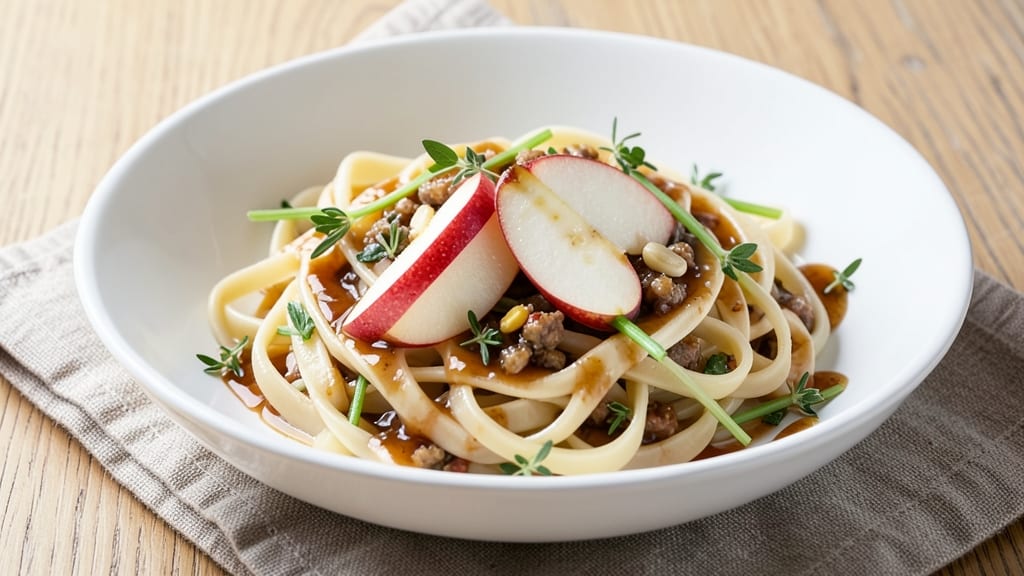
This apple pasta recipe transforms sweet-tart apples and crisp celery into a restaurant-worthy dish that balances freshness and comfort. The secret lies in caramelizing the apples until they're tender yet still hold their shape, then pairing them with al dente noodles in a light, herby sauce.
I developed this recipe after craving something that felt both autumnal and approachable—no heavy cream or complicated techniques required.
The foundation is simple: sautéed apples and celery with just enough garlic and shallots to deepen the flavor without overpowering the natural sweetness. A splash of apple cider vinegar brightens the dish, while fresh thyme and parsley add aromatic depth.
The pasta—whether fettuccine, linguine, or even whole wheat—absorbs the sauce beautifully, creating a dish that's hearty enough for dinner but light enough for lunch.
What you'll end up with is a perfectly balanced plate: tender apples with a hint of caramelization, crisp celery adding texture, and al dente noodles that hold their shape. The sauce clings to every strand of pasta, delivering a harmonious blend of sweet, savory, and herbal notes.
This recipe proves that seasonal produce can elevate even the simplest pasta dish into something memorable.
Serve with a simple arugula salad dressed in lemon vinaigrette or crusty garlic bread to soak up any remaining sauce. The contrast of textures and temperatures makes this dish even more satisfying. Let's get cooking!
Ingredients for apple pasta
Seasonal apples and celery star in this restaurant-style pasta—simple yet sophisticated.
| Ingredient | Amount | Notes |
|---|---|---|
| Honeycrisp or Fuji Apples 🍎 | 2 medium | Peeled, cored, sliced thin |
| Celery Stalks 🧅 | 2 whole | Trimmed, sliced into ribbons |
| Garlic Cloves 🧄 | 3 cloves | Minced, fresh preferred |
| Shallots 🧅 | 2 whole | Minced, or sub 2 tbsp onion |
| Apple Cider Vinegar 🍯 | 1 tbsp | For brightness, optional but recommended |
| Fresh Thyme Leaves 🌿 | ½ tsp | Or 1/4 tsp dried thyme |
| Fresh Parsley 🌿 | ¼ cup | Chopped, for garnish |
| Extra-Virgin Olive Oil 🫒 | ½ cup | For sautéing, fruity variety |
| Fettuccine or Linguine 🍝 | 12 oz | Al dente preferred, whole wheat optional |
| Salt 🧂 | 1 ½ tsp | Diamond Crystal preferred |
| Black Pepper 🌶️ | ½ tsp | Freshly ground |
| Butter 🧈 | 2 tbsp | Unsalted, for finishing |
The apples are non-negotiable—Honeycrisp or Fuji deliver the perfect sweet-tart balance. Local farmers markets often have the best selection in fall, but grocery store produce works too. Look for firm apples with vibrant color—no bruising. Celery should be crisp with bright green leaves still attached. The extra-virgin olive oil matters here: use something you'd drizzle on bread, like California Early Harvest or Colavita. Fresh thyme and parsley elevate the dish without overpowering the apple's natural sweetness—Whole Foods bulk section is great for small amounts.
No Honeycrisp? Gala or Braeburn work beautifully—they just need slightly more caramelization time. Sub celery with fennel bulbs for a different texture, but reduce to 1 stalk. Short on thyme? Dried thyme at half the amount gets you close, though fresh is ideal. The apple cider vinegar adds that restaurant-quality brightness—Bragg or Mott's are reliable brands. For the pasta, De Cecco or Barilla are my go-tos, but any quality brand will work. Want extra richness? Add 1 tbsp crème fraîche at the end.
Apples caramelize best when sliced thin—1/4-inch thickness ensures even cooking. Store prepped apples in a bowl of cold water in the fridge for up to 2 days. Fresh herbs keep best in a jar of water on the counter like flowers—1 week of vibrant flavor. The cooked pasta reheats beautifully with a splash of water, but eat within 2 days for best texture. Freeze portions of the sauce separately if you want to prep ahead—just add fresh herbs when reheating.
Why You'll Love This Recipe
- One-Pan Magic: I swear by this recipe when I’m too tired to scrub a million dishes. Sauté the shallots and garlic in olive oil, toss in the apples and celery—no prep required beyond dicing—and let the vinegar work its tangy charm while the pasta cooks. Done in one pan, no stress.
- Sweet-Savory Balance: That first bite? It’s like autumn in a bowl. The crisp, juicy apples (Honeycrisp is my pick) caramelize just enough to soften, while the vinegar cuts through the richness, and the celery adds a fresh crunch. It’s weirdly addictive—my husband steals my plate.
- Lunchbox Hero: Between us, this is my go-to for meal prep. The flavors only get better the next day, and it reheats like a dream. Pack it cold for work or warm it up for a quick dinner—it’s the kind of dish that makes you look like a chef without trying.
- Budget Brightener: Apples and celery last forever, and a few cloves of garlic stretch far. I’ve made this for under $10 for four servings, and it still feels fancy. Honestly, it’s the kind of recipe that makes you question why you ever ordered takeout.
Step-by-step instructions for celery-apple sauté with al dente noodles
This method transforms simple ingredients into a vibrant, balanced dish where sweet apples and crisp celery harmonize perfectly with pasta.
Cook the Pasta to Al Dente Perfection
Bring a large pot of water to a rolling boil and add the 12 oz fettuccine or linguine. Stir immediately to prevent sticking. Add 1.5 tsp salt (Diamond Crystal preferred) and 0.5 tsp freshly ground black pepper to the boiling water—this ensures the pasta absorbs flavor from the start.
Cook the pasta for 1 minute less than the package instructions specify. You want it al dente—firm to the bite with a slight resistance. Reserve 1 cup of pasta water before draining, as this starchy liquid will help emulsify the sauce later. Drain the pasta and set it aside, tossing occasionally to prevent sticking.
Sauté Shallots and Celery Until Tender
Heat 0.5 cup extra-virgin olive oil in a large skillet over medium heat. Add the 2 whole shallots and 2 whole celery stalks, sliced into ribbons. Cook for 4-5 minutes, stirring occasionally, until the shallots soften and the celery becomes tender but still retains its bright green color.
Here's the thing—don't let the celery brown. You want it to stay crisp-tender, not mushy. If it starts to darken too quickly, reduce the heat slightly. This step builds the aromatic base for the dish, so take your time and let the flavors develop.
Add Apples and Garlic for Sweet-Savory Balance
Increase the heat to medium-high and add the 2 medium Honeycrisp or Fuji apples, sliced thin, and the 3 cloves minced garlic. Cook for 3-4 minutes, stirring occasionally, until the apples soften slightly but still hold their shape. You want them to contribute sweetness without turning to mush.
Watch the apples closely—they'll release juices as they cook. If the pan starts to dry out, add 1-2 tablespoons of water to prevent sticking. The garlic should sizzle lightly but not burn—this ensures it adds aromatic depth rather than bitterness.
Finish with Vinegar, Thyme, and Butter
Reduce the heat to medium-low and stir in the 1 tbsp apple cider vinegar and 0.5 tsp fresh thyme leaves. Let the mixture simmer for 1 minute, allowing the vinegar to brighten the flavors and the thyme to release its earthy aroma. This is where the dish comes together—acid cuts through the sweetness while the thyme adds complexity.
Remove the skillet from heat and stir in the 2 tbsp unsalted butter. The butter will melt into the sauce, creating a silky finish. Add the drained pasta to the skillet and toss gently to coat everything evenly. If the sauce seems too thick, add 2-3 tablespoons of reserved pasta water to loosen it to your desired consistency.
Garnish and Serve Immediately
Transfer the pasta to serving plates and garnish with the 0.25 cup chopped fresh parsley. The parsley adds a fresh, herbal note that brightens the dish and ties all the flavors together. Serve immediately while the pasta is hot and the apples retain their slight crunch.
Each bite should deliver a perfect balance of sweet apples, crisp celery, and the rich, buttery sauce clinging to the al dente noodles. The vinegar and thyme add just the right amount of brightness to keep the dish from feeling too heavy. Enjoy while warm for the ultimate experience!
Pro Tips For Making Apple Pasta
- STORE APPLES RIGHT: Don’t wash them until you’re ready to cook—Honeycrisp and Fuji bruise easily, and wet skin speeds up spoilage. Keep them in the fridge, unwashed, for up to a week, and pat them dry with a paper towel right before dicing.
- SWEAT SHALLOTS LOW: I used to rush this and end up with bitter, browned shallots instead of sweet, translucent ones. Cook them on medium-low with a splash of apple cider vinegar (yes, even at this stage) for 8-10 minutes—just until they’re soft and glossy.
- SAVE THE JUICE: When you sauté the apples, celery, and garlic, the pan will flood with liquid. Instead of pouring it out, reduce it by half over high heat—it’s the base for a silky sauce that clings to the pasta like a dream.
- SWAP PASTA FOR TEXTURE: If your dish feels too saucy, toss in 1/2 cup of cooked farro or orzo alongside the pasta. It soaks up excess liquid and adds a chewy contrast that balances the apples’ sweetness—no extra effort, just better mouthfeel.
Creative variations of this apple pasta
Sweet-Savory Fusion
This isn't your typical pasta—it's a fusion of sweet and savory that feels both comforting and exciting. The key is balancing the natural sweetness of apples with the earthy depth of celery and garlic.
I like to think of it as a cross between a classic apple sauce and a herby sauté—without any heavy cream or complicated techniques. 🍎🧅
For extra richness, add 1 tbsp crème fraîche or mascarpone cheese at the end for a creamy texture. Or, if you want more heat, toss in ½ tsp red pepper flakes while sautéing the apples.
The acidity from the apple cider vinegar keeps everything in harmony, so don’t skip it—it’s the secret to restaurant-quality flavor.
Protein Additions
Want to make this a full meal? Stir in grilled chicken breast (about 8 oz, sliced thin) or crispy prosciutto (about 4 oz, torn) during the final minute of cooking. The protein soaks up the sauce beautifully and adds a satisfying bite.
For a vegetarian option, try sautéed mushrooms (about 1 cup, sliced) or toasted walnuts (about ¼ cup) for crunch and texture.
If you’re adding protein, reduce the cooking time slightly—2-3 minutes max—so it stays tender. I often use boneless, skinless chicken thighs because they stay juicy even when cooked quickly.
For a seafood twist, try shrimp (about ½ lb, sautéed separately and added at the end) or smoked salmon (about 4 oz, flaked on top before serving).
Seasonal Twists
This dish is perfect for fall and winter, but it works year-round with a few tweaks. In summer, swap the apples for peaches or plums and add a splash of lemon juice instead of vinegar.
For spring, use asparagus (about 1 cup, sliced into ribbons) instead of celery and add fresh mint to the garnish. The technique stays the same—just adjust the ingredients to match the season.
For a holiday twist, add candied pecans (about ¼ cup) or dried cranberries (about 2 tbsp) to the sauce for festive flavor. Or, serve it with roasted Brussels sprouts on the side for a cozy winter meal.
The beauty of this recipe is how adaptable it is—you can make it feel special for any occasion without much extra effort.
Global Inspirations
This dish draws from Italian and French techniques but feels entirely fresh. The caramelized apples are inspired by Italian sugo (sauces), while the herbaceous finish comes from French sauté traditions. For a Japanese twist, add 1 tsp soy sauce and ½ tsp grated ginger to the sautéed vegetables.
Or, for a Mexican-inspired version, swap the thyme for cilantro and add ½ tsp cumin to the apples while cooking.
In Southern U.S. kitchens, this dish would likely include smoked paprika or a dash of hot sauce for a spicy kick. Meanwhile, Nordic cooks might add dill and a splash of aquavit for a bright, herbal note.
The possibilities are endless—just keep the balance of sweet, savory, and acid in mind.
Nutrition facts
Frequently asked questions
Can I use any type of apple for this pasta?
Honeycrisp or Fuji apples work best because they hold their shape while caramelizing. For a softer texture, try Gala or Braeburn apples—they'll break down faster but still deliver sweetness. Avoid mealy varieties like Granny Smith unless you want a more rustic, chunky texture in your sauce.
How do I prevent the apples from turning mushy?
Slice apples thinly (1/4-inch thick) and cook them over medium-high heat for only 3-4 minutes. Add a splash of water if the pan gets dry, and never let them sit uncovered while cooking. The key is quick cooking—apples should soften but still hold their shape when pierced with a fork.
Can I make this pasta vegetarian or vegan?
Skip the butter and use olive oil for richness, or substitute with vegan butter. For extra protein, add sautéed mushrooms or toasted walnuts. The dish already contains no animal products except for optional butter, making it easily adaptable for plant-based diets.
What's the best way to store leftovers?
Store leftovers in an airtight container in the fridge for up to 3 days. Reheat gently in a skillet with a splash of water or pasta water to restore moisture. For longer storage, freeze the sauce separately (without pasta) for up to 3 months
Why does my sauce seem too thick after adding pasta?
This happens when the pasta absorbs all the sauce. The fix is simple: add 2-3 tablespoons of reserved pasta water while tossing, 1 tablespoon at a time, until you reach your desired consistency. The starch in the pasta water acts as a natural thickener when needed, but it also helps loosen thick sauces.