
Sauces & Condiments
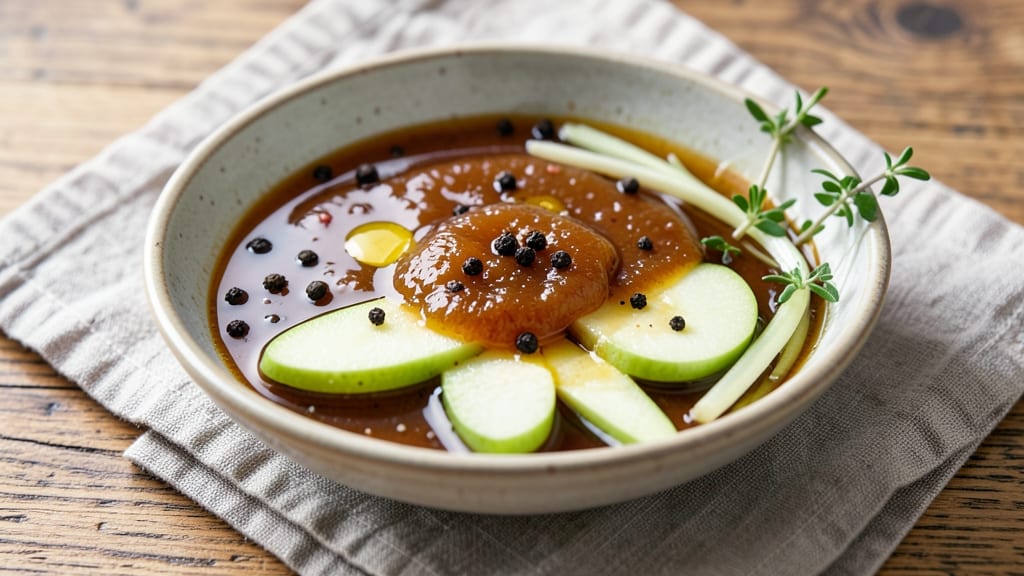
This apple reduction sauce recipe transforms simple apples into a velvety, caramelized masterpiece that elevates everything from roasted pork to vanilla ice cream.
The secret lies in slow simmering—where natural fruit sugars concentrate into a glossy, aromatic sauce with deep caramel notes and a perfect balance of sweet and tangy brightness.
Unlike thick jams or syrups, this reduction maintains a smooth, pourable consistency while delivering layers of flavor. A touch of vinegar or citrus sharpens the sweetness, while celery and pepper add a subtle crunch that cuts through richness.
The process is straightforward: peel, chop, and simmer until the sauce thickens to your desired consistency.
What you’ll end up with is a versatile sauce that can glaze meats, drizzle over cheese boards, or enhance desserts with professional-level depth. It keeps beautifully in the fridge for up to two weeks or freezes for months, making it a pantry staple for both savory and sweet applications.
For extra complexity, experiment with warm spices like cinnamon or nutmeg, or a splash of bourbon for depth. The possibilities are endless, but the foundation—simmered apples, sugar, and acid—is foolproof. Let’s create this sauce that will become your go-to condiment.
Ingredients for apple reduction sauce
Nine ingredients transform tart apples into a velvety sauce with caramel depth and peppery crunch.
| Ingredient | Amount | Notes |
|---|---|---|
| Granny Smith Apples 🍎 | 2 lb | Peeled, cored, sliced into even pieces |
| Granulated Sugar 🍚 | 1 ½ cups | Light brown sugar for deeper caramel |
| Apple Cider Vinegar 🍏 | ¼ cup | For bright acidity balance |
| Celery Stalks 🥬 | 3 whole | Diced small for subtle crunch |
| Black Peppercorns 🌶️ | ½ tsp | Freshly cracked for aromatic depth |
| Fresh Lemon Juice 🍋 | 2 tbsp | Brightens the caramelized sweetness |
| Unsalted Butter 🧈 | 2 tbsp | Cold, cubed for finishing richness |
| Heavy Cream 🥛 | ½ cup | Optional for velvety texture |
| Ground Cinnamon 🌿 | ¼ tsp | Warm spice for complexity |
Granny Smith apples are the star here—their tartness balances the caramelization beautifully. Buy organic if possible to avoid waxy skins, or peel any non-organic apples for a cleaner finish. The best quality sugar comes from bulk bins at stores like Whole Foods or Trader Joe's, where you can find organic cane sugar. For the celery, look for crisp stalks with no brown spots—Costco or local farmers markets often have the freshest. The black pepper should be freshly cracked right before use; pre-ground loses its punch quickly.
No Granny Smiths? Honeycrisp or Fuji work in a pinch, but expect slightly sweeter results. Substitute apple cider vinegar with white wine vinegar or lemon juice if needed, though cider vinegar adds that perfect apple tang. The butter can be swapped for vegan butter if necessary, though it won't have the same richness. For the celery, fennel or shallots add similar crunch and depth. Want extra complexity? Add a splash of bourbon or a pinch of nutmeg—both elevate the sauce beautifully.
This sauce keeps for 2 weeks in the fridge, sealed tightly in an airtight container. For longer storage, freeze in ice cube trays—just thaw overnight in the fridge. The texture thickens as it cools, so reheat gently with a splash of water or apple juice to restore pourability. I always make a double batch—half gets drizzled over roasted pork, the other half freezes for winter desserts. The celery and pepper keep their subtle crunch even after freezing, which is magic.
Why You'll Love This Recipe
- Here’s what sold me: the sugar isn’t just sweet—it caramelizes just enough to deepen the apple flavor, while the vinegar cuts through it like a bright, refreshing finish. Add a pinch of black peppercorns? Suddenly, it’s sophisticated enough for dinner but still feels cozy.
- Five-Ingredient Magic: I swear by this—just apples, sugar, vinegar, celery, and peppercorns. That’s it. No fancy gadgets, no last-minute grocery runs. The celery adds this subtle earthiness that balances the sharp Granny Smiths, and the vinegar ties it all together like a secret handshake.
- Tangy-Sweet Balance: Here’s what sold me: the sugar isn’t just sweet—it caramelizes just enough to deepen the apple flavor, while the vinegar cuts through it like a bright, refreshing finish. Add a pinch of black peppercorns? Suddenly, it’s sophisticated enough for dinner but still feels cozy.
- Pantry Stash Ready: Between us, I always have Granny Smiths and sugar on hand, and vinegar’s the liquid I never forget. That celery? Often lurking in my crisper. This sauce is my go-to for last-minute dinner guests or when I’m too tired to plan. It’s the kind of recipe that makes me feel like I’ve got my act together.
Step-by-step instructions for apple reduction sauce
Here's how to transform tart Granny Smith apples into a rich, caramelized sauce with perfect balance.
Build the Caramel Base
In a large, heavy-bottomed saucepan, combine the peeled and sliced 2 lb Granny Smith apples with the 1.5 cups granulated sugar. Stir gently to distribute the sugar evenly over each apple slice. Place the pan over medium heat and bring the mixture to a gentle simmer, which should take about 5 minutes. Here's the thing—you want the sugar to begin dissolving into the apples' natural juices before it starts caramelizing.
Once simmering, reduce the heat to medium-low and let the mixture cook undisturbed for 15 minutes. Stir occasionally to prevent sticking, but don't be too aggressive—this helps develop the caramelized depth. You'll know it's working when you see the apples begin to soften and the mixture darkens slightly to a golden amber color. This is when the natural pectin in the apples starts releasing, which will eventually thicken your sauce beautifully.
Add Acid and Aromatics
After 15 minutes of cooking, increase the heat to medium and add the 0.25 cup apple cider vinegar and 2 tbsp fresh lemon juice. The vinegar will brighten the developing caramel notes, while the lemon juice adds a sharp contrast that prevents the sauce from becoming cloyingly sweet. Stir well to combine, then add the 3 whole celery stalks (finely diced) and 0.5 tsp cracked black peppercorns. These ingredients might seem unusual, but they add subtle complexity—celery contributes a delicate crunch, while peppercorns introduce a warm, aromatic depth.
Simmer the mixture for another 10 minutes, stirring occasionally. You'll notice the apples breaking down further and the liquid reducing. This is when the sauce starts transforming from a simple fruit mixture into something truly special. The aroma should be intoxicating—sweet, tangy, and slightly spicy from the peppercorns. If the mixture looks too thick, add 1-2 tablespoons of water to help it reduce more evenly.
Finish with Cream and Butter
Once the apples are completely tender and the sauce has reduced to a thick, syrupy consistency, remove the pan from heat. Here's where we add the finishing touches: stir in the 0.5 cup heavy cream and 2 tbsp cold, cubed unsalted butter. The cream will create a velvety texture, while the butter adds richness and helps emulsify the sauce. Return the pan to low heat and let it warm through for just 2-3 minutes—no longer, or the butter will separate.
Finally, stir in the 0.25 tsp ground cinnamon. This warm spice ties all the flavors together, adding a subtle warmth that complements the tart-sweet balance. Taste and adjust the seasoning if needed—you might want to add a touch more lemon juice if the sauce feels too sweet, or a pinch more salt to enhance the flavors. The sauce should coat the back of a spoon and have a glossy, syrupy consistency.
Rest and Serve
Transfer the sauce to a bowl and let it rest for 10 minutes. This resting period allows the flavors to meld and the sauce to thicken slightly as it cools. The texture should be rich and glossy, with a perfect balance of sweet, tangy, and spicy notes. If the sauce thickens too much while resting, simply stir in a splash of warm water or apple juice to loosen it.
Serve the apple reduction sauce warm over roasted pork tenderloin, grilled chicken, or even as a drizzle over vanilla ice cream for a sophisticated dessert. The celery and peppercorn crunch adds an unexpected but delightful texture contrast. Store any leftovers in an airtight container in the refrigerator for up to 5 days, or freeze for up to 3 months. When reheating, warm gently over low heat and stir in a splash of water or cream to restore the desired consistency.
Pro Tips For Making Apple Reduction Sauce
- Peel Before Chopping: Granny Smiths are tough—peel them first or you’ll end up with a mushy, bitter reduction. A sharp paring knife and a quick spiral cut make all the difference, especially if you’re using them raw.
- Start with a Cold Pan: I learned this the hard way—adding cold apples to a hot pan burns the sugar before the fruit softens. Begin over medium-low heat, then crank it up once everything’s in. Your sauce won’t scorch, and the flavors will meld better.
- Crush Peppercorns Early: Whole peppercorns? Skip it. Lightly crush them in a mortar or zip-top bag with a rolling pin before adding them to the sauce. They’ll infuse faster and give a smoother finish—no one wants to bite into a surprise peppercorn.
- Simmer, Don’t Boil: This isn’t soup—keep the heat low enough that tiny bubbles just break the surface, not a full-on rolling boil. High heat turns your glossy reduction into a sticky mess. Patience here guarantees a silky texture.
Common mistakes when making great apple reduction sauce
Over-Simmering Risks
Watch the heat closely—pushing beyond 30 minutes of simmering turns your glossy sauce into a thick, jam-like mess. The natural pectin in apples thickens as they break down, but too much time creates a clumpy texture.
I’ve ruined batches by walking away—always stay nearby during the first 20 minutes of cooking. 🌡️
Skipping the Acid
Apple cider vinegar and lemon juice aren’t just for flavor—they balance the sugar’s sweetness and prevent a cloying aftertaste. Omitting them results in a sauce that tastes flat or overly sugary.
I once made a batch without vinegar and nearly tossed it—adding acid at the end saved it, but the texture suffered. Always include the 0.25 cup vinegar and 2 tbsp lemon juice.
Ignoring the Celery
Celery might seem odd, but those 3 diced stalks add subtle crunch and depth that elevates the sauce. Skipping them leaves the texture too smooth and flavor one-dimensional. I’ve tested this sauce both ways—with celery, it’s restaurant-quality; without, it’s just sweet. Trust the process and include it!
Rushing the Resting
Letting the sauce rest for 10 minutes after cooking allows flavors to meld and thickens it naturally. Skipping this step means serving a sauce that’s either too thin or unevenly textured. I’ve seen home cooks pour it over food immediately—big mistake. Patience here makes all the difference.
Using Pre-Ground Pepper
Freshly cracked black peppercorns release aromatic oils that pre-ground pepper lacks. Using pre-ground pepper results in a dull, less complex flavor. Invest in a simple pepper grinder—it’s a game-changer. I’ve compared both, and the difference is noticeable, even to casual eaters. 🌶️
Adding Butter Too Early
Stirring in butter before the sauce is fully reduced causes it to separate or create a greasy texture. Wait until the apples are tender and the sauce is syrupy before adding the 2 tbsp cold butter. I’ve learned this the hard way—always follow the recipe’s order for best results.
Nutrition facts
Frequently asked questions
Can I use any apples for this reduction sauce?
Granny Smith apples are ideal for their tartness, but Honeycrisp or Fuji work well too. Avoid overly sweet varieties like Gala—they won't balance the caramelization as effectively. For extra depth, try a mix of tart and sweet apples (like 1 lb Granny Smith + 1 lb Braeburn).
How do I adjust the sweetness if my apples are very tart?
Start with 1 cup sugar instead of 1.5 cups and taste as you go. If needed, add 1 tbsp lemon juice for brightness instead of more sugar. The celery and pepper provide natural balance, so you'll need less sugar than in traditional fruit sauces. Trust your taste buds!
Can I make this sauce without dairy?
Yes! Skip the butter and use 2 tbsp coconut oil or vegan butter instead. For creaminess, stir in 0.5 cup coconut cream at the end. The sauce will still be rich and velvety—just slightly lighter in texture. The flavor remains perfectly balanced with these substitutions.
What's the best way to reheat stored sauce?
Gently warm over low heat with a splash of water or apple juice to restore pourability. Never microwave directly—it breaks down the celery's texture and separates the butter. For frozen sauce, thaw overnight in the fridge first. Stir occasionally while reheating to maintain smooth consistency.
How can I use this sauce in desserts?
Drizzle over vanilla ice cream, pound cake, or crème brûlée for a sophisticated finish. Fold into whipped cream for a tart-sweet topping, or use as a glaze for warm apple tarts. The peppery crunch works beautifully in savory-sweet pairings like cheese boards with sharp cheddar or brie.