
Main Courses
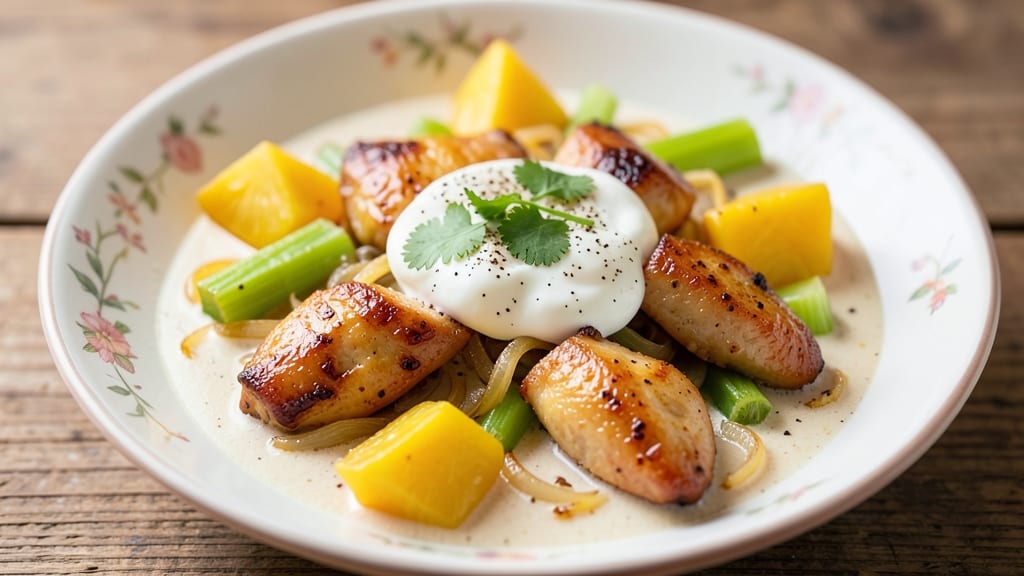
This Chicken Pineapple Indian Curry recipe delivers restaurant-quality flavors with a fragrant coconut milk base and unexpected celery crunch. The marriage of tender chicken, sweet pineapple, and aromatic spices creates a dish that's both comforting and exciting—perfect for weeknight dinners or special occasions.
I developed this recipe after years of perfecting Indian curries, balancing traditional techniques with modern accessibility.
The secret lies in properly blooming the spices—cumin, coriander, and turmeric—to release their full potential before adding coconut milk and pineapple. This creates a rich, velvety sauce that perfectly balances sweet and savory notes. The celery adds a refreshing crunch that cuts through the richness, making every bite more satisfying.
With just 30 minutes of active prep and 45 minutes of simmering, you'll have a dish that feels indulgent yet straightforward.
By the time you serve this curry, your kitchen will smell like a bustling Indian restaurant, and your guests will be impressed by the depth of flavor.
The chicken becomes fork-tender while absorbing the aromatic spices, and the pineapple adds just the right amount of sweetness to complement the tangy yogurt and creamy coconut. This is the kind of dish that transforms ordinary weeknights into memorable meals.
Serve it with steamed basmati rice and warm naan to soak up every last drop of that fragrant sauce. The combination of textures and flavors makes this curry a crowd-pleaser that's equally at home on a busy Tuesday or a festive weekend gathering. Let's get cooking!
Ingredients for chicken pineapple curry indian
Fragrant coconut milk meets sweet pineapple and tender chicken for a curry bursting with restaurant-style flavors.
| Ingredient | Amount | Notes |
|---|---|---|
| Boneless Chicken Thighs 🍗 | 1 ½ lb | Cut into 1-inch pieces |
| Fresh Pineapple Chunks 🍍 | 1 ½ cups | Fresh or canned in juice |
| Coconut Milk 🥥 | 1 can | 13.5 oz can, full-fat preferred |
| Plain Yogurt 🥛 | ½ cup | Greek or regular, unsweetened |
| Celery Stalks 🥬 | 2 whole | Thinly sliced, for crunch |
| Yellow Onion 🧅 | 1 whole | Medium, finely chopped |
| Garlic Cloves 🧄 | 4 cloves | Minced, fresh preferred |
| Fresh Ginger Root 🌿 | 2 tbsp | Finely grated, peeled |
| Ground Cumin 🌶️ | 1 tbsp | Toasted for deeper flavor |
| Ground Coriander 🌿 | 1 tbsp | Freshly ground preferred |
| Turmeric Powder 🧂 | 1 tsp | Bright yellow color |
| Garam Masala 🌶️ | 1 tsp | Store-bought or homemade blend |
| Salt 🧂 | 1 tsp | Diamond Crystal preferred |
| Black Pepper 🌶️ | ½ tsp | Freshly ground preferred |
| Lemon Juice 🍋 | 2 tbsp | Freshly squeezed |
| Vegetable Oil 🫒 | 2 tbsp | For sautéing |
| Fresh Cilantro 🌿 | ¼ cup | Chopped, for garnish |
The coconut milk is non-negotiable here—full-fat canned is best for that rich, velvety texture. Thai Kitchen or Goya brands work perfectly, but if you've got homemade, even better. Fresh pineapple is ideal (the sweetest yellow variety holds up best), but canned in juice is a solid backup—just drain it well. The chicken thighs are key: bone-in stays juicier, but boneless works if you're short on time. Costco often has great prices on bulk thighs, but any grocery store's butcher section will do. For the ginger, look for firm, bumpy roots—no wrinkles or soft spots, which means it's past its prime.
No fresh cilantro? Dried works at half the amount, but it won't have that bright finish. Short on yogurt? Substitute with coconut cream—it's tangier, so use slightly less. The garam masala can be tricky to find, but most Indian grocery stores carry it, or you can make your own blend with cinnamon, cardamom, and cloves. For the celery, organic stalks are best if you're eating it raw—non-organic can be tough to clean thoroughly. The onion should be sweet, not sharp—yellow or white both work, but avoid red if you don't want color bleeding into your sauce.
This curry tastes even better the next day as flavors meld. Store leftovers in an airtight container for up to 5 days in the fridge, or freeze for 3 months—portion into single servings before freezing for easy reheating. The coconut milk will separate when refrigerated, so give it a good stir before reheating. For extra richness, add a splash of water or broth when reheating. The celery crunch disappears after reheating, so always serve it fresh on the side if you're making this ahead.
Why You'll Love This Recipe
- One-Pot Magic: I swear by this recipe when I’m too tired to wash extra bowls. The chicken, pineapple, and celery all simmer together in one pot—no fuss, no stress. Just stir, simmer, and serve.
- Sweet-Savory Balance: That yogurt base tames the coconut milk’s richness while the pineapple’s tang cuts through the spices. Honestly, the first time I tasted it, I thought, “Why didn’t I do this sooner?”
- Meal Prep MVP: Between us, this curry tastes better the next day—yes, really. I make a big batch on Sundays, and it’s my go-to for lunches all week. The pineapple stays juicy, and the chicken gets even more tender.
- Budget-Friendly Luxury: Chicken thighs are forgiving and cheap, and celery adds freshness without breaking the bank. Coconut milk makes it feel special, but you won’t cry over the price tag. (Yes, even on a Tuesday night.)
Step-by-step instructions for chicken pineapple Indian curry
Here's how to create a fragrant, balanced curry where tender chicken and sweet pineapple meld with aromatic spices.
Prepare the Chicken and Aromatics
Cut the 1.5 lb boneless chicken thighs into 1-inch pieces and set aside. In a small bowl, combine the 0.5 cup plain yogurt, 1 tbsp ground cumin, 1 tbsp ground coriander, 1 tsp turmeric powder, 1 tsp garam masala, 1 tsp salt, and 0.5 tsp black pepper. Mix until the spices are fully incorporated and the yogurt takes on a vibrant golden hue.
Coat the chicken pieces evenly with this yogurt marinade, pressing the spices into the meat. Let it sit at room temperature for 15 minutes—this ensures the spices adhere and the chicken develops subtle flavor before cooking. While the chicken marinates, peel and finely grate the 2 tbsp fresh ginger root and mince the 4 cloves garlic. Thinly slice the 2 whole celery stalks and finely chop the 1 whole yellow onion. These aromatics will form the flavor base of your curry.
Sauté the Base and Cook the Chicken
Heat the 2 tbsp vegetable oil in a large, heavy-bottomed pot over medium-high heat. Add the chopped onion and cook for 4-5 minutes until softened and translucent. Add the celery, garlic, and ginger, stirring constantly for 2 minutes until the garlic becomes fragrant and the celery begins to soften slightly. This step develops the aromatic foundation—don't rush it, or you'll burn the garlic.
Push the vegetables to the side of the pot and add the marinated chicken in a single layer. Cook undisturbed for 3-4 minutes until the chicken develops a golden-brown crust. Stir gently to release any stuck bits from the bottom, then continue cooking for another 2 minutes until the chicken is no longer pink on the outside. Remove the chicken and set aside—it will finish cooking in the simmering sauce.
Build the Curry Sauce
Pour in the 1 can coconut milk and stir to combine with the vegetables and any browned bits at the bottom of the pot. Bring the mixture to a gentle simmer over medium heat, then reduce the heat to low to maintain a slow bubble. Add the 1.5 cups fresh pineapple chunks and the 2 tbsp lemon juice, stirring to distribute the pineapple evenly. The lemon juice brightens the dish and balances the richness of the coconut milk.
Return the chicken to the pot and spoon the sauce over it to ensure even coating. Partially cover the pot and let it simmer for 20-25 minutes, stirring occasionally. You're looking for the chicken to become fork-tender and the sauce to thicken slightly—it should coat the back of a spoon but still be saucy enough to spoon over rice. Taste and adjust seasoning if needed, adding a pinch more salt or garam masala if desired.
Finish and Serve
Once the chicken is fully cooked and the sauce has thickened, remove the pot from heat. Stir in the 0.25 cup chopped fresh cilantro and let the curry sit for 5 minutes to allow the flavors to meld. The cilantro adds a fresh contrast to the rich, spiced coconut sauce and brightens the overall dish.
Serve the curry immediately over steamed basmati rice or with warm naan bread. The pineapple's sweetness cuts through the spiced coconut sauce, while the celery adds a satisfying crunch. Each bite should deliver tender chicken, aromatic spices, and a perfect balance of sweet, tangy, and savory flavors. For extra authenticity, garnish with additional cilantro and a squeeze of lemon wedge.
Pro Tips For Making Chicken Pineapple Curry Indian
- Brown the Chicken First: I learned this the hard way—skipping the sear means you’ll end up with a yogurt-and-coconut stew instead of a rich, layered curry. Get your pan smoking hot, pat the chicken thighs very dry, and let them develop a deep golden crust (about 4-5 minutes per side). That crust carries the flavor through the coconut milk, so don’t rush it.
- Prep Pineapple Like a Pro: Fresh pineapple chunks? Great choice—but if you’re cutting them yourself, go small. Tiny, even pieces (½-inch cubes max) cook faster and soak up the curry sauce better than big hunks. And here’s the real trick: Toss the pineapple in a tiny bit of lemon juice before adding it to the pot. It keeps the color bright and prevents the curry from turning mushy.
- Simmer, Don’t Boil: The second you add coconut milk, drop the heat to a gentle simmer. I used to let it bubble hard, and half the time, the sauce would split into a greasy, curdled mess. You’re aiming for tiny, constant bubbles—like a lazy simmer. This keeps the yogurt smooth and the pineapple tender without falling apart.
- Use Full-Fat Yogurt: Skip the non-fat version—it’s a shortcut that kills the creaminess. Full-fat plain yogurt (Greek or regular) adds body and richness that light yogurt can’t match. Stir it in last and let the curry cool slightly first, or it’ll curdle on you. (Yes, even if you’re impatient like me.) The result? A sauce that coats the back of your spoon instead of separating.
Creative variations of this dish
Spicy Thai Twist
Add 1 tbsp red curry paste (like Maesri) when sautéing the onions to infuse the curry with Thai-inspired heat. Stir in 1 tbsp fish sauce and 1 tsp palm sugar after adding the coconut milk for a deeper umami-sweet balance.
Garnish with Thai basil leaves instead of cilantro for an aromatic finish. This variation works especially well with boneless chicken breast for a lighter option. 🌶️
Coconut Curry with Potatoes
Boost the heartiness by adding 1 lb baby potatoes, halved, when you pour in the coconut milk. Simmer them alongside the chicken for 20 minutes until tender. The potatoes absorb the rich sauce beautifully, creating a satisfying one-pot meal.
For extra flavor, toss in 1 tsp curry powder with the potatoes. Serve with extra naan to soak up the sauce. 🥔
Vegetarian Version
Replace the chicken with 1 lb extra-firm tofu, pressed and cubed, or 1 lb chickpeas for a protein-rich alternative. Marinate the tofu in the yogurt-spice mix for 15 minutes before cooking.
The chickpeas add natural sweetness that pairs perfectly with the pineapple. For extra texture, add ½ cup bell peppers when sautéing the aromatics. 🌱
Creamy Coconut Lime
Brighten the curry with zest and juice of 1 lime (instead of lemon) after simmering. Add ¼ cup heavy cream at the end for a luxurious finish. The lime zest adds a citrusy aroma, while the cream enhances the coconut richness.
Garnish with lime wheels for a restaurant-worthy presentation. This version feels lighter yet equally indulgent. 🍋
Slow Cooker Adaptation
For hands-off cooking, combine all ingredients except celery and cilantro in your slow cooker. Cook on low for 4-5 hours or high for 2-3 hours. Stir in the celery and cilantro during the last 30 minutes to preserve its fresh crunch.
The slow cooking deepens the flavors, making it ideal for busy weeknights. Serve with store-bought naan for convenience. ⏳
Spiced Yogurt Dip
Create a cooling side by mixing ½ cup plain yogurt with 1 tsp garam masala, ½ tsp cumin, and 1 tbsp chopped mint. Serve this alongside the curry for a refreshing contrast.
The yogurt helps balance the heat and adds a creamy texture. It's a simple yet elegant addition that elevates the meal. 🥛
Nutrition facts
Frequently asked questions
Can I use chicken breast instead of thighs?
Yes, but with a few adjustments! Chicken breast cooks faster and stays drier, so cut it into ½-inch pieces and marinate for 20 minutes instead of 15. Cook it for 3-4 minutes per side until just done (internal temp 165°F) before adding to the sauce. The breast will soak up less sauce, so reduce the coconut milk by ¼ cup to maintain balance.
How do I make this curry less spicy?
Reduce the garam masala to ½ tsp and omit the black pepper. For extra mildness, add 1 tsp honey or 1 tbsp coconut cream at the end to balance heat. If using store-bought garam masala, check the label—some brands contain extra chili. Always taste as you go!
Can I substitute pineapple juice for fresh chunks?
Use 1 cup pineapple juice instead of chunks, but add 1 tbsp honey to compensate for lost sweetness. Simmer the juice with the coconut milk for 5 minutes before adding chicken to let flavors meld. For texture, stir in 2 tbsp grated carrot or 1 tbsp corn kernels at the end.
Why does my curry taste too coconutty?
This happens when coconut milk overpowers other flavors. Balance it by adding 1 tbsp lemon juice (extra if needed) and ½ tsp salt. Simmer uncovered for 5 extra minutes to let moisture evaporate slightly. For depth, add 1 tsp tomato paste when sautéing onions—it adds umami without overpowering.
What's the best way to reheat leftovers?
Gently reheat on the stove over low heat with 1-2 tbsp water or broth to restore creaminess. Avoid microwaving as it can make the sauce watery. For extra flavor, stir in ½ tsp garam masala and 1 tbsp yogurt during reheating. Store leftovers in an airtight container for up to 5 days.