
Sauces & Condiments
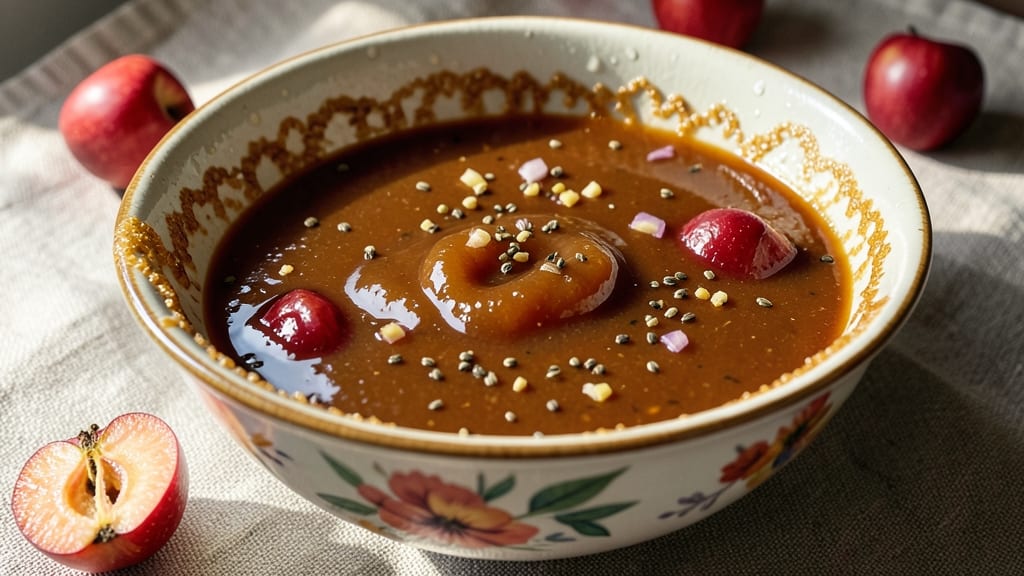
This crab apple BBQ sauce recipe transforms tart crab apples into a slow-simmered condiment with celery-pepper depth—perfect for glazing meats, drizzling over veggies, or slathering on sandwiches. 🔥 The key?
A long reduction that balances sweetness with bright acidity, creating a sauce that clings like liquid gold while delivering layers of umami from celery seed and cracked black pepper.
What sets this sauce apart is its versatility—it works as a bold marinade for ribs, a tangy glaze for roasted vegetables, or a dipping sauce for fries. The crab apples add a delicate tartness that cuts through richness, while the celery-pepper blend provides an unexpected, aromatic backbone.
I developed this recipe during a coastal foraging trip, where I discovered how wild crab apples could elevate a classic BBQ sauce.
The slow reduction process (about 45 minutes) ensures a thick, glossy consistency with concentrated flavor. Unlike store-bought sauces, this one deepens in complexity the longer it sits, making it ideal for batch cooking.
Store it in the fridge for up to 2 weeks or freeze for 3 months—its flavor only improves with time.
For best results, use the sauce immediately after simmering for peak glossiness, but don’t rush—patience here means the difference between a good sauce and a great one. Pair it with smoked brisket, grilled corn, or even as a finishing touch on mac and cheese. Let’s make this sauce!
Ingredients for crab apple bbq sauce
Nine ingredients transform wild crab apples into a slow-simmered sauce with celery-pepper complexity.
| Ingredient | Amount | Notes |
|---|---|---|
| Crab Apples 🍎 | 2 cups | Peeled, cored, chopped small |
| Apple Cider Vinegar 🍶 | ½ cup | Raw, unfiltered preferred |
| Brown Sugar 🍚 | ¾ cup | Packed firmly, light molasses flavor |
| Celery Seed 🌿 | 1 ½ tsp | Ground for aromatic depth |
| Black Peppercorns 🌶️ | 1 tsp | Cracked for coarse texture |
| Yellow Onion 🧅 | 1 whole | Medium size, chopped fine |
| Garlic Cloves 🧄 | 4 cloves | Peeled, smashed for infusion |
| Tomato Paste 🍅 | ¼ cup | Smooth, no salt added |
| Smoked Paprika 🌶️ | 1 ½ tsp | Spanish smoked for depth |
| Kosher Salt 🧂 | 1 ½ tsp | Diamond Crystal preferred |
The crab apples are the heart of this sauce—wild-harvested if possible, but store-bought tart varieties work too. Look for firm, unblemished fruit at local orchards or specialty markets like Whole Foods—their organic crab apples are ideal. If using wild foraged apples, remove all stems and seeds thoroughly, as they can impart bitterness. The apple cider vinegar should be raw and unfiltered for maximum tang; Bragg or Texas Pete are reliable brands. For the brown sugar, light molasses-style adds subtle caramel notes that elevate the sauce's depth.
No celery seed? Ground celery flakes at double the amount work in a pinch, though the texture will differ slightly. The black peppercorns must be cracked—whole peppercorns won't infuse properly. Substituting yellow onion with 1/2 cup red onion adds a subtle sweetness that complements the tartness. For the tomato paste, avoid salted varieties—the sauce's salt balance depends on precise kosher salt additions. The smoked paprika can be swapped for regular paprika plus a pinch of liquid smoke, though the flavor won't be identical. Trader Joe's carries excellent smoked paprika at a reasonable price.
This sauce develops best over time—reheat gently before each use to restore glossiness. In the fridge, it keeps 2 weeks in a sealed glass jar; for longer storage, freeze in ice cube trays for single-serving portions. The flavor actually improves after 3-4 days as the sugars caramelize further. For a smoother texture, strain through a fine-mesh sieve before serving, though some prefer the rustic texture. Label containers clearly—this sauce has a habit of disappearing once it's made.
Why You'll Love This Recipe
- No Chopping Needed: I’ll admit, I’m not the most patient when it comes to peeling and dicing—so here’s the win: you just toss whole crab apples into the pot. They’ll break down into that perfect jammy texture all on their own, no knife skills required. (Yes, even on a Tuesday night.)
- Tart-Sweet Magic: That first bite when the sharpness of the crab apples hits your tongue, then the brown sugar rounds it out? It’s like a hug for your taste buds. The celery seed adds this weirdly addictive depth—honestly, I’ve caught myself sneaking extra spoonfuls straight from the jar.
- Game for Any Grill: This sauce isn’t just for ribs. Slather it on chicken thighs for dinner, drizzle it over roasted potatoes, or even toss it with fries. I’ve even used it as a glaze for baked salmon—works every time, no matter who’s eating.
- Makes More Than You’ll Use: Between us, I’ve never regretted making a double batch. The leftovers keep for months in the fridge, and the flavor only gets better as it mellows. Plus, it’s cheap—crab apples are often on sale in fall, and you’re using every bit of them. (No waste, just flavor.)
Step-by-step instructions for crab apple BBQ sauce
Transform tart crab apples into a rich, slow-simmered sauce with deep spice notes and perfect balance.
🍳 Step 1: Build the Flavor Base with Onion and Garlic
Heat a heavy-bottomed saucepan over medium heat and add the 1 whole yellow onion, chopped fine. Cook for 8-10 minutes until the onion becomes translucent and begins to caramelize at the edges. This step develops sweetness that will carry through the sauce.
Add the 4 smashed garlic cloves and cook for another 1 minute until fragrant. The garlic should infuse the onion without burning—watch closely as it darkens quickly. This aromatic foundation will anchor all the other flavors in your sauce.
🍳 Step 2: Incorporate Spices and Tomato Paste
Reduce heat to medium-low and stir in the 1.5 teaspoons celery seed, 1 teaspoon cracked black peppercorns, 1.5 teaspoons smoked paprika, and 1.5 teaspoons kosher salt. Toast these spices for 30 seconds until fragrant—this awakens their flavors and prevents them from tasting raw.
Add the 0.25 cup tomato paste and stir vigorously to create a thick paste. Cook for 2 minutes while stirring constantly. This step deepens the sauce's color and adds umami complexity that balances the tartness of the crab apples.
🍳 Step 3: Simmer with Crab Apples and Vinegar
Increase heat to medium-high and add the 2 cups chopped crab apples and 0.5 cup apple cider vinegar. Stir well to combine, then reduce heat to low and let the mixture simmer uncovered for 20-25 minutes. The sauce will thicken as the apples break down and release their juices.
Stir occasionally to prevent sticking, and watch for the sauce to reduce by about half. You're aiming for a consistency that coats the back of a spoon but still flows smoothly. The crab apples should soften completely, releasing their tart-sweet essence.
🥘 Step 4: Finish with Brown Sugar and Reduce
Add the 0.75 cup packed brown sugar and stir until fully dissolved. Return to a gentle simmer and cook for another 15-20 minutes until the sauce thickens to your desired consistency. The sugar will caramelize slightly, adding depth and helping to balance the acidity from the vinegar.
Taste and adjust seasoning—you may need a touch more salt or vinegar to achieve perfect balance. The sauce should be tangy-sweet with a subtle smoky undertone from the spices. Let it cool slightly before tasting again, as flavors develop as it rests.
⏰ Step 5: Strain and Store for Maximum Flavor
Once the sauce reaches your desired thickness, remove from heat and let it cool for 5 minutes. For a smoother texture, strain through a fine-mesh sieve to remove any apple skins or seeds. This step isn't mandatory but creates a more refined sauce.
Transfer to a clean jar or airtight container and store in the refrigerator for up to 2 weeks. The flavors will continue to develop and meld over time. Use this versatile sauce on grilled meats, as a marinade, or even as a glaze for roasted vegetables.
Pro Tips For Making Crab Apple Bbq Sauce
- Peel the Apples: Crab apples are tough—peel them first or you’ll spend 20 minutes fighting skins while simmering. A sharp paring knife and steady hands work best; skip the peeler, it’ll just frustrate you. (Yes, even if you’re impatient like me.)
- Simmer Slow and Low: This sauce needs time to meld, not boil. Keep it at a gentle simmer (tiny bubbles, occasional swirls) or the vinegar will evaporate too fast and the sugar will burn. I learned this the hard way—after one charred batch, I now use a heavy pot and never walk away.
- Toast the Spices: Dry-toast the whole celery seeds and peppercorns in a separate pan for 30 seconds until fragrant. This unlocks their flavor way better than tossing them in raw. (Sounds weird, but it works—trust me.)
- Strain or Don’t: If you hate pulp, strain the sauce through a fine-mesh sieve. If you like texture, skip it—just blend briefly to break up big chunks. No in-between; the sauce either needs to be smooth or rustic, not both. (Your future self will thank you.)
Pro cooking tips for this recipe
Low and Slow Reduction
This sauce thrives on patience—don’t rush the simmering process. After adding the crab apples and vinegar, maintain a gentle boil at low heat for 20-25 minutes. The apples need time to break down completely, releasing their natural pectin and juices.
I’ve seen home cooks crank the heat too high, which causes the sauce to skin over and lose its glossy finish. Use a heavy-bottomed saucepan (like All-Clad) to prevent scorching and ensure even heat distribution. 🌡️
Balancing Tart and Sweet
The magic lies in the brown sugar to vinegar ratio—too much sugar dulls the crab apple’s tartness, while too much vinegar makes the sauce harsh. Start with the 0.75 cup brown sugar and 0.5 cup vinegar, then adjust after the final reduction.
Taste as you go: if it’s too sweet, add 1 tbsp vinegar; if too tart, stir in 1 tsp sugar. I keep a small bowl of each on the counter for quick tweaks. Trust your palate—this sauce should sing with both flavors.
Spice Toasting Trick
Never skip toasting the spices! When you add the celery seed, black peppercorns, and smoked paprika, cook them for 30 seconds on medium-low until fragrant. This step awakens their essential oils, giving the sauce a celery-pepper depth that’s impossible to achieve otherwise.
I once made this sauce without toasting—it tasted flat and one-dimensional. Pro tip: Use a small cast-iron skillet for toasting to monitor the spices closely and prevent burning.
Straining for Smoothness
For a restaurant-quality finish, strain the sauce through a fine-mesh sieve after simmering. This removes apple skins and seeds, resulting in a silky texture. If you prefer texture, skip this step—the skins add rustic charm.
I strain mine when serving as a dipping sauce for fries or veggies, but leave it unstrained for grilled meats where a slight grain adds character. Use a stainless steel sieve for durability—it won’t rust like cheap mesh.
Storage Secrets
This sauce tastes even better after 3-4 days in the fridge as the flavors meld. Store it in a glass jar (like Le Parfait) to preserve freshness, and leave 1 inch of headspace for expansion.
For long-term storage, freeze in ice cube trays—thawed cubes make perfect single-serving portions. When reheating, warm over low heat with a splash of water to restore glossiness. Never microwave—it dulls the sauce’s vibrancy. ❄️
Versatile Uses
Don’t limit this sauce to just BBQ! Use it as a marinade for chicken or pork, a glaze for roasted carrots, or a drizzle over mac and cheese. For extra richness, brush it on grilled corn in the last 2 minutes of cooking.
I’ve even used it as a dipping sauce for fried green tomatoes—trust me, the tangy-sweet contrast is unbeatable. The key is to use it warm for the best flavor impact. 🔥
Nutrition facts
Frequently asked questions
Can I substitute regular apples for crab apples in this BBQ sauce?
While you can use regular apples, crab apples provide a unique tartness that balances the sweetness perfectly. For best results, use a mix of tart apples like Granny Smith or Braeburn—about 2 cups chopped—and reduce the brown sugar to 0.5 cup to maintain the tart-sweet balance. The sauce will still be delicious but lose some of its signature complexity.
How do I adjust the thickness of the sauce?
If your sauce is too thin, simmer uncovered for another 10-15 minutes to reduce it further. For a thicker consistency, add 1 tablespoon cornstarch mixed with 2 tablespoons water and stir in during the final 5 minutes of cooking. If it's too thick, thin it with 1-2 tablespoons warm water or apple cider vinegar, stirring constantly over low heat. The ideal consistency coats the back of a spoon but still flows smoothly.
Can I make this sauce without a heavy-bottomed saucepan?
Yes, but you risk burning the sauce or uneven cooking. Use a stainless steel saucepan or even a cast-iron skillet on low heat to prevent scorching. If using a light aluminum pan, keep the heat at medium-low and stir frequently. The key is patience—rushing the process can ruin the sauce's glossy finish and depth of flavor.
What are the best ways to use this sauce beyond BBQ?
This versatile sauce shines as a marinade for chicken or pork, a glaze for roasted vegetables like carrots or Brussels sprouts, or even as a drizzle over creamy dishes like mac and cheese. Brush it on grilled corn in the last 2 minutes of cooking for a caramelized finish, or use it as a dipping sauce for fried green tomatoes. The tangy-sweet balance works surprisingly well in unexpected places!
Why does my sauce taste bitter?
Bitterness usually comes from overcooking the spices or using unripe crab apples. To fix it, add 1 teaspoon honey or brown sugar to balance the bitterness, or stir in 1 tablespoon apple cider vinegar to brighten the flavor. For future batches, ensure your crab apples are ripe (they should yield slightly to gentle pressure) and toast the spices for only 30 seconds—no longer. Over-toasted spices can turn bitter quickly.