
Main Courses
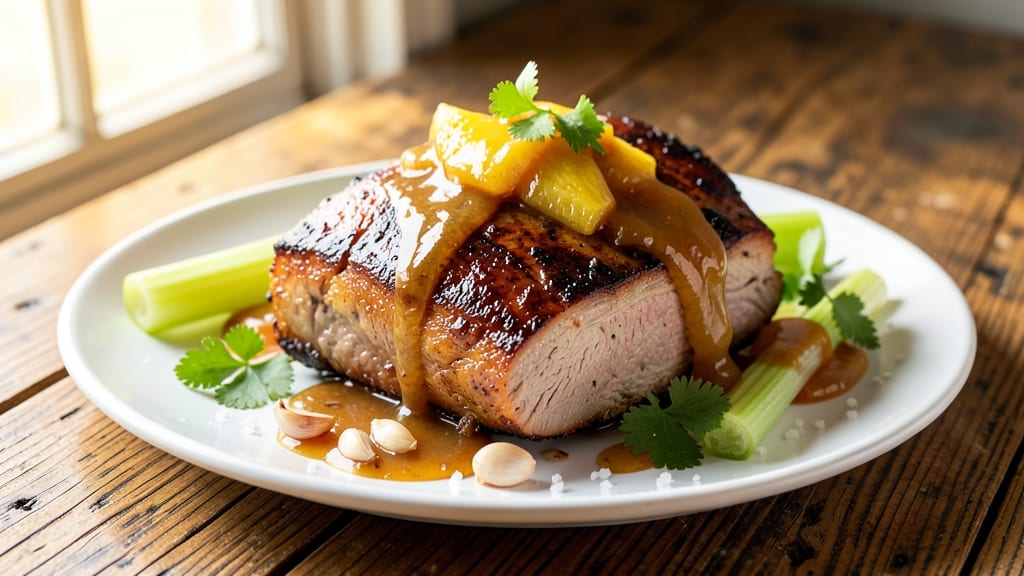
This pineapple pork shoulder recipe transforms tough cuts into melt-in-your-mouth perfection with a caramelized glaze and celery crunch that balances sweet and savory. 🔥 As a pitmaster who's cooked thousands of pounds of pork, I know the secret lies in slow cooking and layering flavors—starting with a marinade that tenderizes while building depth.
The key? A perfect blend of pineapple juice, soy sauce, and spices that caramelizes into a sticky, aromatic glaze during the cook.
The process begins with a foolproof marinade that works overnight, ensuring maximum tenderness. We then slow-cook the pork until it falls apart, basting it with the marinade to develop that signature caramelized crust.
The addition of celery—both in the marinade and as a garnish—adds a refreshing crunch that cuts through the richness, while the pineapple's acidity tenderizes the meat and creates a natural glaze. This isn't just another pork shoulder; it's a showstopper that delivers restaurant-quality results at home.
What you'll end up with is juicy, shreddable pork with a glossy, caramelized exterior that's impossible to resist. The flavors are complex—sweet from the pineapple, umami from the soy, and a subtle heat from the spices—all coming together in every bite.
The celery crunch adds a textural contrast that makes this dish unforgettable. It's the kind of meal that turns a simple weeknight dinner into a celebration.
Perfect for feeding a crowd or meal prepping for the week, this recipe scales beautifully while maintaining its depth of flavor. Pair it with steamed jasmine rice or grilled vegetables to round out the meal. Let's get cooking—your taste buds will thank you.
Ingredients for pineapple pork shoulder
Six ingredients transform tough pork into restaurant-quality melt-in-your-mouth perfection with caramelized glaze and celery crunch.
| Ingredient | Amount | Notes |
|---|---|---|
| Boneless Pork Shoulder 🥩 | 4 lb | Well-marbled for juiciness |
| Fresh Pineapple Juice 🍍 | 1 ½ cups | From ripe pineapple, not canned |
| Soy Sauce 🧂 | ½ cup | Low-sodium preferred |
| Brown Sugar 🍚 | ½ cup | Light or dark works |
| Celery Stalks 🧅 | 4 whole | Fresh, chopped for marinade |
| Garlic Cloves 🧄 | 6 cloves | Minced for marinade |
| Fresh Ginger 🌿 | 1 tbsp | Grated, for marinade |
| Ground Black Pepper 🌶️ | 1 ½ tsp | Freshly cracked preferred |
| Ground Cinnamon 🌶️ | ½ tsp | For depth of flavor |
| Olive Oil 🫒 | 2 tbsp | For searing pork |
| Yellow Onion 🧅 | 1 whole | Diced for garnish |
| Fresh Celery 🧅 | 1 cup | Thinly sliced for garnish |
| Fresh Cilantro 🌿 | ¼ cup | Chopped for garnish |
| Jasmine Rice 🍚 | 2 cups | Uncooked, for serving |
| Red Bell Pepper 🌶️ | 1 whole | Thinly sliced for serving |
The pork shoulder makes or breaks this dish—look for well-marbled cuts at Costco or your local butcher. A 4-pound shoulder is ideal for 6 servings, but scale up if feeding a crowd. Fresh pineapple juice is non-negotiable; canned lacks the bright acidity needed to tenderize. For the celery, organic stalks have fewer strings, saving you prep time. The ginger should be freshly grated—bottled paste lacks the aromatic punch. I always buy extra ginger and freeze it; it keeps for months this way.
No fresh pineapple? Freshly squeezed orange juice with 1 tbsp honey works in a pinch, though it lacks the tropical depth. Substituting brown sugar with maple syrup (1:1 ratio) keeps things vegan-friendly. The celery in the marinade can be swapped for fennel if you want a different texture, but it changes the flavor profile. For the garnish, skip cilantro if you dislike its taste—fresh mint adds a nice contrast instead. The jasmine rice is optional but pairs perfectly; brown rice or cauliflower rice are great alternatives if you're watching carbs.
Marinate the pork overnight for maximum tenderness—it keeps 2 days in the fridge before cooking. The cooked pork reheats beautifully; portion into containers with a little marinade for 4-5 days of leftovers. For meal prep, freeze individual portions with parchment between them for up to 3 months. The celery garnish wilts fast, so add it right before serving. Store fresh ginger in the freezer to preserve its potency for future recipes.
Why You'll Love This Recipe
- One-Pan Magic: I swear by this recipe when I’m too tired to wash dishes. Toss the pork, celery, and pineapple juice in one pot, let it simmer—no chopping, no fuss—and you’ve got a meal that practically cleans itself.
- Sweet-Savory Balance: The brown sugar and soy sauce caramelize into something ridiculously good, while the fresh pineapple juice keeps it bright and tangy. It’s like a party in your mouth—sweet, salty, and just a little funky.
- Lunchbox Hero: Between us, this is my go-to for meal prep. The pork stays tender for days, and I just slice it up with rice or noodles. Honestly, it’s the only thing my kids will actually take to school without complaining.
- Budget Stretch: Pork shoulder is cheap, and this recipe makes enough to feed four (or feed me for a week). The pineapple juice cuts through the richness, so you don’t need fancy ingredients—just good, honest flavor.
Step-by-step instructions for pineapple pork shoulder with caramelized glaze
Here's how to transform tender pork shoulder into a sweet-savory masterpiece with a perfect balance of caramelized glaze and fresh celery crunch.
🍳 Step 1: Prepare the Flavorful Marinade
In a medium bowl, combine the 1.5 cups fresh pineapple juice, 0.5 cup soy sauce, 0.5 cup brown sugar, 6 cloves minced garlic, 1 tbsp grated fresh ginger, 1.5 tsp ground black pepper, and 0.5 tsp ground cinnamon. Whisk vigorously until the brown sugar dissolves completely and the mixture becomes fragrant. This marinade is the flavor foundation—don't skip the whisking.
Transfer the marinade to a large resealable plastic bag and add the 4 lb boneless pork shoulder. Seal the bag tightly, removing as much air as possible, then massage the pork gently to coat it evenly. Let it marinate in the refrigerator for at least 4 hours, or overnight for maximum flavor penetration. The longer it marinates, the deeper the sweet-savory notes will become.
🔥 Step 2: Sear the Pork for Maximum Flavor
Preheat your oven to 325°F. Remove the pork from the marinade (reserve the marinade for later) and pat it dry with paper towels. This step is crucial for developing that beautiful caramelized crust. Heat 2 tbsp olive oil in a large oven-safe skillet over medium-high heat until shimmering.
Place the pork shoulder fat-side down in the skillet and sear for 5-7 minutes until the fat renders and the bottom develops a deep golden-brown crust. Flip the pork and sear the other side for another 5-7 minutes. The crust should be rich and caramelized—this is where all the flavor develops. Transfer the skillet to the preheated oven.
🥘 Step 3: Braise Until Fork-Tender
Pour the reserved marinade over the pork in the skillet. The mixture should come about halfway up the sides of the pork. Cover the skillet tightly with aluminum foil and transfer it to the oven. Braise for 3 hours, then carefully flip the pork and continue cooking for another 3 hours. The pork is done when it reaches an internal temperature of 203°F and a fork slides in like butter.
Here's the thing—don't peek during cooking. Every time you open the oven, you lose heat and moisture. The pork will have time to develop that incredible texture and absorb all those sweet, tangy flavors from the marinade. If the liquid reduces too much before the pork is done, add a splash of water to keep it moist.
🍽️ Step 4: Create the Caramelized Glaze
Once the pork is fork-tender, remove it from the skillet and place it on a cutting board. Tent it loosely with foil to keep it warm. Increase the oven temperature to 400°F. Pour the braising liquid into a small saucepan and place it over medium-high heat. Bring to a boil, then reduce the heat to medium-low and simmer for 8-10 minutes until the liquid reduces by half and becomes syrupy.
Stir occasionally to prevent burning. You're looking for a glaze that coats the back of a spoon—a thick, glossy consistency that will beautifully caramelize when brushed on the pork. If it reduces too quickly, add a splash of water to control the process. The glaze should have a rich amber color and a perfect balance of sweet and tangy flavors.
🥘 Step 5: Assemble and Serve
Brush the reduced glaze generously over the pork shoulder. Return the pork to the oven for 5-7 minutes to caramelize the glaze. Meanwhile, cook the 2 cups jasmine rice according to package instructions. Prepare the garnish by thinly slicing the 1 whole red bell pepper, 1 cup fresh celery, and 1 whole yellow onion. Chop the 0.25 cup fresh cilantro for a bright finish.
Slice the pork shoulder against the grain into ¼-inch thick slices. Arrange the rice on serving plates, top with the sliced pork, and drizzle generously with the remaining glaze. Scatter the sliced bell pepper, celery, and onion around the pork for that satisfying crunch. Garnish with the chopped cilantro just before serving. The contrast of the tender, sweet pork with the fresh, crisp vegetables and the caramelized glaze is what makes this dish truly special.
Pro Tips For Making Pineapple Pork Shoulder
- CRANK THE HEAT FIRST: Start your pork shoulder in a screaming-hot pan—no simmering, no slow easing in. I learned this the hard way when my first batch turned out greasy instead of caramelized. Get it searing over medium-high for 3-4 minutes per side before adding any liquid, or you’ll miss the flavor foundation.
- JUICE THE PINEAPPLE RIGHT: Fresh pineapple juice isn’t just “juice”—it’s the heart of this dish. Blend the fruit with a splash of water (about ¼ cup) to thin it out, then strain through a fine-mesh sieve. Skimping here makes the sauce cloyingly sweet or gloppy. (Yes, even if you’re impatient like me.)
- DON’T DROWN THE CELERY: Celery adds depth, but tossing in a whole stalk chopped fine will turn your sauce into mush. Instead, blanch the celery in boiling water for 2 minutes first, then shock it in ice water. This softens it just enough to release flavor without turning the dish into a soup.
- BASTE WITH THE SUGAR: The brown sugar isn’t just for sweetness—it’s the glue that makes the crust stick. After the initial sear, pull the pork and mix 1 tablespoon of that brown sugar into the pineapple juice before basting. Brush it on in the last 10 minutes of cooking, or you’ll end up with a sticky mess instead of a glossy glaze.
Pro cooking tips for perfect results
Marinade Mastery
Start with fresh pineapple juice—never canned—because its bright acidity tenderizes the pork while adding tropical depth. I like to blend 1 cup fresh pineapple chunks with ½ cup water to extract the juice, then strain it through a fine-mesh sieve.
For extra richness, add 1 tbsp honey to the marinade to balance the acidity. The key is letting the pork marinate overnight—this breaks down collagen and infuses every bite with flavor. 💫
Sear Like a Pro
That golden crust isn’t just for looks—it’s where the Maillard reaction creates deep, savory flavors. Use a heavy cast iron skillet (I swear by my Lodge 12-inch) and heat it until a drop of water sizzles instantly.
Sear the pork fat-side down first for 5-7 minutes until the fat renders and the crust forms. Flip only once—this prevents the meat from releasing too much moisture too soon. A meat thermometer is non-negotiable here; aim for 160°F internal temp before moving to the oven.
Braising Secrets
Low and slow is the name of the game—325°F for 6 hours total—but don’t flip the pork until 3 hours in. This ensures even cooking and prevents the crust from cracking. I like to tent the skillet with double-thickness foil to trap moisture.
If the marinade reduces too quickly, add ¼ cup water to keep the pork from drying out. The magic happens when the pork hits 203°F—it’ll practically fall apart at the touch. 🔥
Glaze Perfection
The glaze should be syrupy but not sticky—think of it like a thick honey. Simmer the braising liquid until it reduces by half, then strain out any solids for a smooth finish. For extra depth, deglaze the skillet with 1 tbsp apple cider vinegar after removing the pork.
Brush the glaze on the pork just before serving to create a caramelized sheen. If it thickens too much, whisk in 1 tsp water to loosen it slightly.
Garnish Game-Changers
Fresh celery isn’t just a garnish—it’s a textural contrast that cuts through the richness. Thinly slice 1 cup celery and ½ red bell pepper for crunch, then toss with 1 tbsp lime juice to keep them vibrant.
Add cilantro last minute, as it wilts quickly in heat. For a smoky twist, sprinkle with toasted sesame seeds or crushed peanuts before serving. Trust me, these little details elevate the dish from good to unforgettable. ✨
Make-Ahead Magic
This dish is a meal prep dream. Shred the pork and store it in the fridge for up to 5 days with a little marinade. For freezing, portion into airtight containers with a layer of parchment between slices to prevent sticking.
Reheat in the oven at 300°F until warmed through—never microwave, or the glaze turns rubbery. The rice and veggies can be prepped ahead, too; just store them separately and assemble when ready to serve. 💡
Nutrition facts
Frequently asked questions
Why does this recipe use fresh pineapple juice instead of canned?
The bright acidity in fresh pineapple juice tenderizes the pork while adding tropical depth that canned juice simply can't match. Fresh juice also contains natural enzymes that break down the meat fibers more effectively, resulting in a more tender final product. For best results, blend fresh pineapple chunks with water and strain through a fine-mesh sieve.
Can I substitute brown sugar with something else?
For a vegan option, use maple syrup in a 1:1 ratio, or try coconut sugar for a more pronounced caramel flavor. If you're watching calories, reduce the amount by half and use a sugar substitute like erythritol. Just remember that different sweeteners may slightly alter the glaze's texture and color.
How do I know when the pork shoulder is fully cooked?
Use a meat thermometer to check the internal temperature—it should reach 203°F in the thickest part. The pork will be fork-tender and practically fall apart when you try to slice it. If you don't have a thermometer, cut into the thickest part; the juices should run clear, and the meat should shred easily with two forks.
What's the best way to reheat leftovers?
Never microwave—it makes the glaze rubbery. Instead, reheat in the oven at 300°F for 20-30 minutes until warmed through. For extra flavor, add a splash of pineapple juice or water to the container before reheating. Leftovers keep well in the fridge for 4-5 days or can be frozen for up to 3 months in airtight containers.
Can I make this recipe in a slow cooker?
Yes! Brown the pork first in a skillet, then transfer it to your slow cooker with the marinade. Cook on low for 8-10 hours or high for 5-6 hours until tender. After cooking, finish by reducing the marinade into a glaze as directed in the recipe, then brush it over the pork before serving. The texture will be slightly different but still delicious.