
Main Courses
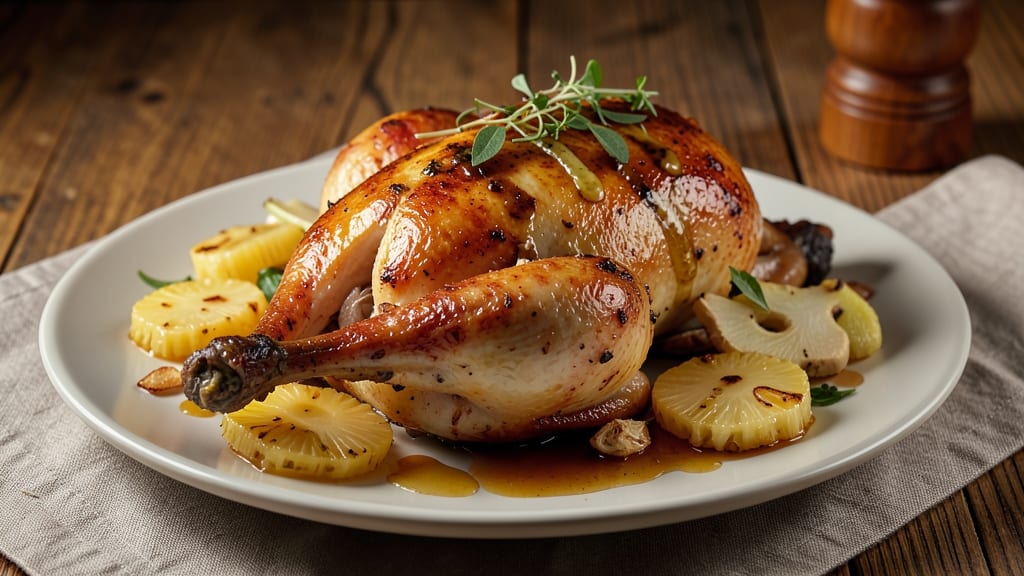
This pineapple roasted chicken recipe transforms ordinary roasted chicken into a juicy, caramelized masterpiece with a tropical twist. The secret lies in a simple yet effective glaze made from fresh pineapple juice and honey, which creates a sticky, sweet-savory crust that locks in moisture while developing a beautiful golden-brown finish.
I've been perfecting this technique for years, and it consistently delivers restaurant-quality results without requiring any special equipment.
The magic happens when the pineapple juice caramelizes during roasting, creating a glossy, flavorful bark that adds depth to every bite. Unlike traditional roasted chicken, this method ensures the meat stays moist and tender throughout, even when cooked to golden perfection.
The natural sweetness of the pineapple balances beautifully with the savory herbs and spices, making this dish equally impressive for weeknight dinners or special occasions.
What sets this recipe apart is the simplicity of the process—just marinate the chicken, roast it with the glaze, and baste occasionally for extra flavor. The result is perfectly seasoned, moist, and caramelized chicken that pairs wonderfully with rice, roasted vegetables, or a fresh salad.
The aroma alone will have everyone gathering around the table, eager for their first bite.
Ready in about 1 hour and 15 minutes, this recipe is perfect for those who want a flavorful, foolproof main course without spending hours in the kitchen.
The combination of pineapple's tangy sweetness and the rich, savory roasted chicken creates a dish that's both comforting and exciting. Let's get started!
Ingredients for pineapple roasted chicken
The tropical glaze transforms simple roasted chicken into a restaurant-worthy centerpiece.
| Ingredient | Amount | Notes |
|---|---|---|
| Whole Chicken 🍗 | 4 lb | Bone-in, skin-on preferred |
| Fresh Pineapple Juice 🍍 | 1 cup | From 1 medium pineapple |
| Honey 🍯 | ½ cup | Wildflower preferred |
| Olive Oil 🫒 | ¼ cup | Extra-virgin for richness |
| Garlic Cloves 🧄 | 6 cloves | Minced for marinade |
| Fresh Ginger 🌿 | 1 tbsp | Grated, finely chopped |
| Soy Sauce 🍶 | 2 tbsp | Low-sodium preferred |
| Brown Sugar 🍚 | ¼ cup | Light or dark variety |
| Fresh Thyme Leaves 🌿 | ½ tsp | Or 1 tbsp dried thyme |
| Salt 🧂 | 1 ½ tsp | Diamond Crystal kosher |
| Ground Black Pepper 🌶️ | ½ tsp | Freshly ground preferred |
| Fresh Lime Juice 🍋 | 1 tbsp | For brightness |
The whole chicken is non-negotiable here—bone-in, skin-on pieces develop that coveted caramelized crust while staying moist. Look for organic or free-range at Whole Foods or your local butcher for superior flavor. If using a pre-cut chicken, opt for thighs and drumsticks—they stay juicier during roasting. Fresh pineapple juice is essential for that authentic tropical tang; Trader Joe's often carries pre-juiced bottles, but nothing beats freshly blended. The honey should be wildflower for depth, while the extra-virgin olive oil adds richness that regular olive oil can't match. For ginger, peel it first—unpeeled burns easily in the marinade.
No fresh pineapple juice? Coconut water or bottled pineapple juice works in a pinch, though texture differs slightly. Substitute honey with maple syrup (1:1 ratio) if needed, but the flavor profile shifts. The soy sauce adds umami depth—low-sodium versions prevent over-salting. For a sweeter glaze, increase brown sugar to 0.375 cups; for tangier, add 1 tbsp lime zest. Fresh thyme is ideal, but dried works at one-third the amount. If you're short on time, pre-minced garlic from a jar (like Garlic & Co) saves prep work without sacrificing flavor. The lime juice can be swapped for lemon juice, though lime's brightness is preferred.
Marinate the chicken for at least 4 hours (overnight is best) to maximize flavor penetration. Store the marinade in an airtight container in the fridge for up to 3 days—the flavors meld beautifully over time. The roasted chicken reheats well; cover with foil and warm in a 350°F oven for 15 minutes. For meal prep, portion the glaze separately and brush on fresh before serving. Leftovers keep for 4 days in the fridge or 3 months frozen—though honestly, it's best enjoyed fresh. The glaze can be made ahead and stored in the fridge for 1 week or frozen for 3 months
Why You'll Love This Recipe
- One-Pan Magic: I swear by this—just toss the chicken and pineapple juice on a sheet pan, add honey and garlic, and let the oven do the work. No chopping, no flipping, no stress. That’s my kind of cooking.
- Sweet-Savory Balance: The honey and pineapple juice caramelize into a sticky glaze while the garlic roasts into rich, aromatic perfection. It’s crispy on the outside, juicy inside—like a tropical twist on Sunday dinner.
- Weeknight to Weekend: This works for lazy Tuesdays (thank you, minimal prep) or impressing guests (thank you, restaurant-worthy flavor). Serve with rice or naan, and suddenly you’ve got a full spread without the fuss.
- Budget-Friendly Feast: A whole chicken stretches for days—shred for tacos, slice for sandwiches, or reheat leftovers with zero dryness. Honestly, I make this twice a month just to avoid takeout.
Step-by-step instructions for pineapple roasted chicken
This tropical glaze transforms ordinary roasted chicken into a juicy masterpiece with caramelized edges.
Prepare the Tropical Glaze
In a medium saucepan, combine the 1 cup fresh pineapple juice, 0.5 cup honey, 0.25 cup olive oil, 2 tablespoons soy sauce, 0.25 cup brown sugar, 1 tablespoon fresh ginger, 6 cloves minced garlic cloves, 0.5 teaspoon fresh thyme leaves, 1.5 teaspoons salt, and 0.5 teaspoon ground black pepper. Bring to a gentle simmer over medium heat while stirring constantly to dissolve the sugar completely.
Simmer for 8-10 minutes until the mixture reduces by about one-third and thickens slightly. You'll notice the aroma become intensely sweet and fragrant with garlic and ginger notes. Remove from heat and stir in the 1 tablespoon fresh lime juice. Let the glaze cool to room temperature—this ensures even coating when applied later.
Marinate and Rest the Chicken
Pat the 4 lb whole chicken completely dry with paper towels, including the cavity. This step is critical for crispy skin—remove any excess moisture that could prevent browning. Season the cavity generously with 0.5 teaspoon salt and 0.25 teaspoon black pepper, then place the chicken breast-side up on a rack in a shallow baking dish.
Pour the cooled glaze evenly over the chicken, coating all sides thoroughly. Let the chicken marinate uncovered in the refrigerator for at least 4 hours, preferably overnight. This resting period allows the flavors to penetrate deeply while the skin develops a tender texture. The longer it marinates, the more pronounced the tropical flavors will be.
Roast to Golden Perfection
Preheat your oven to 375°F and position racks in the upper and lower thirds for even heat distribution. Remove the chicken from the refrigerator and let it sit at room temperature for 30 minutes before roasting—this ensures even cooking throughout. Place the chicken on the middle rack with the breast side up.
Roast for 1 hour 15 minutes, basting with accumulated juices every 20 minutes. The skin should develop a deep golden-brown color with crispy edges, while the internal temperature reaches 165°F in the thickest part of the thigh. If the skin browns too quickly, tent loosely with foil to prevent over-browning while maintaining moisture.
Rest and Serve
Transfer the chicken to a cutting board and tent loosely with foil. Let it rest for 15-20 minutes before carving—this crucial step allows the juices to redistribute throughout the meat, preventing dryness. The resting time also helps the skin maintain its crispiness while the chicken continues to cook slightly from residual heat.
Carve the chicken into serving pieces and serve immediately with the pan juices strained and reduced slightly if desired. The result should be a succulent, moist bird with a caramelized crust that locks in all the tropical flavors. The glaze should be sticky and slightly syrupy, coating each bite with a balance of sweet, tangy, and savory notes.
Pro Tips For Making Pineapple Roasted Chicken
- USE A DARK PAN FOR CRUST: I learned this the hard way—light-colored pans reflect heat, and your chicken will steam instead of caramelize. A black or stainless steel pan gets hotter faster, giving that sticky, golden glaze from the honey and pineapple juice without turning to syrup.
- STRAIN THAT PINEAPPLE JUICE: Fresh pineapple juice is amazing, but the pulp clogs your roasting pan and makes a mess. Strain it through a fine-mesh sieve first, then reduce it with honey and garlic over medium heat until it’s syrupy but not sticky. Trust me, your pan will thank you.
- DON’T SKIP THE GARLIC INFUSION: Raw garlic cloves in the pan? They’ll burn before your chicken is done. Instead, mince them finely and sauté in olive oil for 2 minutes until fragrant—just until they smell like heaven, not like charred regret. Then pour in the pineapple-honey mix.
- ROAST AT 375°F, NOT HIGHER: I used to blast this at 425°F for crispy skin, but the pineapple juice would boil off too fast, leaving the chicken dry. 375°F keeps the glaze intact while still giving you crispy skin and juicy meat—no sad, rubbery chicken here.
Storing and reheating this dish
Refrigerator Storage
Let your pineapple roasted chicken cool completely before storing—about 2 hours at room temperature. Transfer to an airtight container with the juices and store in the fridge for up to 4 days.
The flavors actually deepen overnight as the pineapple and honey meld further. I always use glass Pyrex containers because they keep the chicken moist longer than plastic. 🌿
Freezer-Friendly Tips
For longer storage, freeze the chicken (uncooked or cooked) in a single layer on a tray for 1 hour to prevent clumping, then transfer to a freezer bag. Label with the date—it stays fresh for 3 months.
When ready to cook, thaw overnight in the fridge. The glaze may thicken slightly after freezing, so brush it on fresh after reheating.
Oven Reheating
This is my preferred method because it maintains the crispy skin. Preheat oven to 350°F, place chicken on a wire rack over a baking sheet, and cover loosely with foil.
Heat for 20-25 minutes until reaching 165°F internal temperature. Brush with extra glaze if needed to restore shine. For extra moisture, add 2 tablespoons chicken broth to the baking sheet.
Microwave Shortcut
For quick meals, cover chicken pieces with a damp paper towel and microwave on 50% power for 3-4 minutes, stirring halfway. Add 1 tablespoon water or pineapple juice to prevent drying.
This method works best for leftovers but won't restore the crispy skin. Perfect for busy weeknights when you're short on time. ⏰
Glaze Refresh
If the glaze looks dry after reheating, revive it by simmering 2 tablespoons pineapple juice with 1 teaspoon honey for 2 minutes, then brush over the chicken.
This restores the sticky, caramelized texture. I keep a small jar of extra glaze in the fridge for exactly this purpose—it's a game-changer for second servings.
Serving Suggestions
Reheated chicken pairs perfectly with steamed jasmine rice or roasted sweet potatoes to complement the tropical flavors. For a complete meal, serve with a simple mango avocado salad dressed with lime. The contrast of cool, fresh greens cuts through the richness beautifully. Store sides separately to maintain texture. 🍽️
Nutrition facts
Frequently asked questions
Can I use canned pineapple juice instead of fresh?
Yes, but fresh pineapple juice delivers the best flavor. Canned juice works in a pinch—just choose a brand without added sugar. For extra depth, simmer the canned juice with a pinch of cinnamon or a splash of lime juice to mimic fresh pineapple's brightness.
How do I prevent the chicken skin from burning before it's cooked through?
Tent the chicken loosely with foil after 45 minutes of roasting. This traps heat while preventing over-browning. For even browning, rotate the pan halfway through cooking. If the skin starts browning too quickly, reduce oven temp to 350°F for the last 15 minutes.
Can I make this recipe with chicken thighs instead of a whole chicken?
Use 8 bone-in, skin-on thighs (about 4 lbs total). Reduce roasting time to 45-50 minutes at 375°F, basting every 15 minutes. The thighs stay juicier and develop a deeper flavor from the glaze. For extra crispiness, broil for 2-3 minutes at the end.
What's the best way to use leftover glaze?
Store extra glaze in an airtight container in the fridge for up to 1 week. Warm it gently before using—it's perfect for brushing on grilled chicken, drizzling over rice, or glazing roasted vegetables. For a quick sauce, reduce it with 1 tablespoon soy sauce and serve with noodles.
Why does my chicken turn out dry even with the glaze?
Overcooking is the most common cause. Use a meat thermometer and remove at 160°F—it'll rise to 165°F while resting. Also, avoid cutting into the chicken immediately; let it rest 15-20 minutes to redistribute juices. If using a slow cooker, reduce time to 3 hours on low with foil covering.