
Main Courses
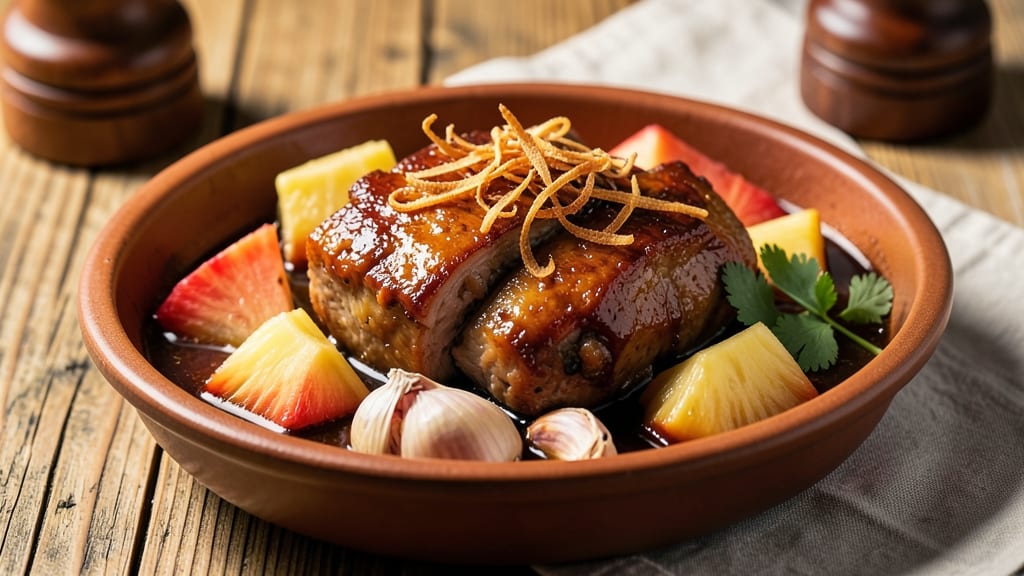
This pork adobo with pineapple recipe brings Panlasang Pinoy flavors to your table with a perfect balance of tangy, savory, and sweet notes. 🌟 The secret lies in marinating pork in soy sauce and vinegar before slow-cooking it with pineapple chunks, creating a dish that’s both comforting and vibrant.
I first discovered this version while traveling in the Philippines, where the combination of adobo’s bold flavors with pineapple’s natural sweetness became a local favorite.
The beauty of this recipe is in its simplicity—just a few key ingredients transform into a restaurant-worthy meal. The pork becomes tender and infused with the deep flavors of soy sauce and vinegar, while the pineapple adds a bright, juicy contrast that cuts through the richness.
This dish is perfect for family dinners or gatherings, where the aroma alone will have everyone gathering around the table.
By the time you’re done, you’ll have a dish that’s golden-brown, sticky, and packed with flavor—the perfect harmony of crispy edges and tender meat. The pineapple not only adds sweetness but also keeps the adobo from becoming too heavy, making every bite refreshing.
Serve it with steamed rice to soak up every delicious drop of sauce.
This recipe is foolproof and delivers restaurant-quality results with minimal effort. Whether you're a fan of Filipino cuisine or just love bold, flavorful dishes, this pork adobo with pineapple will quickly become a staple in your cooking repertoire. Let’s get started!
Ingredients for pork adobo with pineapple recipe panlasang pinoy
Panlasang Pinoy flavors start with these vibrant, tangy-sweet ingredients that transform simple cuts into restaurant-worthy magic.
| Ingredient | Amount | Notes |
|---|---|---|
| Pork Shoulder 🥩 | 2 lb | Cut into 2-inch chunks, boneless |
| Soy Sauce 🍶 | ½ cup | High-quality, preferably Japanese |
| White Vinegar 💧 | ½ cup | White or cane vinegar preferred |
| Fresh Pineapple 🍍 | 1 cup | Chunks, fresh or canned in juice |
| Brown Sugar 🍚 | ¼ cup | Packed, light or dark |
| Garlic Cloves 🧄 | 6 cloves | Minced, fresh for best flavor |
| Fresh Ginger 🌿 | 2 tbsp | Grated, peeled, fresh preferred |
| Black Peppercorns 🌶️ | 1 tsp | Crushed, freshly ground |
| Bay Leaves 🍃 | 2 whole | Dried, for deep aroma |
| Olive Oil 🫒 | 2 tbsp | Extra-virgin, for searing |
| Salt 🧂 | 1 tsp | Kosher or sea salt |
| Green Onions 🧅 | 3 whole | Sliced, for garnish |
| All-Purpose Flour 🌾 | 2 tbsp | For thickening sauce |
The pork shoulder is your star—look for well-marbled cuts at Filipino markets or the meat section of Asian grocery stores. If you can't find it, substitute pork butt (just add 15 minutes to cooking time). The soy sauce matters here—use Japanese-style like Kikkoman for that deep umami punch. White vinegar should smell sharp and clean; if it's cloudy or smells funky, grab a new bottle. Fresh pineapple is ideal, but canned in juice (not syrup) works in a pinch—just drain well. For the ginger, buy fresh if possible, but if you're using powdered, cut the amount in half.
No soy sauce? Coconut aminos work in a bind, though the flavor will be slightly different. Vinegar substitute? Lemon juice at half the amount, but it won't have the same tangy depth. Pineapple chunks too expensive? Mango chunks bring a similar sweetness, though the texture changes. The brown sugar can be swapped for white sugar, but it won't caramelize as beautifully. For the garlic and ginger, if you're short on fresh, use powdered but reduce to half the amount. The black peppercorns? Crush them well—whole peppercorns won't release their flavor. Bay leaves are non-negotiable here; they add that earthy depth that makes this dish sing. Store-bought adobo sauce? Skip it—homemade is where the magic happens.
This dish tastes even better the next day as the flavors meld. Portion into airtight containers and store for up to 5 days in the fridge. For longer storage, freeze for 3 months—just thaw overnight in the fridge. The sauce thickens as it cools, so add a splash of water when reheating. Garnish with green onions right before serving to keep them crisp. Leftovers reheat beautifully—stovetop on medium-low with a splash of water to loosen the sauce. Serve with steamed jasmine rice to soak up every last drop of that sticky, golden adobo goodness.
Why You'll Love This Recipe
- One-Pot Magic: I swear by this—just dump everything in one pot (pork, soy sauce, vinegar, pineapple chunks) and let it simmer. The vinegar and sugar do all the work while you sip your coffee.
- Sweet-Savory Balance: That tangy-sweet combo? Chef’s kiss. The pineapple’s natural acidity cuts through the richness of the pork, while the brown sugar caramelizes into a glossy, sticky sauce. My kids fight over the last bite.
- Leftover Goldmine: This dish tastes better the next day—honestly. The flavors meld into something deeper, and reheating it is zero effort. I pack it for lunches or freeze portions for lazy nights.
- Budget Crowd-Pleaser: Pork shoulder is affordable, and the ingredients stretch far. Serve it over rice, in tacos, or even cold in sandwiches. It’s my go-to for potlucks or when I’m feeding a houseful without breaking the bank.
Step-by-step instructions for pork adobo with pineapple
Here's how to transform simple ingredients into a restaurant-quality dish that balances sweet, tangy, and savory flavors perfectly.
🔥 Step 1: Sear the Pork Shoulder for Maximum Flavor
Heat the 2 tablespoons olive oil in a large Dutch oven over medium-high heat until shimmering. Add the 2 lb pork shoulder cut into 2-inch chunks and sear for 3-4 minutes per side until golden brown. This step creates a flavorful crust that won't dissolve during cooking.
Here's the thing—don't crowd the pan. Work in batches if needed to maintain even browning. You want those pork pieces to develop a deep caramelization that'll infuse the sauce with rich, meaty depth. Once all pieces are browned, transfer them to a plate and set aside.
🍳 Step 2: Build the Tangy-Sweet Sauce Base
In the same Dutch oven, reduce heat to medium and add the 6 cloves minced garlic cloves and 2 tablespoons grated fresh ginger. Cook for 30 seconds until fragrant—you should smell that aromatic punch. Add the 2 whole bay leaves and 1 teaspoon crushed black peppercorns, stirring for another 10 seconds.
Pour in the 0.5 cup soy sauce and 0.5 cup white vinegar, scraping up all those browned bits from the bottom. This deglazing captures all the meaty flavor that would otherwise disappear. Bring to a gentle simmer, then add the 0.25 cup packed brown sugar and 1 teaspoon salt. Stir until the sugar dissolves completely—this creates the perfect balance of sweet and tangy.
🥘 Step 3: Simmer the Pork Until Fork-Tender
Return the pork to the Dutch oven and add 1 cup fresh pineapple chunks. Pour in enough water to just cover the pork (about 2 cups) and bring to a boil. Once boiling, reduce heat to low and cover partially. Here's where patience pays off—simmer for 1 hour 30 minutes to 2 hours until the pork is fork-tender.
Real talk: The sauce should reduce significantly, coating the pork in a glossy, sticky glaze. If it looks too thin after 1 hour, uncover and simmer for another 15 minutes to thicken. You'll know it's ready when the pork easily pulls apart with a fork and the sauce has that perfect jammy consistency.
⏰ Step 4: Thicken and Finish the Sauce
Remove the pork from the sauce and set aside. In a small bowl, whisk together the 2 tablespoons all-purpose flour with 2 tablespoons cold water to make a slurry. Slowly pour this into the sauce while stirring constantly over medium heat for 3-4 minutes until thickened.
Return the pork to the sauce and let it absorb those flavors for 2 minutes. Taste and adjust seasoning—you might need a touch more soy sauce for saltiness or a splash of vinegar for tang. The sauce should coat the back of a spoon with a velvety texture. Here's the moment that matters: Garnish with sliced green onions right before serving to add freshness and color.
🍽️ Step 5: Serve with Crispy Rice for the Ultimate Experience
Serve the pork adobo hot over steamed white rice, spooning the rich sauce generously over each portion. For extra crunch, I like to serve it with garlic fried rice or crispy rice cakes on the side. The contrast between the tender pork, sweet-tangy sauce, and crunchy rice creates that perfect balance of textures.
Don't skip the pineapple—its natural acidity cuts through the richness of the pork and adds a refreshing sweetness. If you have leftovers (and you will), they actually taste better the next day as the flavors meld even more. Store in an airtight container in the fridge for up to 5 days or freeze for 3 months.
Pro Tips For Making Pork Adobo With Pineapple Recipe Panlasang Pinoy
- Brown Sugar First: Toss the pork shoulder in brown sugar before adding vinegar—this caramelizes the edges while the meat cooks, giving you those sticky, glossy bits that make the dish sing. I used to add it later, and the sugar just dissolved into the sauce instead of doing its magic on the meat.
- Cut Pineapple Small: Dice that pineapple into ½-inch cubes, not chunks—smaller pieces soften faster and release their juice evenly, balancing the tangy adobo sauce without turning it watery. Big chunks stay undercooked or turn mushy, and nobody wants that.
- Simmer Slow and Low: After the initial sear, drop the heat to a gentle simmer (barely bubbling) once the vinegar starts working—high heat here makes the pork tough and the sauce bitter. This isn’t a race; let it melt in, and the pork will fall apart like it’s supposed to.
- Deglaze Aggressively: After browning the pork, don’t just splash in the vinegar—scrape up those stuck-on bits with a wooden spoon or spatula. That’s where flavor hides, and skipping it means a duller sauce. (Yes, it’s messy, but it’s worth it.)
Serving suggestions for this dish
Steamed Jasmine Rice
This dish practically begs for steamed jasmine rice—its delicate floral aroma and slightly sticky texture soak up the rich, tangy adobo sauce perfectly. I like to cook 2 cups uncooked rice with 2.5 cups water in a rice cooker, letting it steam for 20 minutes until fluffy.
For extra flair, sprinkle ½ teaspoon toasted sesame seeds on top before serving. The contrast between the fragrant rice and bold pork adobo makes every bite unforgettable. 🍚
Crispy Rice Cakes
Add a satisfying crunch with Filipino rice cakes (kakanin), like bibingka or puto, available at Asian markets or frozen sections. Toast them in a dry skillet over medium heat for 2-3 minutes per side until golden.
Serve alongside the adobo for a textural contrast that balances the dish's richness. For a shortcut, use store-bought rice crackers like Lotus Foods varieties. These add a delightful crunch without overpowering the main dish.
Garlic Fried Rice
Transform leftover rice into garlic fried rice by sautéing 3 cups day-old rice in 2 tablespoons olive oil with 4 minced garlic cloves until fragrant. Add ½ cup diced bell peppers and ¼ cup chopped green onions, then stir-fry for 3-4 minutes.
The slight sweetness of the peppers complements the adobo's tangy-sweet profile beautifully. This side turns leftovers into a quick, flavorful meal the next day.
Fresh Pineapple Slices
Serve extra pineapple slices on the side to let guests add sweetness as desired. I like to grill them briefly for 1-2 minutes per side to caramelize the edges slightly. This adds another layer of texture and lets diners customize their portion.
For a tropical touch, drizzle with a little honey-lime dressing (mix 1 tbsp honey with 1 tbsp lime juice). The fresh fruit cuts through the dish's richness beautifully.
Pickled Vegetables
Brighten the plate with quick-pickled vegetables like cucumbers or carrots. Thinly slice 1 cup cucumber and ½ cup carrot, then toss with ¼ cup rice vinegar, 1 tsp sugar, and ½ tsp salt.
Let sit for 15 minutes before serving. The crisp, tangy pickles provide a refreshing contrast to the rich pork and sweet pineapple. This side adds color and a palate-cleansing crunch that keeps the meal balanced.
Warm Tortillas
For a fusion twist, serve with warm corn tortillas to make adobo tacos. Lightly toast them on a dry skillet for 30 seconds** per side, then fill with pork, pineapple, and a drizzle of sauce.
The soft tortillas soak up the flavors while adding a fun, interactive element. This works especially well for casual gatherings or when you want to turn the dish into a handheld meal. 🌮
Nutrition facts
Frequently asked questions
Why does this recipe use both soy sauce and vinegar?
The combination creates the classic adobo flavor profile—soy sauce provides deep umami and saltiness, while vinegar adds bright acidity that tenderizes the pork. Together, they balance the sweetness of pineapple and brown sugar, creating that signature tangy-sweet taste Panlasang Pinoy dishes are famous for.
Can I substitute pineapple with another fruit?
Yes! For a similar sweet-tangy contrast, try mango chunks or peaches. Avoid overly watery fruits like peaches—drain well if using canned. The fruit should complement the sauce without diluting it. For a different flavor profile, bell peppers work too, though they add a vegetal note instead of sweetness.
How do I prevent the sauce from being too thin?
Simmer uncovered for the last 15-20 minutes to reduce the liquid naturally. If it's still thin, whisk 1 tablespoon cornstarch with 1 tablespoon water and stir into the sauce until thickened. Never rush this step—thick sauce is key for that restaurant-style texture.
Is this dish safe to eat if the pork isn't fully tender?
No—always cook pork until it reaches 145°F internally (measured in the thickest piece) and rests for 3 minutes. Undercooked pork can be tough and unsafe. If your pork isn't tender after 2 hours, extend cooking time by 30 minutes or switch to a more tender cut like pork tenderloin (adjust cooking time to 45-60 minutes).
Can I make this in a slow cooker?
Sear the pork first, then transfer everything to a slow cooker and cook on low for 6-8 hours or high for 3-4 hours. Add ½ cup water if the sauce gets too thick. The slow cooker method enhances tenderness but may require more sauce reduction at the end. Perfect for busy weeknights!