
Main Courses
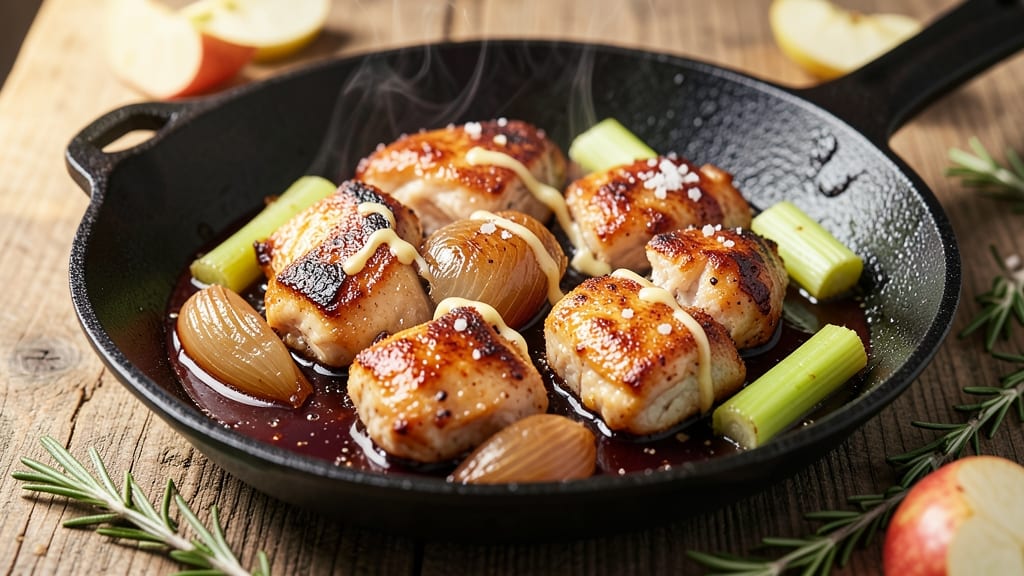
This skillet apple cider chicken recipe transforms a simple weeknight dinner into a cozy, aromatic masterpiece—where tender chicken simmers in a caramelized apple cider sauce, thickened with just a touch of cornstarch for that perfect velvety finish.
I developed this dish during a crisp fall evening when I wanted something hearty enough to stand up to Georgia’s chilly air, yet simple enough to pull together in under an hour.
The secret lies in balancing the natural sweetness of apple cider with warm spices and a crisp celery crunch that cuts through the richness.
The technique is straightforward but delivers restaurant-quality results: sear the chicken first for depth of flavor, then deglaze the pan with apple cider to create a sauce that reduces into a glossy, spiced glaze.
I add a splash of bourbon (optional but recommended) for an extra layer of warmth, while fresh thyme and bay leaves infuse the dish with herbal complexity. The celery adds a satisfying crunch that keeps every bite interesting.
By the time you serve this dish, your kitchen will smell like autumn—warm spices mingling with caramelized cider—and the chicken will be fork-tender, swimming in a sauce that’s rich yet balanced.
It’s the kind of meal that feels special without requiring hours of prep, perfect for family dinners or impressing guests. The sauce thickens beautifully, clinging to each piece of chicken while leaving just enough liquid to spoon over the top.
Pair it with crusty bread to soak up the sauce or serve alongside roasted sweet potatoes for a complete fall-inspired meal. The recipe scales easily too, so you can double it for leftovers that reheat just as well as the first serving. Ready to make dinner feel like a celebration?
Ingredients for skillet apple cider chicken
Pantry staples plus a few fall favorites—this skillet chicken is all about cozy flavors.
| Ingredient | Amount | Notes |
|---|---|---|
| Boneless, Skinless Chicken Thighs 🍗 | 1 ½ lb | Cut into 1-inch pieces |
| Unsalted Butter 🧈 | 3 tbsp | For searing chicken |
| Yellow Onion 🧅 | 1 whole | Diced, medium size |
| Celery Stalks 🥬 | 2 whole | Diced, fresh preferred |
| Apple Cider 🍎 | 1 ½ cups | Unfiltered for best flavor |
| Bourbon 🥃 | ¼ cup | Optional, for depth |
| Cornstarch 🌾 | 1 tbsp | For thickening sauce |
| Fresh Thyme 🌿 | 1 tbsp | Leaves only, chopped |
| Bay Leaves 🍃 | 2 whole | Remove before serving |
| Ground Black Pepper 🌶️ | ½ tsp | Freshly cracked |
| Kosher Salt 🧂 | 1 ½ tsp | Adjust to taste |
| Cinnamon Stick 🌰 | 1 whole | For aroma, optional |
| All-Purpose Flour 🌾 | 1 tbsp | For sauce thickening |
The chicken thighs are key here—they stay juicy while soaking up all that spiced cider. Grab the bone-in, skin-on kind if you can find it (like Butcher Shop or Whole Foods often carry them), but boneless works fine. The apple cider should be unfiltered—Mott's or Woodchuck are solid choices, or grab whatever's local. Fresh thyme makes a difference, but dried works at one-third the amount if you're in a pinch. Celery adds that crisp crunch, so don't skip it—Trader Joe's sells pre-diced celery in bags if you hate chopping.
No bourbon? Substitute apple brandy or even a splash of vanilla extract for warmth. The cornstarch is non-negotiable for that velvety finish, but if you're gluten-free, swap for cornstarch-free flour blend. For the spices, Penzeys has great whole spices if you want to toast them first (cinnamon especially benefits from this). The flour helps thicken the sauce, but if you're making this ahead, you can always reduce the cider more for a thicker consistency. Want extra richness? Add a pat of butter at the end—Plugrá or European-style melts best.
This reheats beautifully—just add a splash of water or cider to loosen the sauce. Keeps 3-4 days in the fridge, freezes for 3 months. I always double the recipe because leftovers taste even better the next day. Store the chicken and sauce separately if you want to reheat them separately—sauce reheats faster. The celery can be added fresh when serving if you want that crisp texture back.
Why You'll Love This Recipe
- One-Pan Magic: The chicken, onions, and celery all cook together—no extra pots, no extra cleanup. Just dump, sear, deglaze with that golden apple cider, and let the skillet do the work. (Yes, even on a Tuesday night.)
- Sweet-Savory Balance: That apple cider isn’t just for drinking—it caramelizes into a glossy, tangy-sweet sauce that clings to the chicken like a hug. The butter keeps it rich, the onions add depth, and suddenly, comfort food feels fancy.
- Leftovers That Don’t Suck: This dish tastes even better the next day, especially reheated with a splash of apple cider. Pack it for lunch, freeze portions for lazy mornings, or serve it cold in wraps when you’re too tired to cook.
- Budget-Friendly Feast: Chicken thighs stretch further than breasts, and apple cider adds luxury for pennies. Onion and celery are pantry staples, and butter? Well, a little goes a long way. Feeds four for under $15, and everyone leaves happy.
Step-by-step instructions for skillet apple cider chicken
Here's how to make this cozy, aromatic chicken dish with a rich pan sauce that's perfect for chilly evenings.
Sear the Chicken for Maximum Flavor
Cut the 1.5 lb boneless, skinless chicken thighs into 1-inch pieces and pat them dry with paper towels. Heat 2 tablespoons of the 3 tbsp unsalted butter in a large skillet over medium-high heat until it foams. Working in batches if needed, add the chicken pieces and cook for 4-5 minutes per side until they're golden brown and cooked through to 165°F internally.
Don't overcrowd the pan—this ensures the chicken gets properly browned. Once cooked, remove the chicken and set it aside on a plate. You'll want to keep it warm while you build the sauce, so I like to tent it loosely with aluminum foil. The remaining 1 tablespoon butter in the pan will form the base for your sauce, so don't wipe it out.
Sauté Aromatics and Deglaze the Pan
In the same skillet, reduce heat to medium and add the diced yellow onion and diced celery stalks. Cook for 5-6 minutes until the onions soften and the celery becomes tender. Stir in the 1 tbsp chopped fresh thyme, 2 whole bay leaves, 1 whole cinnamon stick, 1.5 tsp kosher salt, and 0.5 tsp ground black pepper, cooking for another 1 minute to toast the spices.
Here's where the magic happens: Pour in the 1.5 cups apple cider and the 0.25 cup bourbon (if using). Scrape up any browned bits from the bottom of the pan with a wooden spoon—this releases all that delicious flavor. Let the liquid simmer for 3-4 minutes until it reduces by about half and thickens slightly. You'll smell the warm, spiced apple cider aroma filling your kitchen—that's your cue it's ready for the next step.
Thicken the Sauce and Finish Cooking
In a small bowl, whisk together the 1 tbsp all-purpose flour and 1 tbsp cornstarch. Slowly sprinkle this mixture into the simmering pan while stirring constantly. Cook for 2-3 minutes until the sauce thickens to a glossy, velvety consistency that coats the back of a spoon. If it thickens too quickly, add 1-2 tablespoons of water to loosen it.
Return the chicken and any accumulated juices to the skillet. Stir gently to coat the chicken pieces evenly in the sauce. Let everything simmer together for 2-3 minutes just to heat through and allow the flavors to meld. Taste and adjust seasoning—you might want to add a pinch more salt or a splash of apple cider if needed. The sauce should be rich, slightly sweet, and perfectly balanced with warm spice notes.
Serve Immediately with Celery Crunch
Remove the 2 whole bay leaves and 1 whole cinnamon stick from the skillet before serving. Transfer the chicken and sauce to a serving platter, making sure each piece gets its fair share of that glorious pan sauce. The celery pieces in the sauce will add a pleasant crunch that contrasts beautifully with the tender chicken.
This dish tastes best served immediately while the sauce is warm and the celery still has a bit of bite. I like to pair it with crusty bread to soak up every last drop of that spiced apple cider sauce. The combination of tender chicken, aromatic spices, and the slight tang of apple cider makes this a weeknight favorite that feels like a cozy autumn meal.
Pro Tips For Making Skillet Apple Cider Chicken
- SEAR THE CHICKEN FIRST: I used to toss the thighs straight into the cider, but searing them dry in butter for 4-5 minutes per side—until deep golden—builds flavor that simmering alone can’t match. The cider will still caramelize beautifully, but you’ll get that restaurant-quality crust.
- CHOP ONIONS SMALLER THAN YOU THINK: I’ve ruined this dish by leaving onion chunks too big—they turn mushy instead of sweet and tender. Dice them into ¼-inch pieces so they melt into the sauce without fighting for texture. Same goes for celery: thin sticks cook faster and disappear into the cider.
- DON’T BOIL THE CIDER: After adding the cider, let it bubble gently for 5 minutes, then reduce to a simmer. I learned this the hard way—boiling it off too fast turns the sauce bitter and syrupy. A steady simmer keeps the apple notes bright and the texture velvety.
- USE THE SKIMMED BUTTER: When the cider reduces, there’ll be a layer of golden butter fat floating on top. Don’t pour it out—spoon it back into the pan at the end. It adds richness without needing extra butter, and it’s the easiest way to make this dish feel luxurious without effort.
Pro cooking tips for this dish
Perfect Skillet Selection
This recipe shines in a 12-inch cast iron skillet—my trusty Lodge Pre-Seasoned handles the heat beautifully and retains flavor. Cast iron distributes heat evenly, preventing hot spots that can burn your chicken or scorch the sauce.
If you don’t own cast iron, a heavy stainless steel skillet (like All-Clad) works too, but preheat it for 5 minutes before adding butter to prevent sticking. Avoid nonstick—it won’t brown the chicken properly, and those flavors are essential for depth. 🔥
Searing Secrets
For maximum flavor, pat the chicken pieces completely dry with paper towels before searing—this ensures a proper sear instead of steaming. Work in batches if needed, and don’t overcrowd the pan. I use medium-high heat and let the butter foam before adding chicken.
If your pan isn’t hot enough, the butter will turn into soup instead of creating that golden crust. A meat thermometer is worth the investment—aim for 165°F internal temperature to guarantee safe, juicy chicken. 🌡️
Deglazing Like a Pro
The apple cider and bourbon combo is where the magic happens, but timing is key. After removing the chicken, reduce heat to medium before adding liquids—this prevents boiling, which can make the sauce watery.
Scrape up every browned bit from the pan with a wooden spoon (metal can scratch your skillet). Let the liquid reduce by half before thickening—this concentrates the flavors. If you’re nervous about alcohol burning off, simmer uncovered for 2 minutes first to let the bourbon cook down safely. 🥃
Sauce Thickening Hacks
The cornstarch and flour combo is foolproof, but here’s how to avoid lumps: Whisk them together in a small bowl with 1 tablespoon cold water first, then slowly sprinkle into the pan while stirring constantly. If your sauce thickens too fast, add 1 tablespoon water to loosen it.
For extra richness, stir in the remaining 1 tablespoon butter at the end—this adds a silky finish. Pro move: Taste the sauce before adding chicken back in. It should be slightly under-thickened so it coats the chicken perfectly when combined. 💫
Celery Crunch Preservation
Celery adds texture, but it softens quickly. To keep it crisp, add the diced celery to the pan with the onions and cook it just until tender—5-6 minutes max. If serving later, reserve some celery separately and add it fresh to each plate.
For extra crunch, toss reserved celery with 1 teaspoon olive oil and a pinch of salt before serving. This trick works for any dish where you want that fresh, crisp contrast. 🥬
Bourbon Substitutes
No bourbon? No problem. Use apple brandy (same proof, similar flavor) or vanilla extract (½ teaspoon) for warmth. For a non-alcoholic option, swap with ½ cup apple juice—it won’t add depth, but it keeps the dish balanced.
If you’re using vanilla, add it after the sauce thickens to avoid overpowering the spices. The key is 1 tablespoon of liquid total, so adjust accordingly. 🍎
Nutrition facts
Frequently asked questions
Can I use chicken breasts instead of thighs?
Chicken breasts will work, but they cook faster and can dry out more easily. For best results, cut them into 1-inch pieces and cook them for just 3-4 minutes per side until they reach 165°F internally. Keep an eye on them—they're done when they're no longer pink in the center. If you prefer breasts, consider adding a splash of apple cider to the pan while they rest to keep them moist.
How can I make this dish ahead of time?
This recipe actually tastes even better the next day! Cook the chicken and sauce as directed, then let it cool completely. Store the chicken and sauce separately in airtight containers in the refrigerator for up to 3-4 days. To reheat, warm the sauce in a saucepan over medium heat until it's bubbly, then add the chicken and heat through for 2-3 minutes. You can also freeze it for up to 3 months—just thaw overnight in the fridge before reheating.
What if I don't have bourbon? Can I still make this?
The bourbon adds depth, but it's not essential. For a similar flavor, use apple brandy or ½ teaspoon vanilla extract. If you're avoiding alcohol completely, substitute with ½ cup apple juice—it won't add the same complexity, but it keeps the dish balanced. Just remember, the bourbon helps concentrate the flavors as it cooks down, so your sauce might be slightly thinner without it.
Can I make this recipe in a slow cooker?
While this dish is designed for the stovetop, you can adapt it to a slow cooker. Sear the chicken first in a skillet, then transfer it to the slow cooker with the onions, celery, and spices. Add the apple cider and bourbon (if using), then cook on low for 3-4 hours or high for 1.5-2 hours. Before serving, remove the chicken and thicken the sauce on the stovetop with cornstarch and flour as directed. The slow cooker method will give you more tender chicken but a thinner sauce.
Why does my sauce turn out too thin?
A thin sauce usually happens when the cornstarch and flour aren't cooked long enough or if the sauce is reduced too much before thickening.