
Sauces & Condiments
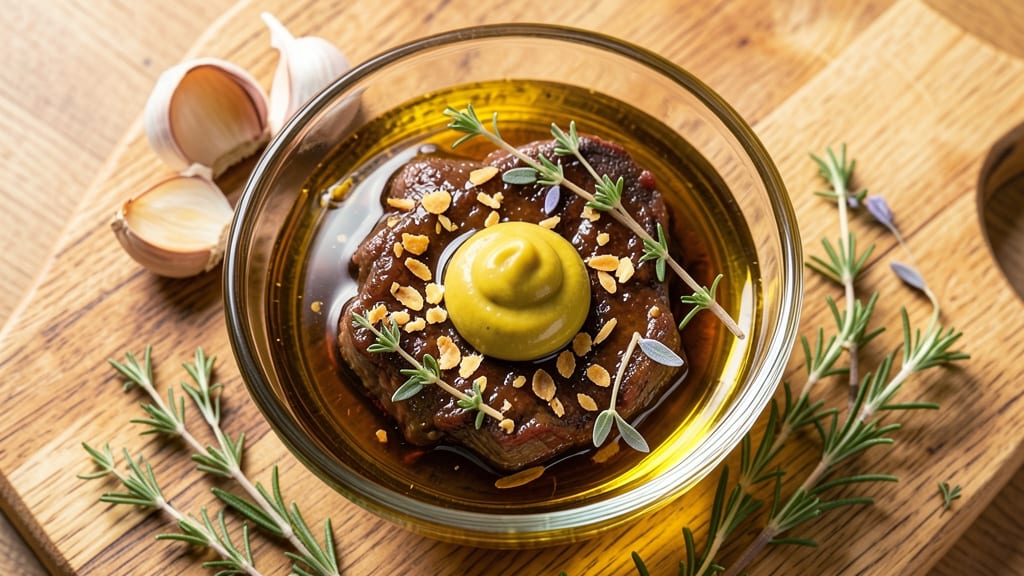
This apple cider vinegar steak marinade transforms tough cuts into tender, flavor-packed perfection with just 30 minutes of prep. The acidity tenderizes while the aromatic blend of garlic, rosemary, and Dijon creates layers of umami depth that penetrate every bite.
I developed this marinade after years of experimenting with acidic marinades that promised greatness but often fell short—this one delivers every time.
The secret lies in balancing acidity with fat-soluble flavors: apple cider vinegar breaks down proteins for tenderness, while olive oil carries the savory elements deep into the meat. Fresh herbs like rosemary and thyme add aromatic complexity, and a touch of brown sugar caramelizes during marinating for subtle depth.
This isn't just another vinegar-based marinade—it's a foolproof system that works with ribeye, flank steak, or even chicken thighs.
What you'll achieve is steak with an irresistible crust and fork-tender interior, where every bite carries bright, herby notes from the marinade. The vinegar's tang cuts through richness, creating a perfect balance that restaurant-quality steaks achieve.
Best of all, the marinade keeps for up to 5 days in the fridge, making it ideal for meal prep.
Use this marinade as a base and customize with your favorite additions—smoked paprika for heat, soy sauce for umami, or a splash of Worcestershire for complexity. The possibilities are endless, but the foundation remains the same: tender, flavorful steak with minimal effort. Let's get started with the ingredients.
Ingredients for apple cider vinegar steak marinade
Bright acidity meets rich umami in this marinade that tenderizes while infusing steak with aromatic depth.
| Ingredient | Amount | Notes |
|---|---|---|
| Apple Cider Vinegar 🍏 | ½ cup | Raw, unfiltered preferred |
| Extra-Virgin Olive Oil 🫒 | ½ cup | High-quality, fruity variety |
| Dijon Mustard 🍯 | 2 tbsp | Whole-grain preferred |
| Fresh Garlic Cloves 🧄 | 6 cloves | Minced or finely chopped |
| Fresh Rosemary 🌿 | ¼ cup | Finely chopped, stems removed |
| Fresh Thyme Leaves 🌿 | ¼ cup | Finely chopped, stems removed |
| Granulated Brown Sugar 🍚 | 2 tbsp | Light or dark variety |
| Kosher Salt 🧂 | 1 ½ tsp | Diamond Crystal preferred |
| Ground Black Pepper 🌶️ | 1 tsp | Freshly ground preferred |
| Worcestershire Sauce 🍶 | 1 tbsp | Vegan version if needed |
The apple cider vinegar is non-negotiable here—Bragg or Texas Pete are my go-tos, but any raw, unfiltered variety works. Trader Joe's and Whole Foods carry great options, or check the apple cider section at your local grocery store. Fresh herbs make all the difference: rosemary should smell piney and vibrant, thyme should be fragrant and bright green. If you're using dried herbs, cut the amount to one-third—dried thyme and rosemary lose potency fast. The olive oil needs to be extra-virgin; anything less will taste flat against the vinegar's brightness. California Olive Ranch or Colavita are reliable brands that won't break the bank.
No Dijon mustard? Whole-grain mustard works best, but yellow mustard in a pinch will do. Running short on Worcestershire? Soy sauce at half the amount adds umami, though it lacks the depth. The brown sugar caramelizes during marinating, so don't skip it—it balances the acidity beautifully. For a smokier profile, add 1 tsp smoked paprika (adjust to taste). If you're prepping ahead, store the marinade without the Worcestershire sauce—it can darken the vinegar over time. The garlic is where flavor really builds; roast the cloves first for 10 minutes at 400°F if you want to take it to the next level.
This marinade keeps for 5 days in the fridge, sealed tightly in a glass jar. The flavors actually improve after 24 hours as everything melds together. For longer storage, freeze in ice cube trays—thaw overnight in the fridge before using. When using, let the steak sit in the marinade for 30 minutes to 4 hours max. Longer marinating times can make the meat mushy, especially with vinegar. Always marinate in the fridge, never at room temperature. If you're using this on chicken, reduce marinating time to 15-20 minutes—chicken cooks faster and can get rubbery.
Why You'll Love This Recipe
- Fridge-to-Table Magic: I swear by this marinade because it uses stuff I always have—no special shopping required. The apple cider vinegar does the heavy lifting while I’m chopping veggies, and the rosemary adds that earthy punch without needing a spice rack.
- Tangy Crispy Perfection: That vinegar cut? It tenderizes the steak and creates this addictive crust—like a cross between a charred sear and a caramelized bite. The Dijon mustard ties it all together with a subtle kick that lingers.
- Weeknight or Weekend Star: Toss it on ribeyes for date night or slice it thin for a quick stir-fry. Honestly, I’ve even used the leftover marinade to baste chicken—works every time. No rules, just results.
- Leftovers That Don’t Suck: Marinade doubles easily, and the extra? Freeze it in ice cube trays for future steak emergencies. (Yes, even on a Tuesday night.) Plus, the olive oil keeps it rich, so you’re not left with dry, sad meat.
Step-by-step instructions for apple cider vinegar steak marinade
This marinade transforms tough cuts into tender, flavorful steaks with perfect acid balance.
Whisk Together the Base Ingredients
In a medium bowl, combine the 0.5 cup apple cider vinegar and 0.5 cup extra-virgin olive oil. I like to use a whisk for this step—it creates a smooth emulsion that coats the steak evenly. The vinegar will initially separate from the oil, but keep whisking until you see a uniform, slightly cloudy liquid. This is normal and actually helps distribute flavor more effectively.
Add the 2 tablespoons Dijon mustard and 1 tablespoon Worcestershire sauce to the bowl. The mustard adds depth while the Worcestershire brings that unmistakable umami punch. Stir these in thoroughly until fully incorporated. Here's the thing—don't rush this step. The marinade needs to be completely homogeneous so every bite of your steak gets the same flavor experience.
Incorporate the Sweet and Savory Elements
Add the 2 tablespoons granulated brown sugar to the bowl and whisk until dissolved. The sugar will help caramelize slightly during the marinating process, creating a subtle sweetness that balances the acidity. Next, sprinkle in the 1.5 teaspoons kosher salt and 1 teaspoon ground black pepper. I always use freshly ground pepper because pre-ground pepper loses its potency over time.
Give everything another thorough whisk to ensure the sugar and salt are completely distributed. You should now have a marinade that looks like a rich, golden dressing. If you taste it now, you'll notice the vinegar's tang, the mustard's bite, and the Worcestershire's deep savory notes—this is your flavor foundation. Let the mixture sit for 5 minutes while you prepare the next ingredients. This brief rest allows the flavors to meld slightly before adding the fresh herbs.
Add the Fresh Herbs and Garlic
Finely chop the 6 cloves fresh garlic and add them to the bowl. For the herbs, remove stems from the 0.25 cup fresh rosemary and 0.25 cup fresh thyme leaves, then chop them finely. The rosemary adds a piney brightness while the thyme contributes earthy warmth—together they create a herbaceous backbone for the marinade. Stir these in gently with a wooden spoon to avoid creating too many bubbles.
Here's where it gets good: give the marinade one final taste. You should notice the garlic's sharpness cutting through the sweetness, the herbs adding complexity, and the vinegar's acidity creating a perfect balance. The marinade should be vibrant and aromatic. If you've used high-quality olive oil, you'll also detect its fruity notes peeking through. This is your quality control moment—if something feels off, adjust the salt or sugar slightly before proceeding.
Marinate the Steak Properly
Place your steak in a resealable plastic bag or shallow dish. Pour the marinade over the steak, ensuring it's completely coated on all sides. For best results, I recommend marinating for 30 minutes to 2 hours in the refrigerator. The acid in the vinegar works quickly but needs time to tenderize without overcooking the meat. If you marinate longer than 2 hours, the vinegar can start to "cook" the steak's surface, making it mushy.
When ready to cook, remove the steak from the marinade and let it sit at room temperature for 15-20 minutes before searing. This resting period ensures even cooking. I always pat the steak dry with paper towels before cooking—this creates a better sear and prevents the marinade from steaming off instead of caramelizing. The residual marinade on the steak will create a delicious crust during cooking, but you want that direct meat-to-heat contact for maximum flavor development.
Pro Tips For Making Apple Cider Vinegar Steak Marinade
- Mince That Garlic: I learned this the hard way—chopping garlic cloves into the marinade leaves uneven bits that don’t infuse properly. Use a knife to smash the cloves flat first, then finely mince them into a paste. This ensures every bite gets that bright, sharp garlic punch without chunks that turn to mush.
- Balance the Vinegar: Apple cider vinegar is potent, and too much will overpower the steak. Start with ¼ cup per pound of meat, then taste the marinade before adding it. If it’s too sharp, dilute with an extra splash of olive oil—it mellows the acidity while keeping the marinade emulsified.
- Marinate Just Long Enough: Four hours max for tender cuts like sirloin or ribeye—any longer and the vinegar starts breaking down the meat fibers. For tougher cuts like flank steak, 6–8 hours works, but don’t let it sit overnight. The acid does its job quickly; lingering too long turns the steak mushy.
- Toast the Rosemary First: Fresh rosemary needs a little coaxing to release its aroma. Heat a dry skillet over medium-low, add the sprigs whole, and let them sizzle for 30 seconds until fragrant. Then finely chop them and mix into the marinade. This step makes the flavor pop without bitterness—trust me, it’s worth the extra minute.
Best sauces and condiments for this dish
Classic Red Wine Reduction
Pair this marinade with a red wine reduction that mirrors its depth. Simmer 1 cup dry red wine (Cabernet Sauvignon works best) with 2 tablespoons balsamic vinegar and 1 tablespoon brown sugar until reduced by half.
The wine's tannins complement the steak's crust while the balsamic adds complexity. Drizzle over sliced steak tableside for an elegant finish. 🍷
Garlic-Herb Butter
For a rich contrast, melt ¼ cup unsalted butter with 3 minced garlic cloves and 1 tbsp chopped parsley over low heat until fragrant. Brush this onto the steak during the last 2 minutes of cooking for a luxurious, aromatic crust. The butter's richness balances the vinegar's tang beautifully.
Chimichurri Sauce
This bright, herby sauce cuts through the richness of the steak. Blend 1 cup parsley, ¼ cup cilantro, 4 garlic cloves, ¼ cup apple cider vinegar (using leftover marinade if available), ½ cup olive oil, 1 tsp red pepper flakes, and 1 tsp salt.
The vinegar ties back to the marinade while the herbs add freshness. Serve with grilled vegetables or crusty bread.
Spicy Honey Glaze
Create a sweet-spicy contrast by combining ¼ cup honey, 1 tbsp apple cider vinegar, and ½ tsp cayenne pepper. Simmer until slightly thickened, then brush over the steak during the last 3 minutes of cooking.
The heat and sweetness elevate the dish while balancing the marinade's acidity. 🌶️
Roasted Garlic Aioli
Roast 1 head of garlic at 400°F for 30 minutes, then blend with 1 cup mayonnaise, 1 tbsp lemon juice, and 1 tsp Dijon mustard.
The roasted garlic adds depth that pairs perfectly with the steak's herby marinade. Serve as a dip for crusty bread or drizzle over sliced steak.
Smoky Chipotle Cream
For a smoky kick, blend 1 cup sour cream, 1 tbsp adobo sauce (from canned chipotles), 1 tsp lime juice, and ½ tsp smoked paprika.
The chipotle's smokiness complements the rosemary and thyme in the marinade while adding a creamy contrast. Use as a topping or spread on sandwiches with leftover steak. 🔥
Nutrition facts
Frequently asked questions
Can I use this marinade on chicken or fish?
This marinade works beautifully on chicken thighs (marinate for 15-20 minutes max) and firm white fish like salmon (use 10-15 minutes). The acidity tenderizes quickly, but delicate proteins like chicken breast or sole can become mushy if over-marinated. For fish, reduce the apple cider vinegar to ¼ cup to prevent over-acidifying the flesh.
What's the best way to store leftover marinade?
Store unused marinade in a sealed glass jar in the fridge for up to 5 days. For longer storage, freeze in ice cube trays—thaw overnight in the fridge. The Worcestershire sauce may darken the vinegar over time, but the flavor remains excellent. Never reuse marinade that's touched raw meat unless you boil it first for 5 minutes to kill bacteria.
Why does my steak turn out mushy after marinating?
Over-marinating (beyond 2 hours) or using too much vinegar breaks down muscle fibers too aggressively. Always marinate in the fridge, not at room temperature, and pat the steak dry before cooking. For tough cuts like flank steak, 30 minutes is ideal—longer times work better for thicker cuts like ribeye. The acid works fast but needs balance!
Can I substitute apple cider vinegar with white vinegar?
White vinegar works in a pinch, but it lacks the complex fruitiness and subtle sweetness of apple cider vinegar. For best results, use raw, unfiltered apple cider vinegar—it contains the "mother" culture that adds depth. If you must substitute, reduce the amount to ¼ cup and add 1 teaspoon honey to balance the harshness.
How do I fix if my marinade smells too strong?
If the vinegar smell overpowers, let the marinade sit uncovered in the fridge for 15-20 minutes to allow some alcohol to evaporate. Add 1 extra tablespoon olive oil to dilute the acidity. For a quick fix, stir in ½ teaspoon sugar or 1 teaspoon honey to balance the sharpness. The flavors will mellow as they marinate the meat.