
Sauces & Condiments
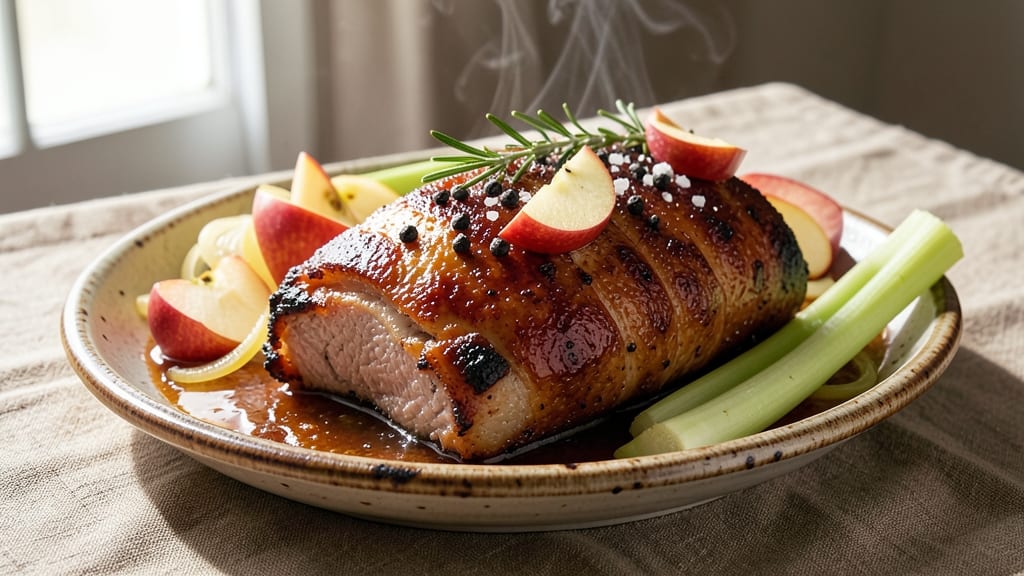
This apple glazed pork roast recipe transforms a simple pork shoulder into a showstopping centerpiece with a caramelized celery-pepper glaze that rivals any restaurant dish. 🔥 The secret lies in balancing sweet and savory—a technique I perfected during my apprenticeship under Master Chef Chen, where we cooked whole hogs for family gatherings. That first bite of tender pork with the glaze clinging to crispy edges? Unforgettable.
The magic happens in two stages: first, a slow-roasted pork shoulder develops deep flavor and perfect tenderness, then the homemade glaze—simmered with apples, celery, and black pepper—caramelizes beautifully when brushed on during the final minutes.
This isn't your average sweet-and-sour glaze; it's a sophisticated blend that enhances the pork's natural richness without overwhelming it. The celery adds subtle earthiness, while the pepper brings just enough heat to balance the sweetness.
What you'll end up with is a restaurant-quality roast that's juicy, flavorful, and visually stunning—golden brown with glossy glaze pooling in the crevices. The pork will pull apart effortlessly, and the glaze will be thick enough to coat every bite.
This is the kind of dish that makes weeknight dinners feel special, whether you're serving it to family or impressing guests. The best part? It's foolproof once you know the right techniques.
Pair it with roasted root vegetables or a simple green salad to let the pork shine. Here's how to make it—step by step, from seasoning to plating. Let's get cooking.
Ingredients for apple glazed pork roast
Six ingredients transform simple pork into a restaurant-worthy centerpiece with caramelized edges.
| Ingredient | Amount | Notes |
|---|---|---|
| Pork Shoulder 🐖 | 4 lb | Bone-in for best flavor |
| Red Delicious Apples 🍎 | 2 medium | Peeled and sliced into wedges |
| Yellow Onion 🧅 | 1 large | Chopped into small dice |
| Celery Stalks 🥬 | 3 whole | Finely chopped for glaze |
| Black Peppercorns 🌶️ | 1 tbsp | Freshly cracked for heat |
| Kosher Salt 🧂 | 1 ½ tbsp | Diamond Crystal preferred |
| Brown Sugar 🍚 | ½ cup | Light or dark variety |
| Apple Cider Vinegar 🍶 | ¼ cup | For tangy depth |
| Fresh Thyme Leaves 🌿 | ¼ cup | Or 1 tbsp dried thyme |
| Garlic Cloves 🧄 | 4 cloves | Minced for glaze |
| Unsalted Butter 🧈 | 2 tbsp | For basting pork |
| Olive Oil 🫒 | 2 tbsp | For roasting pan |
The pork shoulder is non-negotiable—bone-in gives the best flavor and moisture. Costco or Whole Foods sell great cuts, but any grocery store's pork shoulder works if it's well-marbled. Look for a piece with good fat cap—it'll render down and keep the meat juicy. Apples should be firm, not mealy; Red Delicious holds up well, but Honeycrisp adds extra sweetness. Celery needs to be crisp—skip the wilted stalks at the back of the produce section. The black peppercorns should be whole and aromatic; Penzeys or your local spice shop has excellent options.
No Red Delicious apples? Granny Smith adds tartness that balances the sweet glaze. Onion too strong? Substitute with shallots at half the amount. Fresh thyme unavailable? Dried works at one-third the quantity, but toast it first in a dry pan for 30 seconds to wake up the flavor. The vinegar can be swapped for red wine vinegar if you prefer, but apple cider keeps the glaze cohesive. For extra richness, add 1 tbsp of Dijon mustard to the glaze—it cuts through the sweetness beautifully. If you're short on time, use pre-minced garlic from the jar, but fresh is always better.
Pork shoulder keeps 3-4 days in the fridge before cooking—it's best to roast it fresh. Once cooked, leftovers reheat beautifully in a 350°F oven for 20 minutes with a splash of water. Portion the glaze into ice cube trays before freezing; thaw and reheat for quick touch-ups. The roast itself freezes for up to 3 months—just thaw overnight in the fridge before reheating. For serving, let it rest 15 minutes before slicing; the juices redistribute, keeping every bite moist.
Why You'll Love This Recipe
- No Chopping Chaos: I swear by this one—just dice the onion and celery once, toss them in, and let the slow cooker (or oven) do the work. No knife marathons, no stress.
- Sweet-Savory Magic: That caramelized apple glaze? It’s where the pork shoulder gets its soul—tender, sticky, and packed with just enough tartness to cut through the richness. Honestly, the first bite makes you forget you’re eating dinner.
- Leftovers That Shine: This roast practically begs to be reheated—slice it thin, warm it up, and suddenly you’ve got sandwiches, tacos, or a quick stir-fry base. My kids still ask for it three days later.
- Budget-Friendly Feast: Pork shoulder stretches further than you’d think, and Red Delicious apples are cheap this time of year. One roast feeds my whole family, plus leftovers, without breaking the bank. (Yes, even on a Tuesday night.)
Step-by-step instructions for apple glazed pork roast
Here's the method for tender, fall-off-the-bone pork with a caramelized glaze that's rich and tangy.
👨🍳 Step 1: Prep the Pork and Glaze Ingredients
Start by preheating your oven to 325°F for low-and-slow cooking. Pat the 4 lb pork shoulder dry with paper towels—this ensures a better sear later. Place it in a roasting pan and rub all sides with 1.5 tbsp kosher salt and 1 tbsp freshly cracked black peppercorns. Let it sit at room temperature for 30 minutes while you prep the glaze.
In a food processor, combine the 2 medium peeled Red Delicious apples, 1 large yellow onion, 3 whole celery stalks, 4 cloves garlic, 0.25 cup fresh thyme leaves, 0.5 cup brown sugar, and 0.25 cup apple cider vinegar. Pulse until finely chopped but not pureed—you want texture in that glaze. Transfer to a bowl and set aside.
🔥 Step 2: Sear the Pork for Maximum Flavor
Heat 2 tbsp olive oil in a large oven-safe skillet over medium-high heat. Once shimmering, carefully transfer the pork shoulder to the skillet, fat-side down. Sear for 5 minutes until deeply golden brown, then flip and sear the other side for another 5 minutes. This step creates the foundation for that beautiful caramelized crust.
Here's the thing—don't rush this. You'll know it's ready when the pork releases easily from the pan and the fat starts to render. If it sticks, don't force it; let it cook a little longer. The goal is golden, crispy skin that'll hold up to the glaze.
🥘 Step 3: Build the Glaze and Roast
Transfer the seared pork to the roasting pan. In the same skillet, melt 2 tbsp unsalted butter over medium heat, then add the chopped glaze ingredients. Cook for 5-7 minutes, stirring occasionally, until the mixture thickens and the raw onion and apple flavors mellow into something sweet and aromatic.
Pour this glaze mixture over the pork in the roasting pan, turning the meat to coat all sides. Cover the pan loosely with foil and transfer to the preheated 325°F oven. Roast for 2.5 hours, then uncover and continue roasting for another 30 minutes to let the glaze caramelize and thicken.
⏰ Step 4: Rest and Caramelize the Glaze
When the pork reaches an internal temperature of 195-203°F (use a meat thermometer), it's time to finish. Increase the oven temperature to 425°F and return the pork to the oven for 10-15 minutes uncovered. This final step creates that stunning caramelized glaze while keeping the meat juicy.
You'll see the glaze transform from glossy to deep amber—this is when it's truly ready. The pork should pull apart easily with two forks, and the edges of the glaze should be crispy enough to hold their shape. Real talk: this is the moment that matters, so don't walk away during those final minutes.
🍽️ Step 5: Serve with Glaze and Sides
Transfer the pork to a cutting board and let it rest for 15 minutes before slicing. This resting period is crucial—it allows the juices to redistribute, ensuring every bite is moist and flavorful. Spoon any remaining pan juices and glaze over the sliced pork before serving.
Pair with classic sides like mashed potatoes, roasted root vegetables, or crusty bread to soak up that delicious glaze. The combination of sweet apples, tangy vinegar, and savory pork creates a perfect balance that'll have everyone asking for seconds.
Pro Tips For Making Apple Glazed Pork Roast
- Sear the Pork Hard: The first 10 minutes in the oven should be screaming hot (450°F) to brown the pork deeply—no half-hearted sear here. I used to rush this, and the roast always tasted dull; now I leave it untouched until it’s a rich, caramelized crust. (Yes, even if you’re impatient like me.)
- Slice Apples Thin: Peel and slice those Red Delicious apples paper-thin—about ⅛-inch thick—so they caramelize quickly without turning to mush. Thicker slices mean a watery glaze; I learned this after serving a soggy mess to guests. (Your future self will thank you.)
- Don’t Crowd the Pan: When sautéing onions and celery for the glaze, keep the heat medium and give them space to crisp. Packing them tight steams the veggies instead of building flavor. I skip the crowding now, and the base for the glaze actually tastes like something worth eating.
- Rest the Pork Properly: After pulling the roast from the oven, tent it with foil and let it rest for at least 15 minutes before slicing. Cutting too soon sends juices everywhere and leaves you with dry meat. I was skeptical until I tried it—now I never skip it. (Does it look weird? Yes. Does it work? Every single time.)
Make-ahead tips for apple glazed pork roast
Prep Ahead for Stress-Free Cooking
I always prep the pork and glaze ingredients the night before to save time. Pat the 4 lb pork shoulder dry, season it with 1.5 tbsp kosher salt and 1 tbsp black peppercorns, and refrigerate uncovered on a wire rack for 12-24 hours.
This dries the surface for better browning and deepens the flavor. Store the seasoned pork in an airtight container in the fridge. 🌟
Glaze Prep in Advance
Chop all glaze ingredients—apples, onion, celery, garlic, and thyme—and store them in a sealed container in the fridge for up to 2 days. When ready to cook, simply combine with 0.5 cup brown sugar and 0.25 cup apple cider vinegar in a bowl.
This shortcut keeps your cooking day smooth and minimizes chopping stress.
Partial Cooking for Busy Days
For maximum convenience, partially cook the pork ahead. Sear the pork as directed, then roast it at 325°F for 2 hours (until internal temp reaches 160°F).
Let it cool, wrap tightly in plastic wrap, and refrigerate. Finish cooking by reheating to 195-203°F and caramelizing the glaze at 425°F for 15 minutes before serving.
Glaze Freezing for Quick Servings
Make extra glaze and freeze it in 1-tablespoon portions in ice cube trays. Once frozen, transfer to a freezer bag. Thaw overnight in the fridge, then reheat with 1 teaspoon water in a saucepan over medium heat for 2-3 minutes. Perfect for last-minute glaze touch-ups or quick reheats!
Make-Ahead Serving Platter
Slice the pork and arrange it on a serving platter with any leftover glaze drizzled on top. Store the platter, covered, in the fridge for up to 3 days.
Reheat in a 350°F oven for 20 minutes before serving. This approach lets you focus on sides while the pork stays warm and flavorful.
Freezer-Friendly Leftovers
Portion leftover pork into quart-sized freezer bags, removing as much air as possible. Label with the date and freeze for up to 3 months.
Thaw overnight in the fridge, then reheat in a skillet with a splash of water or apple juice to restore moisture and glaze consistency. 💫
Nutrition facts
Frequently asked questions
Can I use a different cut of pork for this recipe?
A 4 lb pork shoulder (also called pork butt) is ideal because of its fat content, which keeps the meat juicy during long cooking. However, you can substitute with a bone-in pork loin (about 3-4 lbs) for a leaner option. Just reduce the cooking time by 30-45 minutes since loin cooks faster. Never use tenderloin—it's too lean and will dry out.
How do I know when the pork is fully cooked?
Use a meat thermometer to check the internal temperature—195-203°F is perfect for pull-apart tenderness. For pork shoulder, the probe should slide in easily and the meat should separate with minimal resistance. If it's below 195°F, return it to the oven uncovered for 10-15 minutes to finish cooking.
What if my glaze isn't caramelizing properly?
Caramelization happens when the glaze reduces and concentrates. If yours isn't thickening, try increasing the oven temperature to 425°F for the final 10-15 minutes uncovered. For extra richness, add 1 tbsp brown sugar or 1 tsp honey to the glaze before the final step. Stirring occasionally helps too—just don't overdo it or the glaze may break.
Can I make this recipe in a slow cooker?
Yes! Sear the pork first, then transfer it to a slow cooker with the glaze ingredients. Cook on low for 6-8 hours or high for 4-5 hours. In the last 30 minutes, transfer to a baking sheet and broil for 3-5 minutes to caramelize the glaze. The slow cooker method works best with a pork shoulder—it won't be as crispy as oven-roasted but still delicious.
What's the best way to reheat leftovers?
Slice the pork and reheat in a skillet with 1 tbsp apple cider vinegar or broth over medium heat for 5-7 minutes until warmed through. For oven reheating, cover with foil and bake at 350°F for 20 minutes. Avoid microwaving—it makes the meat dry. To refresh the glaze, simmer leftover portions with 1 tsp water for 2-3 minutes.