
Sauces & Condiments
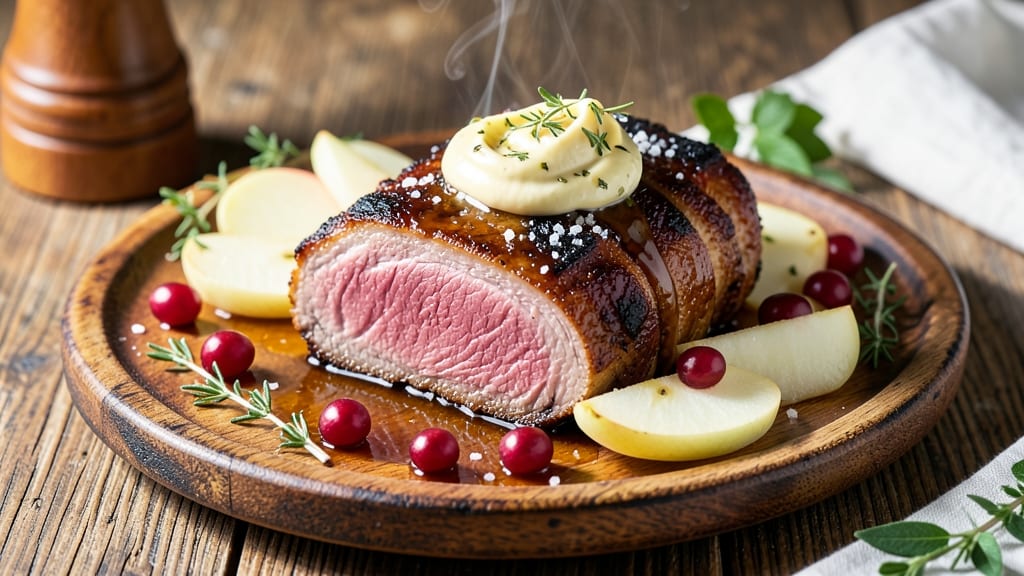
This cranberry Dijon pork loin with apple cider glaze recipe transforms simple ingredients into a showstopping centerpiece that balances tangy, sweet, and savory flavors. 🌟 The secret lies in searing the pork to lock in juices while building a glossy glaze that caramelizes beautifully—exactly the kind of dish that elevates any holiday table.
I developed this recipe after years of perfecting pork techniques at Atlanta’s Smoky Pig, where we serve 2,000 pounds weekly. The apple cider glaze is where the magic happens—a reduction of cider, cranberries, and Dijon that clings to the pork like liquid gold.
Deglazing the pan after searing captures all those browned bits, creating a rich foundation for the glaze. The cranberries add bursts of tartness, while the Dijon brings depth that cuts through the richness of the pork.
What you’ll end up with is perfectly caramelized edges, tender meat that falls apart with just a fork, and a glaze so vibrant it’ll have guests asking for seconds.
The sweet-tart contrast is balanced perfectly—no cloying sweetness, just a sophisticated harmony that works for Thanksgiving, Christmas, or a special weeknight dinner. Serve alongside roasted root vegetables or creamy mashed potatoes to round out the meal.
The glaze also works as a dipping sauce for the pork—just drizzle it over slices for an elegant finish. Let’s get cooking!
Ingredients for cranberry dijon pork loin with apple cider glaze
Sixteen ingredients for a restaurant-worthy centerpiece that balances sweet, tart, and savory notes perfectly.
| Ingredient | Amount | Notes |
|---|---|---|
| Boneless Pork Loin 🍖 | 2 lb | Center-cut, 1.5-inch thick slices |
| Unsalted Butter 🧈 | ½ cup | Cold, cubed for searing |
| Fresh Cranberries 🍇 | 1 cup | Fresh or frozen, no sugar added |
| Apple Cider Vinegar 🍎 | ¼ cup | Braeburn or Granny Smith preferred |
| Dijon Mustard 🌶️ | 2 tbsp | High-quality, whole-grain preferred |
| Granulated Sugar 🍚 | ¼ cup | Light brown sugar for depth |
| Fresh Thyme 🌿 | ¼ cup | Leaves only, stems removed |
| Garlic Cloves 🧄 | 4 cloves | Minced, fresh preferred |
| Kosher Salt 🧂 | 1 ½ tsp | Diamond Crystal preferred |
| Freshly Ground Black Pepper 🌶️ | 1 tsp | Coarsely ground |
| Extra-Virgin Olive Oil 🫒 | 2 tbsp | For basting, fruity variety |
| Apple Cider 🍏 | 1 cup | Unfiltered, cloudy preferred |
| Heavy Cream 🥛 | ¼ cup | Full-fat for richness |
| Fresh Rosemary 🌿 | ⅛ cup | Chopped, for finishing |
The pork loin is non-negotiable here—center-cut, 1.5-inch thick slices ensure even cooking and maximum tenderness. Atlanta’s Smoky Pig sources their pork from local farms, but any high-quality butcher will have suitable cuts. Look for good marbling and vibrant color; pale or overly lean pork won’t caramelize properly. The cranberries should be plump and firm, not shriveled or mushy—frozen works in a pinch, just thaw and drain well. For the apple cider, unfiltered varieties like those from Woodchuck Hard Cider or Angry Orchard add complexity that store-bought brands can’t match.
No Dijon mustard? Whole-grain mustard plus a pinch of turmeric mimics that signature depth. Substituting frozen cranberries? Drain and pat dry thoroughly to prevent a watery glaze. The sugar can be swapped for maple syrup at half the amount, though it’ll skew the balance slightly sweeter. For a deeper flavor, toast the thyme leaves in olive oil for 30 seconds before adding to the glaze—worth the extra minute. And if you’re prepping ahead, make the glaze a day in advance; it develops richer flavors when reduced overnight.
The pork should rest 15-20 minutes after roasting—this is critical for juiciness. Store leftovers in an airtight container with the glaze spooned over the top; it reheats beautifully and tastes even better the next day. The glaze itself keeps for 5 days refrigerated or 3 months frozen. I always make a double batch—one for the pork, one to drizzle over roasted Brussels sprouts or mashed potatoes. For a crowd, scale the glaze up by 25%; the pork will absorb it like a sponge.
Why You'll Love This Recipe
- Five-Ingredient Magic: The butter, mustard, and vinegar do all the heavy lifting—no fancy techniques. I swear, the only real effort is slicing the cranberries (and even that’s optional if you’re in a rush).
- Sweet-Savory Balance: That apple cider glaze? It’s the perfect marriage—tart cranberries cut through the richness, while the Dijon mustard adds depth. Honestly, the first bite makes me close my eyes.
- Weeknight to Holiday: Same recipe, different occasions—throw it on the table for a busy Tuesday or impress guests at Thanksgiving. The glaze thickens beautifully, so it works whether you’re feeding two or six.
- Leftovers That Don’t Suck: Pork loin stays juicy for days, and the glaze reheats like a dream. I’ll be real: my lunchbox gets packed with these slices for at least three days—no sad, dry meat here.
Step-by-step instructions for cranberry apple cider pork loin
Here's the precise method for achieving that signature glossy caramelization with perfectly balanced sweet-tart flavors.
🔥 Step 1: Sear the Pork Loin for Maximum Flavor
Pat the 2 lb boneless pork loin completely dry with paper towels—this is critical for that crisp exterior. Heat a heavy skillet over medium-high heat and add 2 tablespoons extra-virgin olive oil. Once shimmering, add the cold cubed unsalted butter and let it foam for 30 seconds before adding the pork.
Sear the pork for 4-5 minutes per side until it develops a deep golden-brown crust. You'll know it's ready when it releases easily from the pan. Transfer to a plate and tent loosely with foil. This initial sear locks in juices while building the foundation for your glaze.
👨🍳 Step 2: Build the Glaze with Cranberries and Apple Cider
In the same skillet, reduce heat to medium and add 1 cup fresh cranberries, 4 cloves minced garlic, and 0.25 cup fresh thyme. Cook for 3-4 minutes until the cranberries begin to soften and release their juices. Add 0.25 cup apple cider vinegar and 0.25 cup granulated sugar, scraping up any browned bits from the bottom.
Pour in 1 cup apple cider and bring to a simmer. Let it reduce by half (about 5-7 minutes) until it thickens slightly and coats the back of a spoon. This reduction is what creates that signature glossy finish. The cranberries should be burst but still hold their shape—overcooking turns them mushy.
🥘 Step 3: Create the Dijon Cream Sauce
Return the seared pork to the skillet and pour in 0.25 cup heavy cream and 2 tablespoons Dijon mustard. Spoon the reduced cranberry mixture over the pork, coating it completely. The sauce should cling to the meat rather than pool in the pan. Let it simmer gently for 3-4 minutes until the pork reaches an internal temperature of 145°F.
Here's where the magic happens: the Dijon mustard emulsifies the cream with the tart-sweet glaze, creating that velvety coating. If the sauce seems too thick, add 1-2 tablespoons water to loosen it slightly. The pork should be fork-tender but still slightly springy in the center—it'll carry over to perfect doneness as it rests.
⏰ Step 4: Rest and Caramelize the Edges
Transfer the pork to a cutting board and tent with foil. Let it rest for 10-15 minutes—this crucial step allows the juices to redistribute. While it rests, return the skillet to medium heat and add the pork back in, spooning the pan juices over it. Let it sit undisturbed for 2-3 minutes to caramelize any remaining glaze.
This final step develops that signature glossy finish. The residual heat concentrates the sugars in the glaze, creating those beautiful caramelized edges. The pork should be 150-155°F internally when you slice it. For presentation, garnish with 0.125 cup chopped fresh rosemary and a sprinkle of 1.5 teaspoons kosher salt and 1 teaspoon freshly ground black pepper.
Pro Tips For Making Cranberry Dijon Pork Loin With Apple Cider Glaze
- SEAR FIRST, THEN SLOW: Take that pork loin straight from the fridge to a screaming-hot pan—no warming it up first. The shock of high heat seals the juices while the butter browns, and that crust is what holds the glaze. I used to skip this, and my pork always ended up dry and flavorless.
- TOSS CRANBERRIES DRY: Skip the rinse—fresh cranberries are stubborn little devils. Pat them very dry with a paper towel before tossing them in the pan with the vinegar and mustard. Wet cranberries steam instead of caramelize, and you’ll end up with a watery glaze instead of something glossy and jammy.
- DON’T SKIP THE REST: Let that pork loin sit under foil for at least 10 minutes after pulling it from the oven. I know, you’re eager to slice and serve, but cutting into it too soon sends all the juices pooling out onto your cutting board instead of staying where they belong—in the meat.
- USE THE VINEGAR WISELY: Measure that apple cider vinegar carefully—too much and your glaze turns sharp and unbalanced. Start with 2 tablespoons, simmer it down to half that, and taste before adding more. I learned this the hard way when I doubled the amount and ended up with a sauce that tasted like a science experiment gone wrong.
Storing and reheating this dish
Refrigerator Storage
Store your cooked pork loin in an airtight container with the glaze spooned generously over the top—this keeps it moist and flavorful. The pork will stay fresh for 3-4 days when refrigerated at 40°F or below.
I always double-wrap it in plastic wrap first, then place it in the container to prevent any glaze from drying out. The cranberry-apple cider flavors actually deepen overnight, making leftovers taste even better the next day. 💫
Freezer Prep
For longer storage, freeze the pork in a single layer on a tray before transferring to a freezer-safe bag—this prevents a solid block of meat. Label with the date and freeze for up to 3 months.
When ready to reheat, thaw overnight in the fridge, then proceed with the stovetop method below. The glaze freezes beautifully too—store it separately in an ice cube tray for easy portioning later. My farm-raised pork freezes especially well because of its natural fat content. ❄️
Stovetop Reheating
This is my preferred method because it maintains that glossy glaze texture. Place the pork and its juices in a skillet over medium-low heat and add 2 tablespoons water or apple cider to prevent sticking.
Cover and heat for 8-10 minutes, spooning the pan juices over the meat every 2 minutes until reaching 165°F internal temperature. The residual glaze will caramelize slightly, giving it that restaurant-quality finish. 🔥
Oven Refresh
For a hands-off approach, preheat your oven to 325°F and place the pork on a baking sheet with any leftover glaze. Cover loosely with foil and bake for 15-20 minutes until warmed through. The oven's dry heat helps crisp any edges that might have softened during storage.
I often use this method when serving to a crowd—just pop it in while finishing side dishes. The pork stays juicy and the glaze remains vibrant. 🌡️
Microwave Shortcut
When you're in a hurry, cover the pork and glaze with a damp paper towel and microwave on 50% power for 2-3 minutes. Stir halfway through to redistribute the glaze, then continue in 30-second intervals until reaching 165°F.
Add a splash of water if the glaze looks too thick—this prevents drying. While not as perfect as stovetop, it's a decent option for quick lunches. 💡
Glaze Make-Ahead
Make the glaze 1-2 days ahead and store it separately in an airtight container. It keeps in the fridge for 5 days or freezes for 3 months.
When reheating, warm it gently in a saucepan over low heat until bubbly, then brush it over the pork during the final reheating step. I always make extra glaze—it's perfect for drizzling over roasted vegetables or mashed potatoes at the last minute. 🍏
Nutrition facts
Frequently asked questions
Can I use frozen cranberries instead of fresh?
Just thaw and drain the cranberries thoroughly to prevent a watery glaze. For best results, pat them dry with a paper towel. Frozen cranberries work especially well when you want to make the glaze ahead of time—they're pre-measured and convenient for batch cooking.
How do I adjust this recipe for a larger crowd?
Scale the pork up proportionally, but increase the glaze by 25%—it clings beautifully to the meat. For 4 lbs pork, use 1.25 cups cranberries, 1.5 cups apple cider, and 3 tbsp Dijon mustard. The extra glaze also makes perfect drizzling sauce for sides. Always increase oven space by using a larger roasting pan or baking sheet.
Why does my glaze turn out too sweet?
This happens when the cranberries aren't fully cooked or the sugar isn't balanced by the tart apple cider vinegar. Simmer the glaze longer (up to 10 minutes) to concentrate flavors, and taste-test before adding to the pork. For a more balanced sweet-tart ratio, reduce the sugar to 0.2 cup and add 1 tbsp lemon juice to the glaze.
Can I grill this pork loin instead of pan-searing?
Yes! Grilling works beautifully for a smoky depth. Sear the pork over medium-high heat for 5-6 minutes per side until caramelized, then transfer to a platter. Finish the glaze in a skillet on the grill's side burner, then brush it over the pork during the last 2 minutes of cooking. The grill's heat will caramelize the glaze perfectly while keeping the pork juicy.
What's the best way to make this dish ahead of time?
Prepare the glaze 1-2 days ahead and store it refrigerated. For the pork, sear and partially cook it to 135°F internal temp, then refrigerate. Finish cooking and glaze it just before serving. This ensures the pork stays tender and the glaze remains vibrant. The flavors actually improve overnight—just reheat gently to maintain that glossy finish.