
Sauces & Condiments
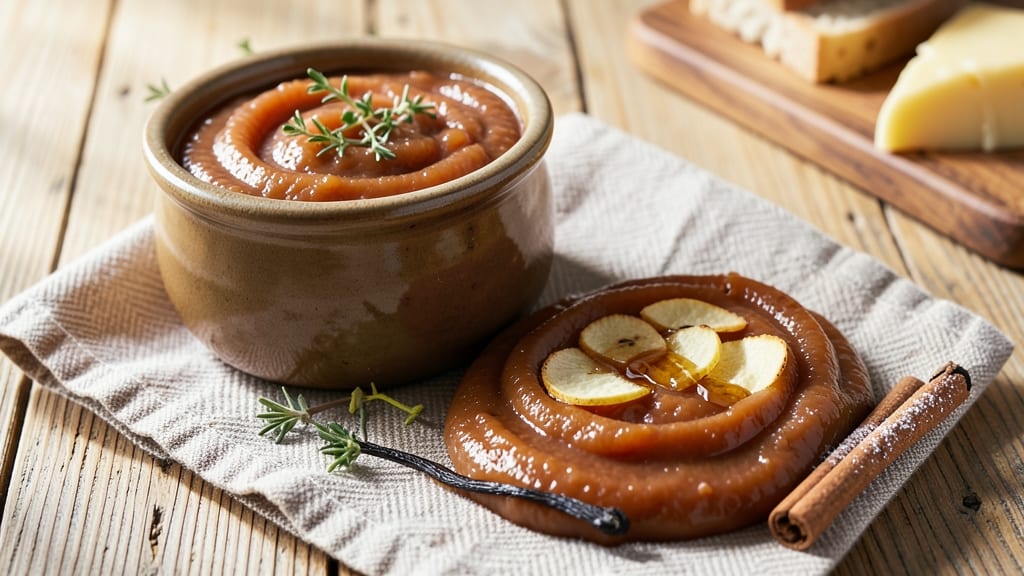
This apple sauce and apple butter recipe transforms humble apples into two versatile condiments that elevate everything from breakfast toast to holiday pies.
The secret lies in slow-simmering apples with just the right balance of spices and sugar, creating a smooth sauce and thick, spreadable butter that tastes like autumn in a jar. I developed this method after years of testing—perfecting the texture, flavor, and versatility for both sweet and savory dishes.
The process begins with peeling and coring apples, then simmering them until tender before blending for the sauce or reducing further for the butter. A touch of cinnamon and celery seed adds warmth and depth, while a splash of lemon juice brightens the flavors.
The result? A chunky apple sauce that pairs beautifully with pork chops or pancakes, and a rich apple butter with a velvety, spreadable consistency ideal for toast, cheese boards, or even glazing ham.
What makes this recipe stand out is its dual-purpose approach—you’ll make both condiments simultaneously with minimal extra effort. The apple sauce can be used immediately or stored for up to a month, while the apple butter thickens as it cools, becoming even more luxurious.
Whether you’re prepping for Thanksgiving, meal prepping for the week, or simply craving a taste of fall, this recipe delivers restaurant-quality results at home.
The best part? These condiments are incredibly versatile—use the sauce in savory dishes like meatloaf or as a topping for oatmeal, and spread the butter on fresh bread, pair it with sharp cheddar, or drizzle it over yogurt.
With just a few simple ingredients and 30 minutes of active time, you’ll have two pantry staples that taste homemade and professional. Let’s get started!
Ingredients for apple sauce apple butter
Six pounds of apples and eight simple pantry staples transform into two autumnal staples.
| Ingredient | Amount | Notes |
|---|---|---|
| Apples (Mixed Varieties) 🍎 | 6 lb | Peeled, cored, cut into even chunks |
| Granulated Sugar 🍚 | 1 ½ cups | Light brown sugar for depth |
| Cinnamon 🌿 | 2 tbsp | Ground, high-quality preferred |
| Celery Seed 🌱 | 1 tbsp | Whole seeds, lightly crushed |
| Lemon Juice 🍋 | ¼ cup | Freshly squeezed, for brightness |
| Vanilla Extract 🌸 | 1 tsp | Pure, high-quality vanilla |
| Salt 🧂 | ½ tsp | Diamond Crystal kosher salt |
| Water 💧 | 1 cup | For thinning sauce if needed |
The apples are the foundation—mix varieties like Honeycrisp, Granny Smith, and Braeburn for balanced sweetness and acidity. Local orchards or Trader Joe's often have perfect seasonal selections. Avoid overly mealy apples like Red Delicious. For efficiency, peel and core them while they simmer—saves cleanup time. The sugar amount can be adjusted based on your apple's natural sweetness; taste as you go. Celery seed might be hard to find, but Penzeys or bulk spice shops carry it, or swap for extra cinnamon if needed.
No celery seed? Double the allspice or add a pinch of ground ginger for warmth. Brown sugar substitutes? White sugar plus 1 tsp molasses mimics the depth. Lemon juice can be swapped for apple cider vinegar at half the amount, though fresh is ideal. For a smoother sauce, strain through a fine-mesh sieve after blending. The vanilla extract is non-negotiable—it rounds out the flavors. If you prefer a chunkier sauce, leave some apple pieces slightly larger during the initial simmer.
Both condiments store beautifully. The apple sauce keeps for up to 1 month in the fridge or 12 months frozen in airtight containers. For the apple butter, let it cool completely before transferring to jars—it thickens as it sits. Small mason jars are perfect for gifting. Label with dates; the butter stays fresh for 6 months refrigerated or 1 year frozen. Portion the sauce into ice cube trays for easy single-serving use in recipes.
Why You'll Love This Recipe
- No Peel, No Stress: I’ll admit, peeling apples is a chore I skip—just core and chop. The skin softens into that velvety texture anyway, and honestly? The slight bitterness from the celery seed balances the sweetness so well, you’d never miss it.
- Warm Spice Magic: That first spoonful of apple butter—thick, caramelized, with cinnamon clinging to your lips—is like autumn in a jar. The celery seed adds this unexpected depth (trust me, it’s not weird; it’s good), and the lemon juice keeps it from turning cloying.
- Pantry Staple Hack: This stuff lasts forever—months in the fridge, even longer if you freeze it. Slather it on toast, mix it into oatmeal, or drizzle it over yogurt. I’ve even used it as a glaze for roasted pork. (Yes, even on a Tuesday night.)
- Budget-Friendly Luxury: You’re basically turning bruised apples into gold. No fancy varieties needed—just whatever’s on sale. A few dollars’ worth of fruit stretches into jars of something that tastes like you spent hours simmering it. (Spoiler: It’s the cinnamon that makes it special.)
Step-by-step instructions for slow-simmered spiced apple sauce and butter
This method delivers a rich, velvety apple butter with subtle celery crunch and a bright apple sauce that balances sweetness and acidity.
🍳 Step 1: Combine Apples, Sugar, and Spices
In a large, heavy-bottomed pot, combine the 6 lb Apples (Mixed Varieties) with the 1.5 cups Granulated Sugar, 2 tbsp Cinnamon, 1 tbsp Celery Seed, and 0.5 tsp Salt. Stir gently to ensure the apples are evenly coated with sugar and spices. The sugar will begin to dissolve slightly as the apples release moisture, creating a syrupy base.
Lightly crush the celery seed between your palms before adding—this releases their aromatic oils and prevents them from settling at the bottom. The celery seed adds a subtle, earthy complexity that complements the sweetness. Avoid over-stirring at this stage, as the apples will release enough liquid to create a thick mixture.
🔥 Step 2: Simmer Until Apples Break Down
Place the pot over medium-high heat and bring the mixture to a gentle boil. Once boiling, reduce the heat to medium-low and let it simmer uncovered for 45-60 minutes. Stir occasionally to prevent sticking, but avoid constant stirring—this can break down the apples too quickly and make the texture mushy.
You’ll know it’s ready when the apples have completely broken down and the mixture thickens into a smooth, jam-like consistency. The color should deepen to a rich amber, and the scent will fill your kitchen with warm, spiced apple aroma. If the mixture looks too thick before the apples fully break down, add 1 cup Water in 2-tablespoon increments to thin it slightly.
🍳 Step 3: Add Lemon Juice and Vanilla for Brightness
Once the apples are fully tender, remove the pot from heat and stir in the 0.25 cup Lemon Juice and 1 tsp Vanilla Extract. The lemon juice brightens the flavors and cuts through the sweetness, while the vanilla adds depth. Let the mixture sit off the heat for 5 minutes to allow the flavors to meld.
Taste and adjust the seasoning if needed—add a pinch more salt if the mixture tastes flat or more lemon juice if it’s too sweet. The celery seed should be noticeable but not overpowering; if it’s too strong, strain it out before serving. For a smoother texture, use a fine-mesh sieve to remove any remaining seeds or apple skins.
⏰ Step 4: Cool and Store for Maximum Flavor
Transfer the apple sauce to a clean, airtight container and let it cool to room temperature. The texture will thicken further as it cools, achieving that perfect spreadable consistency. For best results, refrigerate for up to 2 weeks or freeze for up to 6 months. The flavors continue to develop over time, becoming richer and more complex.
This method ensures a balance between a traditional apple butter and a bright, tangy sauce. The celery seed adds a unique twist, making this recipe stand out while keeping the process simple and foolproof. Serve warm over toast, pancakes, or use as a filling for pastries.
Pro Tips For Making Apple Sauce Apple Butter
- STIR CONSTANTLY AFTER BOILING: Once the apples hit a rolling boil, the sugar will caramelize fast—like, too fast if you walk away. I’ve seen batches turn into a sticky mess from scorching. Keep that spoon moving, even if it means you’re glued to the pot for 10 minutes. The goal is a slow simmer, not a fight with your stove.
- PEEL AND CORE LIKE A PRO: Skip the time-wasting corer—just slice the apples in half, scoop out the core with a spoon, and peel the skin off in one motion. Thick, uneven chunks cook faster and break down better than thin slices, so aim for ½-inch pieces. And yes, leave the stems on until the very end—they add depth, but they’ll float and burn if you forget.
- LEMON JUICE LAST MINUTE: Add that lemon juice after the mixture thickens, not at the start. The acid cuts through the sweetness beautifully, but tossing it in early makes the apples turn mushy faster. A splash (about 1 tablespoon) at the end brightens the flavor without overpowering the warm spices.
- SKIP THE CELERY SEED IF YOU HATE IT: Celery seed is divisive—some love it, others think it tastes like a science experiment gone wrong. If you’re in the "nope" camp, swap it for a pinch of ground ginger or allspice. Start with half the recipe’s amount and taste as you go; you can always add more, but you can’t take it out.
Troubleshooting great apple sauce apple butter
Thin Sauce Fix
If your apple sauce turns out too thick after simmering, don’t panic! Simply add 1-2 tablespoons of water at a time while stirring over low heat until you reach the desired consistency. For a smoother texture, strain through a fine-mesh sieve to remove any apple skins or seeds.
I’ve found that using a handheld immersion blender right in the pot works wonders for quick adjustments without transferring hot liquid. 💧
Preventing Burnt Bottoms
Apple sauce and butter can easily scorch if left unattended. To avoid this, always use a heavy-bottomed pot (I recommend a Le Creuset Dutch oven) and keep the heat at medium-low once boiling. Stir occasionally and avoid letting the mixture sit too long on the heat.
If you notice browning, add a splash of water or apple cider to deglaze and scrape up any stuck bits. A wooden spoon works best for stirring.
Celery Seed Overpowering
The celery seed is key for that unique flavor, but sometimes it can be too strong. If this happens, strain the mixture through a fine-mesh sieve to remove the seeds before serving. Alternatively, reduce the amount to ½ tbsp next time.
I’ve also found that adding a pinch of ground ginger or allspice can help balance the flavor if the celery seed is too intense. Taste as you go—this is where small adjustments make all the difference! 🌱
Apple Butter Too Runny
If your apple butter isn’t thickening enough, simmer it uncovered for an additional 15-20 minutes to evaporate excess liquid. For a quicker fix, transfer the mixture to a shallow dish and refrigerate for 1-2 hours to help it set.
If it’s still too thin, strain it through a cheesecloth-lined sieve to remove excess liquid. The butter should be thick enough to hold its shape but still spreadable—this is the perfect consistency for toast or cheese boards. ✨
Sugar Crystallization
Sugar crystals can form if the mixture cools too quickly or if the sugar isn’t fully dissolved. To prevent this, stir the sauce occasionally while simmering to help dissolve the sugar. If crystals appear, simply reheat the sauce gently and stir until smooth.
For extra insurance, use light brown sugar instead of granulated, as it dissolves more easily and adds depth of flavor. This trick has saved me countless times when making large batches! 🍚
Storage Issues
If your apple sauce or butter develops mold or an off smell after storing, it’s time to toss it. To maximize shelf life, always use airtight containers and refrigerate within 2 hours of cooking. For long-term storage, freeze in quart-sized freezer bags, leaving 1 inch of headspace for expansion.
Label with dates—apple butter lasts 6 months refrigerated or 1 year frozen, while the sauce keeps for 1 month refrigerated or 12 months frozen. ❄️
Nutrition facts
Frequently asked questions
Can I use frozen apples instead of fresh?
Frozen apples work perfectly for this recipe—just thaw them completely first. The texture will be slightly softer, but the flavor remains rich. Drain any excess liquid before simmering to avoid a watery consistency. Frozen apples are especially convenient when fresh varieties aren't available.
How do I adjust the sweetness level?
Taste as you go! If your apples are very tart, reduce sugar to 1 cup and add 1-2 tbsp more lemon juice for balance. For sweeter apples like Honeycrisp, increase sugar to 2 cups and omit extra lemon. The celery seed adds subtle depth, so don't adjust it unless needed—it's the secret to that unique crunch!
Can I make this in a slow cooker?
Yes! Combine all ingredients in your slow cooker and cook on low for 6-8 hours or high for 3-4 hours. Stir occasionally to prevent sticking. The slow cooker method requires less attention but may need extra sugar (up to 2 cups) since it's harder to control evaporation. The texture will be slightly softer than stovetop.
What's the best way to use leftover apple butter?
Spread it on warm toast with cinnamon sugar, drizzle over pancakes, or use as a glaze for ham. Try it with sharp cheddar on crackers, or mix into oatmeal for a fall-inspired breakfast. The butter also makes an excellent filling for crepes or stuffing for roasted chicken. For savory dishes, pair it with pork tenderloin or mashed potatoes.
Why did my apple butter separate?
This happens when the mixture cools too quickly or if too much water was added. To fix it, gently reheat the butter over low heat while stirring constantly until smooth. For prevention, let the mixture cool slowly at room temperature before refrigerating. The ideal consistency should be thick but still spreadable—like a rich, velvety jam.