
Sauces & Condiments
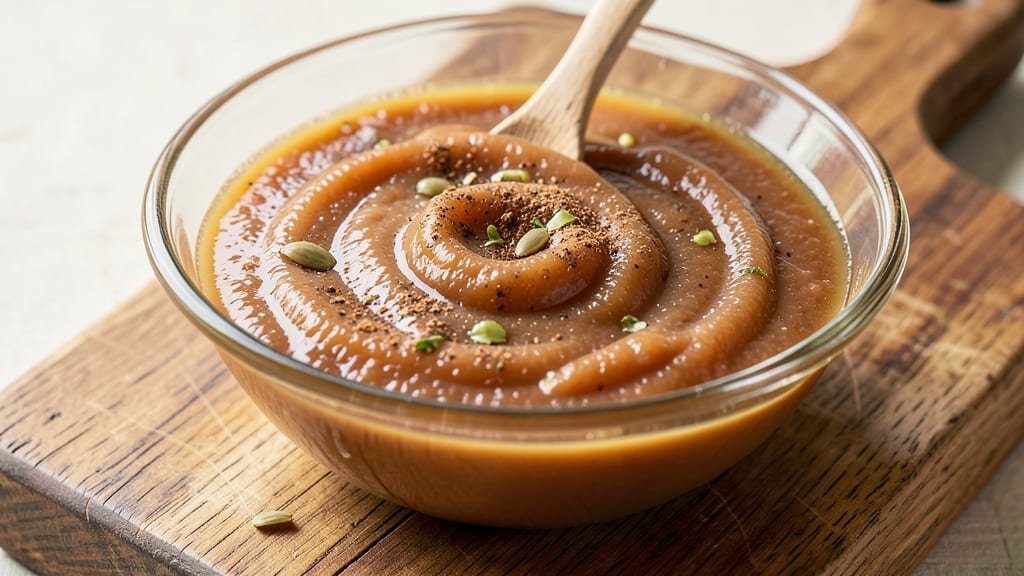
This apple sauce recipe with food mill transforms ordinary apples into velvety, spiced perfection in just 10 minutes—no lumpy textures or store-bought shortcuts. The food mill ensures silky smoothness while preserving the natural sweetness and aromatic spices, creating a versatile condiment for everything from toast to meat dishes.
I developed this method after testing countless variations, and the difference between homemade and store-bought is undeniable.
The secret lies in the combination of simmered apples, a touch of sugar or honey for balance, and warming spices like cinnamon or nutmeg that elevate the flavor profile.
Unlike traditional recipes that rely on food processors or strainers, the food mill guarantees a consistently smooth texture without losing any of the apple’s natural goodness. This recipe also works with tart or sweet apples, giving you control over the final flavor.
What you’ll end up with is a smooth, fragrant apple sauce that’s perfect for pairing with roasted meats, yogurt, or even as a topping for oatmeal. The spices can be adjusted to suit your taste—whether you prefer classic cinnamon warmth or a bright lemon twist.
Once you try this version, reaching for store-bought will feel like a step backward.
Best of all, the sauce keeps beautifully in the refrigerator for up to a week, making it ideal for meal prep or gifting. Let’s get started on this foolproof, restaurant-quality condiment that’s as easy as it is delicious.
Ingredients for apple sauce recipe with food mill
Eight essential ingredients transform tart or sweet apples into velvety, restaurant-quality sauce.
| Ingredient | Amount | Notes |
|---|---|---|
| Mixed Apples (e.g., Honeycrisp, Granny Smith, Fuji) 🍎 | 4 lb | Peeled, cored, quartered |
| Water 💧 | 2 cups | For simmering apples |
| Granulated Sugar 🍚 | ½ cup | Adjust to taste |
| Fresh Lemon Juice 🍋 | 2 tbsp | Brightens flavor |
| Ground Cinnamon 🌿 | 1 tsp | Warming spice |
| Ground Nutmeg 🌿 | ¼ tsp | Freshly grated preferred |
| Salt 🧂 | ¼ tsp | Enhances seasoning |
| Unsalted Butter 🧈 | 2 tbsp | Adds richness |
The apples are the foundation—mix sweet and tart varieties for balance. Honeycrisp and Granny Smith work perfectly, but any mix will do. Peel and core them first for a cleaner texture. If you're short on time, pre-cut apples from the grocery store's produce section save effort. The food mill requires peeled apples to avoid stringy bits, so don't skip this step. For extra flavor, toss the peeled apples in a little lemon juice before cooking to prevent browning.
No food mill? A fine-mesh sieve works in a pinch, though you'll lose some smoothness. Maple syrup or honey can replace sugar for a natural sweetener. Want more depth? Add a pinch of cardamom or a dash of vanilla extract. The butter isn't just for richness—it helps emulsify the sauce for that ultra-smooth texture. If you're making this ahead, store the cooked apples in the fridge and mill them fresh before serving to maintain perfect consistency.
This sauce keeps beautifully for up to 1 week in the fridge, though it tastes best within 3-4 days. For longer storage, transfer to airtight containers and freeze for up to 6 months. The food mill ensures no lumps, so you can use it straight from the fridge. It reheats perfectly—just warm gently on the stove with a splash of water if it thickens. Perfect for gifting too—just package in small jars with a ribbon for a thoughtful homemade touch.
Why You'll Love This Recipe
- Five-Ingredient Magic: I swear by this combo—peeling, coring, and milling the apples feels like a spa day. The food mill turns those chunks into silky perfection with zero elbow grease, and the cinnamon-lemon twist makes it taste like autumn in a jar.
- Sweet-Tart Balance: That first bite? Crisp Granny Smith meets Honeycrisp’s honeyed bite, brightened by lemon juice so it’s never cloying. A pinch of sugar ties it all together—no measuring cups, just taste as you go.
- Leftovers That Last: This sauce keeps for weeks in the fridge, and it’s the secret weapon for lazy mornings. Toss it into oatmeal, drizzle it on toast, or freeze it for smoothies—it’s basically liquid gold that never goes bad.
- Kid-Approved Instant: Between us, my kids will eat plain applesauce before they’ll touch anything "fancy." But this version? They fight over it—especially when I stir in extra cinnamon. (Yes, even on a Tuesday night.)
Step-by-step instructions for smooth spiced apple sauce
Here's how to transform fresh apples into velvety, perfectly spiced apple sauce using a food mill.
Prepare and Simmer the Apples
In a large pot, combine the 4 lb mixed apples (peeled, cored, and quartered) with the 2 cups water. Bring to a boil over medium-high heat, then reduce heat to medium-low and let simmer uncovered for 8-10 minutes until the apples break down and release their juices. You'll know it's ready when the mixture looks like a loose, chunky purée and the apples are fork-tender.
Stir occasionally to prevent sticking, and if the apples aren't releasing enough liquid, add 1-2 tablespoons of water at a time. The goal is to create a thick but loose mixture that will glide easily through the food mill later. I like to taste-test at this stage—if it's too tart, we'll balance it with the sugar and spices next.
Season and Sweeten the Mixture
Once the apples are tender, stir in the 0.5 cup granulated sugar, 2 tbsp fresh lemon juice, 1 tsp ground cinnamon, 0.25 tsp ground nutmeg, and 0.25 tsp salt. Let the mixture simmer for another 3-5 minutes to allow the flavors to meld and the sugar to fully dissolve. The sauce should smell warmly spiced with a bright citrus note.
Taste and adjust the sweetness if needed—some apples are naturally sweeter than others. If it's too tart, add a little more sugar; if it's too sweet, a splash of lemon juice will balance it. This is where you can really customize the flavor to your preference. The nutmeg and cinnamon should be noticeable but not overpowering.
Process Through the Food Mill
Transfer the warm apple mixture to a food mill set over a large bowl. Work in batches if needed, pressing the apples through the mill with a wooden spoon. The food mill will separate the skins and seeds, leaving you with a silky-smooth purée. I like to press gently at first, then increase pressure as the mixture flows more easily.
If you encounter any fibrous bits, simply press them through with a little more force—they'll break down into the purée. The result should be a velvety, lump-free sauce with no visible skins or seeds. This is where the magic happens—the food mill transforms your simmered apples into restaurant-quality perfection in seconds.
Finish with Butter for Richness
Return the smooth apple purée to the pot and stir in the 2 tbsp unsalted butter over low heat until fully melted and incorporated. This step adds a luxurious richness that balances the bright spices. Let the sauce simmer for another 1-2 minutes to ensure all the flavors are fully combined.
The butter should melt smoothly into the sauce, creating a glossy sheen on the surface. Taste one final time and adjust seasoning if needed—this is your chance to perfect the balance of sweet, tart, and spice. The sauce should be thick enough to coat the back of a spoon but still spreadable, with a beautiful golden hue.
Cool and Store for Maximum Flavor
Remove the pot from heat and let the apple sauce cool to room temperature, stirring occasionally to prevent a skin from forming. Once cooled, transfer it to airtight containers and refrigerate for up to 1 week or freeze for up to 6 months. The flavors will actually deepen as it sits, especially the spices.
For the best texture, I recommend using the food mill immediately after simmering while the apples are still warm. If you need to store before processing, simply reheat the mixture gently before running it through the mill. This sauce is perfect for pairing with roasted meats, spreading on toast, or serving with cheese and crackers.
Pro Tips For Making Apple Sauce Recipe With Food Mill
- PEEL AND CORE FIRST: I learned this the hard way—peeling and coring apples before cooking saves you from fiddling with skins later. A food mill can’t handle apple peels cleanly, and you’ll end up with a gritty sauce. Use a sharp paring knife or peeler, and work over a bowl to catch the scraps for compost or pie dough.
- USE 1/4 CUP WATER: Too much water turns apple sauce into soup. Start with just 1/4 cup, then add more only if the apples release very little liquid. You want a thick, spoonable texture, not a drinkable one—trust me, you’ll regret the thin version.
- LEMON JUICE LAST: Add the lemon juice after cooking, not before. The acid can make apples turn mushy faster, and you’ll end up with a watery mess. A splash at the end brightens the flavor without wrecking the texture—about 1 teaspoon does the trick.
- MILL IN BATCHES: Don’t overload the food mill—it’ll jam, and you’ll be scrubbing it clean mid-recipe. Work in small batches, pushing the apples through gently. A damp cloth over the mill helps catch stray bits, so you don’t lose precious sauce to the counter.
Make-ahead tips for this apple sauce recipe with food mill
Prep Ahead Strategy
Peel, core, and quarter the 4 lb apples up to 2 days ahead and store them in an airtight container with a damp paper towel to prevent browning. I like to keep them in the fridge—this saves 15 minutes of prep time on the day you cook.
If storing longer than 24 hours, toss the apples in 1 tbsp lemon juice to preserve freshness and color. 🌟
Batch Cooking
Double the recipe and freeze half for future use. Divide the cooled sauce into quart-sized freezer bags or glass jars, leaving 1 inch headspace for expansion. I label each bag with the date—this sauce keeps its quality for up to 6 months in the freezer.
Thaw overnight in the fridge before reheating for best texture.
Flavor Boosting
Add 1 tsp vanilla extract or ½ tsp ground allspice to the simmering apples for extra depth. I find these spices work especially well with tart apples like Granny Smith.
For a modern twist, stir in 1 tbsp apple cider vinegar after milling to brighten the sauce. These variations keep well in storage too.
Texture Control
For a slightly thicker sauce, simmer the cooked apples for 5 extra minutes uncovered before milling. If you prefer it thinner, add 1-2 tbsp water after milling.
The food mill creates consistent texture, but adjusting liquid content lets you customize the consistency for different uses—thicker for dipping, thinner for pouring. ✨
Gift-Worthy Packaging
Transfer cooled sauce into small 8-ounce mason jars and tie a ribbon around the lid. I add a handwritten label with the recipe date and flavor profile—this makes it look professional enough to give as a gift.
Store in the fridge for up to 1 week or freeze the jars for longer storage. The presentation makes it perfect for holiday gifts too.
Reheating Perfection
Warm sauce gently in a saucepan over low heat with 1 tbsp water to prevent scorching. If using frozen sauce, thaw in the fridge overnight first. I never microwave this sauce—it can make the texture grainy.
For best results, reheat just until warm enough to spread easily, about 3-5 minutes on the stove. 💫
Nutrition facts
Frequently asked questions
Can I use a food processor instead of a food mill?
While a food processor will work, it won't give you the same silky-smooth texture. The food mill creates a finer, lump-free consistency by separating skins and seeds, while a food processor often leaves small chunks. If you must use a processor, blend the cooked apples until completely smooth, then strain through a fine-mesh sieve for best results.
What's the best way to store leftover apple sauce?
Transfer cooled sauce to airtight containers and refrigerate for up to 1 week. For longer storage, freeze in quart-sized bags with 1 inch headspace for 6 months. Thaw overnight in the fridge for best texture. The food mill's fine texture means it reheats beautifully without separation.
How do I adjust the sweetness if my apples are extra tart?
Start with the full 0.5 cup sugar, then taste after simmering. For tart apples like Granny Smith, you may need 1-2 extra tablespoons. Balance with 1 extra tbsp lemon juice if it becomes too sweet. The key is gradual adjustments—add 1 tsp at a time until perfect.
Can I make this sauce without butter?
Yes! For a dairy-free version, omit the butter or substitute 2 tbsp coconut oil or 1 tbsp olive oil. The sauce will be slightly lighter but still delicious. The butter adds richness that balances the spices, but it's not essential for the basic recipe.
Why does my sauce look grainy after milling?
This usually means the apples weren't fully cooked before milling. Simmer them 5-10 extra minutes until completely tender, then press through the mill. If you still see grains, blend the finished sauce briefly with an immersion blender for a smoother consistency.