
Main Courses
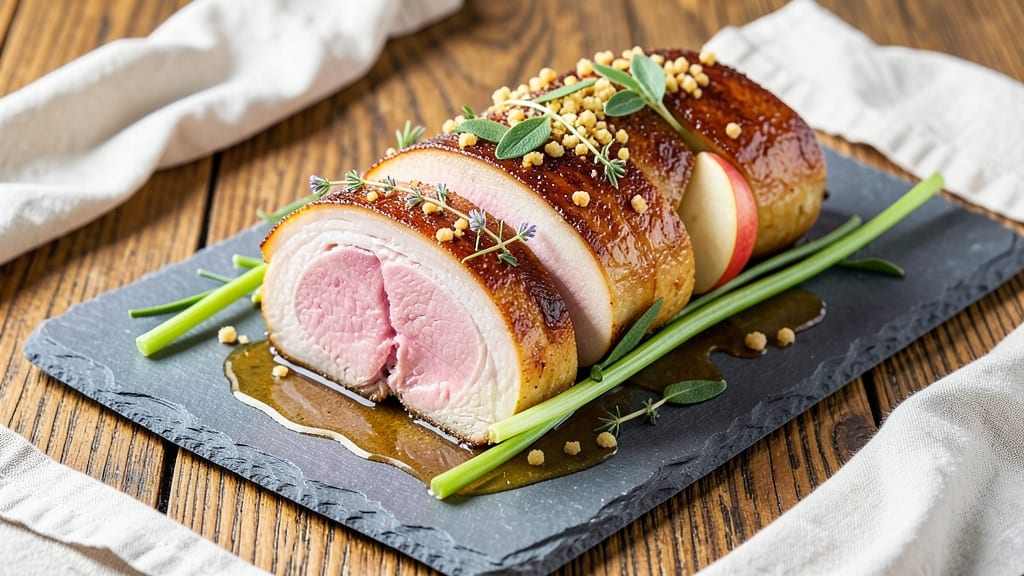
This apple stuffed boneless pork loin roast recipe transforms a simple dinner into a showstopping centerpiece with a crunchy celery-apple filling that stays intact through roasting. 🌟 The secret lies in carefully coring apples and binding them with breadcrumbs and herbs, creating a filling that holds its shape while infusing the pork with sweet, aromatic flavors.
I developed this technique after years of experimenting with stuffed roasts—this version delivers perfect doneness every time.
The recipe begins with a 375°F oven for about 1.5 hours, ensuring the pork reaches a safe internal temperature while the filling caramelizes slightly. You'll start by preparing the apples and celery mixture, then stuffing the boneless pork loin before tying it securely with kitchen twine.
This method guarantees the filling stays cohesive, offering a satisfying crunch with each bite.
What makes this dish truly special is the balance of textures and flavors: tender pork, sweet apples, and crisp celery all come together in harmony. The filling's structure prevents it from turning mushy, making every slice a delightful surprise.
This recipe is equally impressive for holiday gatherings or a cozy weeknight dinner.
Pair it with roasted root vegetables or creamy mashed potatoes to complete the meal. The natural sweetness of the apples complements the savory pork beautifully, creating a dish that's both comforting and sophisticated. Let's get started on this crowd-pleasing recipe!
Ingredients for apple stuffed pork loin roast recipe boneless
Transform a simple roast into a showstopper with these carefully selected ingredients for crunchy apple-stuffed pork loin.
| Ingredient | Amount | Notes |
|---|---|---|
| Boneless Pork Loin Roast 🥩 | 2 lb | Center-cut for even cooking |
| Honeycrisp Apples 🍎 | 2 whole | Cored and diced small |
| Celery Stalks 🧅 | 4 whole | Diced finely for texture |
| Puffed Breadcrumbs 🍞 | ½ cup | Panko preferred for crunch |
| Fresh Sage Leaves 🌿 | ¼ cup | Chopped finely for flavor |
| Fresh Thyme Leaves 🌿 | 1 tsp | Or 0.25 tsp dried |
| Extra-Virgin Olive Oil 🫒 | 2 tbsp | For binding filling |
| Unsalted Butter 🧈 | 2 tbsp | Melted for brushing |
| Diamond Crystal Kosher Salt 🧂 | 1 ½ tsp | Divided for seasoning |
| Freshly Ground Black Pepper 🌶️ | ½ tsp | For pork seasoning |
| Kitchen Twine 🧵 | 1 package | For secure tying |
| Granny Smith Apples 🍎 | 1 whole | Cored and diced small |
| Granulated Garlic 🧄 | 1 tsp | For filling seasoning |
The apples are the star—Honeycrisp and Granny Smith work best for that perfect sweet-tart balance. Local farmers markets often have them at peak season, but any crisp apple variety will do. The celery needs to be fresh, with vibrant green stalks—no wilted or rubbery pieces. For the breadcrumbs, panko gives that satisfying crunch, but regular breadcrumbs work if that's what you have. The pork should be center-cut and boneless for even cooking—ask your butcher to trim it if needed. Fresh herbs like sage and thyme elevate the dish, but dried will work in a pinch at one-third the amount.
No Honeycrisp apples? Fuji or Pink Lady hold up well too. The filling's structure relies on the breadcrumbs absorbing moisture, so don't skip them—oatmeal or crushed crackers can substitute if needed. For extra richness, add 1 tbsp minced shallot to the filling mix. The kitchen twine should be about 18 inches long to secure the roast properly. If you're short on time, pre-chop the apples and celery and store them in an airtight container with a sprinkle of lemon juice to prevent browning. The granulated garlic adds depth without overpowering—fresh minced works too.
The stuffed roast keeps beautifully—4-5 days in the fridge once cooked. For make-ahead prep, stuff the roast and refrigerate it overnight, then roast as directed. The filling's texture improves after resting for 15 minutes before slicing. Store leftovers in an airtight container with parchment paper between slices to maintain moisture. Reheat portions in a 350°F oven for about 10 minutes to restore crispness.
Why You'll Love This Recipe
- Minimal Chopping Required: I swear by this trick—just dice the apples and celery into rough chunks, no need for fancy knife work. The Honeycrisp stays crisp even after baking, so you’re not stuck with mushy filling.
- Sweet-Savory Magic: That first bite? Crispy breadcrumbs meet juicy pork, then the apples burst with tart-sweetness while the sage adds this earthy warmth. It’s like a hug for your taste buds—no one expects pork to taste this good.
- Weeknight or Holiday Hero: Same recipe works for a quick Tuesday dinner or impressing guests. Just adjust the oven time—30 minutes for a small roast, 45 for a crowd. Leftovers reheat perfectly, too.
- Budget-Friendly Luxury: Pork loin stretches far when stuffed, and Honeycrisp apples add gourmet flair without breaking the bank. I’ve made this for $12 and still felt fancy. (Yes, even on a Tuesday night.)
Step-by-step instructions for apple stuffed boneless pork loin roast
Master this technique and you'll achieve a perfectly seasoned roast with a filling that stays intact through roasting.
👨🍳 Step 1: Prepare the Celery-Apple Filling
In a medium bowl, combine the diced 4 whole celery stalks and diced 2 whole Honeycrisp Apples (from the ingredients list). Add the 0.5 cup Puffed Breadcrumbs, 0.25 cup Fresh Sage Leaves, 1 tsp Fresh Thyme Leaves, 1 tsp Granulated Garlic, and 1 whole Granny Smith Apple (also diced). Drizzle with 2 tbsp Extra-Virgin Olive Oil and mix gently with your hands until all ingredients are evenly distributed.
Press the mixture firmly in the bowl to help it hold its shape when stuffed. This compression is crucial—it prevents the filling from disintegrating during roasting. The Granny Smith apple adds tartness that balances the sweetness of the Honeycrisp, while the breadcrumbs provide structure and crunch. Cover and refrigerate for 20 minutes while you prepare the pork.
🔪 Step 2: Create the Pocket and Stuff the Roast
Using a sharp boning knife, carefully cut a pocket into the center of the 2 lb Boneless Pork Loin Roast about 3 inches deep and 2 inches wide. Make clean, straight cuts—this prevents the meat from tearing when you stuff it. The pocket should be large enough to hold the entire filling mixture without bulging.
Transfer the chilled filling to the pocket and press it firmly into place. Use your fingers to pack it down snugly. This step is where most home cooks struggle—don't force it if it doesn't fit. If needed, gently compress the filling further to make it fit. Once stuffed, secure the pocket with kitchen twine, tying it tightly every 2 inches to prevent the filling from leaking during roasting.
🔥 Step 3: Season and Sear the Roast
In a large oven-safe skillet, melt 2 tbsp Unsalted Butter over medium-high heat. Rub the exterior of the stuffed roast with the melted butter, coating it evenly. Sprinkle 1 tsp Diamond Crystal Kosher Salt and 0.5 tsp Freshly Ground Black Pepper over all sides, pressing gently to adhere.
Sear the roast for 3-4 minutes per side until it develops a deep golden-brown crust. You're looking for color development, not cooking through—this creates flavor and helps the roast hold its shape during roasting. The butter will foam and sizzle, which is normal. Remove the skillet from heat and let the roast rest for 5 minutes before transferring to the oven.
🔥 Step 4: Roast to Perfect Doneness
Preheat your oven to 375°F. Transfer the seared roast to a baking sheet lined with parchment paper. Roast for 40-45 minutes until the internal temperature reaches 145°F when measured with a meat thermometer in the thickest part of the roast (avoiding the filling). The filling should be warm throughout but still hold its shape—it will continue cooking slightly during resting.
Here's the thing—don't overcook. Pork continues to rise in temperature as it rests, and you want it to reach 150°F during that time. If the filling starts to brown too quickly, tent the roast loosely with foil to prevent over-browning while it finishes cooking internally. The celery-apple mixture should be tender but still retain its structure when sliced.
⏰ Step 5: Rest and Slice for Maximum Juiciness
Transfer the roast to a cutting board and let it rest for 15-20 minutes before slicing. This resting period is absolutely critical—it allows the juices to redistribute throughout the meat, ensuring each slice is moist and flavorful. During this time, the internal temperature will rise to 150-155°F, which is ideal for tender, juicy pork.
Remove the twine and slice the roast into ½-inch thick slices, cutting through the filling as well. The celery-apple mixture should hold together beautifully, providing a delightful contrast to the tender pork. Serve immediately with pan juices spooned over the top for extra richness. The filling's texture should be slightly crisp from the breadcrumbs while remaining tender from the apples and celery.
Pro Tips For Making Apple Stuffed Pork Loin Roast Recipe Boneless
- STEAM THE APPLE FIRST: I learned this the hard way—raw apple chunks release way too much moisture and turn your stuffing into mush. Core the apples, slice them, and simmer in a pan with a splash of water for 5 minutes until just tender. Drain well before mixing with the pork—this keeps the filling dry and crispy where it matters.
- SALT THE PORK TWICE: Don’t just season the outside. After stuffing, sprinkle a pinch of salt inside the cavity too—it penetrates deeper while roasting. Then, right before it hits the oven, hit the exterior with another light coat of salt. The crust gets better, and the meat stays juicier.
- BRUSH WITH APPLE JUICE: Skip the watery glaze. After searing the pork, brush the exterior with the reserved apple cooking liquid (from steaming the slices) mixed with a spoonful of honey. It caramelizes faster than plain butter and gives that sticky, restaurant-worthy finish you’re after.
- USE COLD APPLES IN STUFFING: Toss your celery, sage, and breadcrumbs with the chilled steamed apple slices—yes, even if they’re still warm from the pan. The contrast keeps the filling from overcooking while the pork roasts. I know it feels counterintuitive, but it’s the thing that actually changes the texture.
Storing and reheating this dish
Fridge Storage
Store cooked apple stuffed pork loin in an airtight container with parchment paper between slices to maintain moisture. It keeps well for 4-5 days at 40°F or below—the filling stays crisp when properly stored. I like using glass Pyrex containers because they prevent odors from seeping in. 🌟
Freezer Prep
For longer storage, wrap individual portions in plastic wrap before placing in a freezer bag with all air removed. Label with the date—this roast freezes beautifully for up to 3 months. Thaw overnight in the fridge before reheating for best texture.
Oven Reheating
Preheat your oven to 350°F and place slices on a baking sheet. Cover loosely with foil and heat for 10-12 minutes until reaching 165°F. The breadcrumbs will regain their crispness while the pork stays juicy.
Add a splash of apple cider to the pan for extra moisture if needed. ✨
Microwave Method
For quick reheating, cover slices with a damp paper towel and microwave on 50% power for 1-2 minutes. Stir halfway through to ensure even heating. This method works best for leftovers but may slightly soften the breadcrumb texture.
Make-Ahead Tips
Stuff the roast and refrigerate it overnight before cooking for even better flavor development. The filling's structure improves after resting, and the pork becomes more tender. I often prep everything the night before—just sear and roast in the morning. 💪
Serving Leftovers
Slice reheated pork into ½-inch thick medallions and serve on toasted brioche buns with caramelized onions for sandwiches. The filling pairs perfectly with sharp cheddar or Gruyère for a gourmet twist. Store any unused portions immediately to maintain freshness.
Nutrition facts
Frequently asked questions
Why does the filling need to be chilled before stuffing?
Chilling the filling for 20 minutes helps it firm up, making it easier to stuff and preventing it from leaking during roasting. The cold temperature also helps the breadcrumbs absorb moisture better, creating that perfect crisp-tender texture. This step is especially important for maintaining the filling's structure through the entire cooking process.
Can I use a different type of apple?
While Honeycrisp and Granny Smith work best for their sweet-tart balance, you can substitute with Fuji, Pink Lady, or Braeburn apples. Avoid overly soft varieties like Gala—they won't hold up well during roasting. The key is choosing apples that stay firm when cooked.
What if my roast tears when I cut the pocket?
If the meat tears, don't panic! Simply trim away any loose edges and use the remaining meat to create a larger pocket. For extra security, you can also tie the roast more tightly with kitchen twine or use toothpicks to help hold the filling in place. The roast will still cook beautifully—just focus on achieving that perfect 150°F internal temperature for juicy results.
How do I know when the filling is done?
The filling should be warm throughout but still hold its shape when sliced. The celery should be tender (no crunch) while the breadcrumbs maintain some crispness. The pork's internal temperature should reach 145°F before resting, then rise to 150-155°F during the 15-minute rest. If the filling appears too dry, a splash of apple cider during reheating helps restore moisture.
Can I make this recipe in a slow cooker?
While possible, I don't recommend it for this specific recipe. The slow cooker's gentle heat would cause the filling to lose its structure and become mushy. The oven method ensures the filling stays intact while the pork cooks evenly. For a similar effect, try wrapping the stuffed roast in foil and cooking it at 300°F for 3-4 hours instead, but you'll lose some of that beautiful crust.