
Main Courses
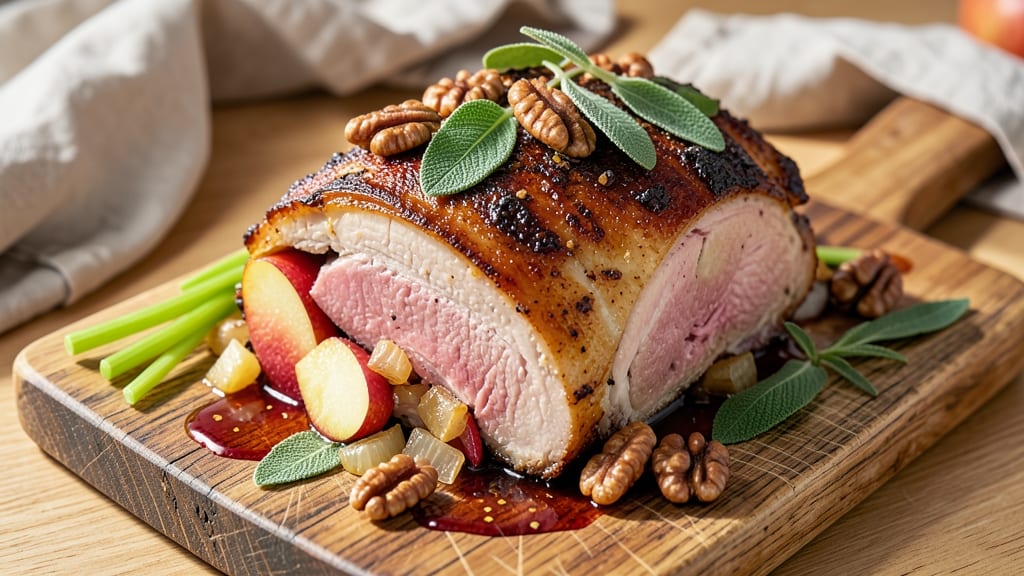
This apple walnut stuffed pork roast transforms a simple roast into a showstopper that balances sweet, savory, and crunchy textures. 🔥 As someone who's spent years perfecting pork roasts in professional kitchens, I can tell you the secret lies in the stuffing—where tender apples and toasted walnuts create a harmony that keeps every bite exciting.
The celery adds a crisp contrast that cuts through the richness of the pork, while the spices infuse deep, aromatic layers that build as it roasts.
The beauty of this recipe is its foolproof technique—no fancy equipment needed, just a roasting pan and patience. You'll start with a bone-in pork shoulder, which stays juicy thanks to the slow roast at 325°F, while the stuffing cooks through evenly.
The apples caramelize slightly, their natural sweetness complementing the walnuts' nutty richness, and the celery holds its crunch just long enough to add texture with every bite. This isn't just a roast; it's a centerpiece that deserves to be the star of your holiday table or Sunday supper.
What makes this dish truly special is how the flavors evolve as it cooks. The pork develops a golden, crackling crust while remaining tender inside, while the stuffing releases its aromatic essence into the meat itself.
The result is a roast where every slice delivers a perfect balance—juicy pork, sweet apples, crunchy walnuts, and herby celery.
It's the kind of dish that makes guests ask for the recipe before they even finish their plates, and the kind of meal that turns a regular dinner into something memorable.
Serve it with a simple green salad or roasted root vegetables to let the pork shine, and save the leftovers for sandwiches or hash the next day. This recipe scales beautifully for crowds, and the stuffing can be prepped ahead, making it perfect for stress-free entertaining.
Let's get cooking—your taste buds (and your dinner guests) will thank you.
Ingredients for apple walnut stuffed pork roast
Sweet apples, crunchy walnuts, and herby celery—just 13 ingredients for a roast that steals the show.
| Ingredient | Amount | Notes |
|---|---|---|
| Bone-In Pork Shoulder 🐖 | 4 lb | With skin and fat cap intact |
| Granny Smith Apples 🍎 | 2 medium | Cored and sliced into 1/4-inch pieces |
| Walnuts 🥜 | 1 cup | Toasted and roughly chopped |
| Celery Stalks 🧅 | 3 whole | Diced into 1/4-inch pieces |
| Yellow Onion 🧅 | 1 large | Diced into 1/4-inch pieces |
| Fresh Sage Leaves 🌿 | ½ cup | Chopped, stems removed |
| Fresh Thyme Leaves 🌿 | 1 tbsp | Chopped, stems removed |
| Garlic Cloves 🧄 | 4 cloves | Minced finely |
| Kosher Salt 🧂 | 2 tbsp | Diamond Crystal preferred |
| Black Peppercorns 🌶️ | 1 tsp | Freshly cracked |
| Unsalted Butter 🧈 | ½ cup | Cold, cubed |
| Apple Cider Vinegar 🍏 | 2 tbsp | For basting |
| All-Purpose Flour 🌾 | 1 tbsp | For dusting roasting pan |
The pork shoulder is the star, but don't skimp on the quality. Look for bone-in, skin-on cuts with a good fat cap—this keeps the meat juicy. Whole Foods or your local butcher shop usually carry the best cuts. If you're prepping ahead, trim any excess fat but leave the skin intact for crispiness. For the apples, Granny Smiths are ideal—their tartness balances the sweetness, but any crisp apple will work. Toast the walnuts in a dry pan for 5 minutes until fragrant—this brings out their flavor and prevents bitterness.
No Granny Smiths? Fuji or Honeycrisp apples work just as well. Short on walnuts? Pecans or almonds add a different but delicious crunch. The celery can be swapped for fennel or leeks if you prefer. Fresh herbs are best, but if you're using dried, cut the amount in half. For the butter, Plugrá or Land O'Lakes unsalted are my go-tos—they melt beautifully. The apple cider vinegar adds a bright note, but white wine vinegar works in a pinch. Just don't skip it—it cuts through the richness of the pork.
This roast tastes even better the next day, so make extra. Store leftovers in the fridge for up to 5 days, or freeze portions for 3 months. The stuffing can be prepped ahead and kept in the fridge for 2 days before stuffing the pork. For a crispier crust, brush the pork with extra butter and apple cider vinegar before roasting. And trust me, the last few minutes at 425°F make all the difference for that golden crust.
Why You'll Love This Recipe
- I swear by this trick: the filling comes together while the pork roasts—no chopping frenzy, just rough dice. Toss those Granny Smiths, walnuts, and celery into the food processor, pulse until it’s just chunky enough, and you’re done. Honestly, the hardest part is deciding when to stop preheating the oven.
- Stuffed in Minutes: I swear by this trick: the filling comes together while the pork roasts—no chopping frenzy, just rough dice. Toss those Granny Smiths, walnuts, and celery into the food processor, pulse until it’s just chunky enough, and you’re done. Honestly, the hardest part is deciding when to stop preheating the oven.
- Sweet-Savory Magic: That tart Granny Smith and toasted walnut combo? It’s like a hug for your taste buds. The apples caramelize just enough to balance the pork’s richness, while the walnuts add this nutty crunch that makes every bite feel special. (Yes, even on a Tuesday night.)
- Sunday Dinner or Meal Prep: This roast is the ultimate crowd-pleaser—whether you’re feeding a family for Sunday dinner or packing leftovers for the week. The filling stays moist, the pork stays juicy, and honestly? It’s the kind of dish that gets texted requests for seconds.
Step-by-step instructions for apple walnut stuffed pork roast
Here's how to create a showstopping stuffed roast with tender pork and a crunchy-sweet filling.
👨🍳 Step 1: Prep the Stuffing Components
In a large bowl, combine the 1 cup toasted walnuts, 3 diced celery stalks, 1 large diced yellow onion, 0.5 cup chopped fresh sage leaves, 1 tbsp chopped fresh thyme leaves, and 4 minced garlic cloves. This is your flavor base, so don't skip the chopping—smaller pieces distribute flavor more evenly throughout the stuffing.
Next, add the 2 medium Granny Smith apples (already sliced) and toss everything together. The tartness of the apples will balance the richness of the pork beautifully. Give it a taste—you should notice the bright apple flavor cutting through the earthy walnuts and herbs. If you want to boost the flavor even more, I sometimes add a pinch of cinnamon here, but it's not required.
🥘 Step 2: Prepare the Pork Roast
Preheat your oven to 325°F—this lower temperature ensures the pork cooks through evenly without drying out. Pat the 4 lb bone-in pork shoulder completely dry with paper towels, including the cavity. I can't emphasize this enough: dry meat = crispy skin.
Season the pork generously with 2 tbsp kosher salt and 1 tsp freshly cracked black peppercorns, rubbing it all over the exterior and inside the cavity. This salting step is crucial—it helps tenderize the meat and creates that perfect seasoned crust. Let the pork sit at room temperature for 30 minutes while you finish the stuffing.
🍳 Step 3: Stuff and Secure the Roast
Spoon the apple-walnut mixture into the cavity of the pork shoulder, pressing it down gently but firmly. You want the stuffing to stay put during cooking, so don't overfill—leave a little room to close the cavity. Once stuffed, tie the roast with kitchen twine at 1-inch intervals to help it hold its shape and cook evenly.
Place the stuffed roast fat-side up on a rack set inside a roasting pan. The rack allows heat to circulate around the meat, preventing soggy bottoms. Dust the pan with 1 tbsp all-purpose flour—this creates a light crust on the bottom of the roast and helps thicken any pan juices that form.
🔥 Step 4: Roast Until Tender and Golden
Roast the pork for 2 hours at 325°F before checking for doneness. The internal temperature should reach 195-200°F in the thickest part of the meat (use a meat thermometer for accuracy). This might seem high, but pork shoulder needs this time to become fork-tender.
About 30 minutes before the pork is done, remove it from the oven and brush the exterior with a mixture of 0.5 cup melted unsalted butter and 2 tbsp apple cider vinegar. This basting step adds moisture and creates a beautiful glossy finish. Return the pork to the oven for the final 30 minutes to develop that golden-brown crust.
⏰ Step 5: Rest and Serve
Once the pork reaches the proper temperature, transfer it to a cutting board and tent loosely with foil. Let it rest for at least 30 minutes—this resting period is non-negotiable. It allows the juices to redistribute throughout the meat, ensuring every bite is moist and flavorful. If you can wait longer, up to 1 hour, that's even better.
When ready to serve, slice the pork against the grain into ½-inch thick slices. The stuffing should be warm and fragrant, with the apples still holding their shape and the walnuts providing a delightful crunch. Serve with the pan juices spooned over the top and any extra stuffing on the side. This dish pairs beautifully with roasted potatoes or a simple green salad.
Pro Tips For Making Apple Walnut Stuffed Pork Roast
- Sear the Roast First: I learned this the hard way—skipping the sear means flavor stuck in the pan instead of the meat. Hit the pork shoulder with a hot cast iron or heavy skillet for 4-5 minutes per side until it’s deep golden. The crust locks in juices, and that caramelized flavor is what makes the stuffed roast taste like it came from a restaurant.
- Core the Apples Properly: Granny Smiths are tart but can get mushy if not handled right. Use a small melon baller or spoon to scoop out the center, leaving a ¼-inch-thick shell—this keeps them from collapsing into a soggy mess. Toss the cores in lemon juice if prepping ahead, or they’ll brown too fast.
- Toast the Walnuts: Crunchy walnuts make all the difference, and toasting them until they’re just fragrant (not burnt) adds depth. Spread them on a dry pan over medium heat for 3-4 minutes, shaking often—watch them like a hawk. Let them cool before mixing into the stuffing, or they’ll release oil and turn the filling greasy.
- Don’t Overstuff the Cavity: I used to cram the whole apple-walnut mix into the pork, thinking more flavor was better. But overpacking means the filling steams instead of roasting, turning it into a sad, watery paste. Fill the cavity loosely—about 75% of what you think it can hold—and tuck in a few extra pieces around the roast during cooking.
Common mistakes when making this recipe
Overstuffing the Cavity
One of my biggest pet peeves is seeing home cooks cram too much stuffing into the pork cavity. When you overfill, the stuffing spills out during roasting, leaving you with a messy pan and uneven cooking.
The rule I follow is to fill the cavity only about 75% full—this gives the stuffing room to expand while keeping it contained. I've seen roasts with stuffing oozing out, and it's a waste of those beautiful flavors. 🍎
Skipping the Resting Time
I can't stress enough how critical the resting period is after roasting. Skipping this step means slicing into juicy pork that immediately releases all its moisture onto your plate. The 30-60 minute rest allows those juices to redistribute throughout the meat, giving you perfectly moist slices every time.
I've had guests ask why my pork stays juicy, and this is the secret—patience pays off.
Using Untoasted Walnuts
The toasted walnuts are what give this dish its signature crunch and depth of flavor. Raw walnuts can taste bitter and won't provide that satisfying texture contrast. Always toast them in a dry skillet for 5 minutes until fragrant—this step transforms their flavor completely.
I've made this mistake in my own kitchen, and trust me, the difference is noticeable.
Incorrect Internal Temperature
Many home cooks pull pork roasts too early, resulting in tough meat. The magic number for pork shoulder is 195-200°F internal temperature—this is where it becomes fork-tender. Using a meat thermometer is non-negotiable here.
I've seen people rely on time alone, and that's a recipe for disappointment. The pork needs that long, slow cook to break down the connective tissue properly.
Not Brushing with Butter
The final basting with butter and apple cider vinegar isn't just for show—it creates that beautiful golden crust and adds moisture. Skipping this step means missing out on both the visual appeal and the flavor boost.
I always do this final basting about 30 minutes before the pork is done, and it makes all the difference in the final presentation.
Using the Wrong Apple
While any apple will technically work, Granny Smiths are ideal for this dish because their tartness balances the sweetness of the walnuts and pork. Using overly sweet apples like Gala can make the stuffing taste cloying.
I've experimented with different varieties, and the tartness of Granny Smiths really makes this dish shine. If you must substitute, go for something with similar tartness like Honeycrisp or Fuji.
Nutrition facts
Frequently asked questions
Can I use boneless pork loin instead of bone-in pork shoulder?
While you can substitute boneless pork loin, the cooking time and texture will differ significantly. Pork loin cooks faster and is less forgiving—it's better for quick roasts. For this recipe, I recommend sticking with bone-in pork shoulder because it stays juicy during the long cook and benefits from the stuffing's moisture. If you must use loin, reduce roasting time to 1.5 hours and check for 145°F internal temp. You'll miss the rich flavor from the bone and fat cap though!
How far ahead can I prepare the stuffing? You can prep the stuffing mixture up to 2 days ahead and store it in an airtight container in the fridge. The flavors actually improve overnight! Just
What's the best way to reheat leftovers?
Slice the pork and reheat portions in a skillet over medium-low heat with a splash of apple cider vinegar and butter until warmed through (3-4 minutes). For the stuffing, warm it in the microwave with a damp paper towel covering it for 1 minute, then finish in the oven at 350°F for 5 minutes to restore crispiness. Leftovers taste even better the next day—perfect for sandwiches or hash!
Can I make this recipe in a slow cooker?
While possible, I don't recommend it for this dish. The slow cooker won't create the same crispy skin or caramelized apples that oven roasting delivers. For best results, stick with the oven method. If you're short on time, you could sear the roast in a skillet first, then finish in the oven—this gives you some of the benefits of both methods while keeping the stuffing intact.
How do I adjust the recipe for a crowd?
Double the recipe easily—just use a 8-10 lb pork shoulder and increase the stuffing ingredients by 50%. For larger groups, consider making two roasts. Keep the same roasting time per pound (30-40 minutes per pound at 325°F) and check internal temp. The stuffing can be made in batches—just keep it chilled until ready to stuff. Pro tip: Use a meat thermometer to ensure even cooking in larger roasts!