
Main Courses
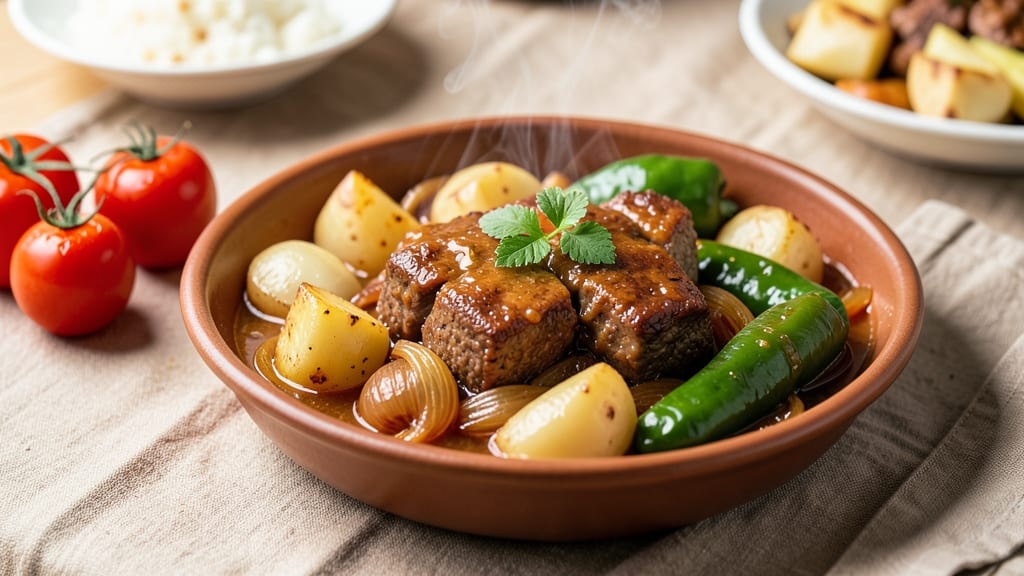
This beef caldereta recipe with pineapple juice brings the soul-warming flavors of Filipino comfort food to your kitchen with its perfect balance of rich, slow-cooked beef and bright tropical notes.
The pineapple juice isn't just an ingredient—it's the secret to cutting through the meat's richness while adding a subtle sweetness that makes every bite unforgettable.
I first discovered this recipe during a family visit to Manila, where my tita swore by her version, and now it's become a staple in our Portland home.
The magic happens in the slow simmer, where tender chunks of beef develop deep, savory flavors while the sauce thickens into a velvety consistency. Tomatoes, potatoes, and bell peppers round out the dish, creating a hearty stew that's as comforting as it is flavorful.
What sets this version apart is the careful balance of spices—just enough to enhance without overpowering—and the way the pineapple juice transforms the sauce from heavy to light in the most delicious way.
By the time you're done, you'll have a dish that's rich yet refreshing, with tender beef that falls apart at the touch of a fork and a sauce that's perfectly balanced between sweet, tangy, and savory.
The aroma alone will have everyone gathering around the table, and the first bite will remind you why this Filipino classic has stood the test of time. This isn't just dinner—it's an experience that turns a simple meal into something special.
Whether you're serving it with steamed rice for a full Filipino feast or enjoying it as-is with a side of garlic bread, this recipe delivers restaurant-quality results at home.
The best part? It's a one-pot wonder that gets better with time, making it perfect for meal prep or feeding a crowd. Let's get cooking!
Ingredients for beef caldereta recipe with pineapple juice
Rich beef, tropical pineapple, and velvety coconut milk—this is Filipino comfort in a pot.
| Ingredient | Amount | Notes |
|---|---|---|
| Chuck Roast 🥩 | 2 lb | Cut into 1.5-inch cubes |
| Pineapple Juice 🍍 | 1 cup | Freshly squeezed preferred |
| Tomatoes 🍅 | 2 medium | Roma or vine-ripened |
| Russet Potatoes 🥔 | 2 medium | Peeled and chunked |
| Green Bell Peppers 🧅 | 2 whole | Sliced into strips |
| Yellow Onion 🧅 | 1 medium | Diced |
| Garlic Cloves 🧄 | 6 cloves | Minced |
| Tomato Paste 🍅 | 2 tbsp | Squeeze tube preferred |
| Soy Sauce 🥢 | 2 tbsp | Light or regular |
| Calamansi Juice 🍋 | ½ cup | Or substitute lime juice |
| Bay Leaves 🌿 | 2 whole | Fresh preferred |
| Ground Black Pepper 🌶️ | 1 tsp | Freshly ground |
| Salt 🧂 | 1 ½ tsp | Kosher or sea salt |
| Olive Oil 🫒 | 2 tbsp | For searing |
| Coconut Milk 🥥 | 1 can | Full-fat preferred |
The chuck roast is where the magic starts. Look for good marbling—that's what gives you tender, fall-apart meat. Most grocery stores carry it pre-cubed, which saves time, but if you're feeling ambitious, ask the butcher to cut it for you. Costco and Trader Joe's usually have great options, and I always grab extra because it freezes beautifully. For the pineapple juice, fresh is ideal—it adds that bright, tropical punch—but canned works in a pinch. Just avoid anything with added sugar. The tomatoes? Roma or vine-ripened hold up best in long cooking, but regular old grocery store tomatoes will work too. Don't peel them unless you're feeling fancy—the skins add texture and flavor.
No calamansi? Lime juice works perfectly—just double the amount. Soy sauce substitute? Coconut aminos or tamari keep it gluten-free. Running low on bay leaves? Dried works at half the amount, but fresh is worth hunting down at an Asian market. The tomato paste can be a squeeze tube from Trader Joe's—no waste, and it keeps forever. For the potatoes, I always use russets because they hold their shape, but Yukon golds add a creamy texture if you prefer. The green bell peppers? Any color works, but green stays crisp while reds get softer faster. Toast your garlic cloves in the olive oil before adding them—that's the secret to deeper flavor.
This dish tastes even better the next day—honestly, the flavors meld into something extraordinary. Store it in the fridge for up to 5 days, and freeze portions for 3 months. I always make a double batch because it reheats beautifully and turns into easy lunches. The sauce thickens as it cools, so add a splash of water or coconut milk when reheating if it gets too stiff. Serve it over steamed rice, and trust me—you'll want to save leftovers for breakfast the next morning.
Why You'll Love This Recipe
- One-Pot Magic: I swear by this recipe when I’m too tired to scrub pots—just dump everything in one Dutch oven, let it simmer, and walk away. The chuck roast practically melts into tender shreds while the potatoes soak up that tangy pineapple-tomato sauce like sponges.
- Sweet-Savory Balance: That pineapple juice isn’t just for flavor—it cuts through the richness of the beef and tomatoes, leaving you with a sauce that’s ridiculously good. My kids fight over the last bite, and honestly, I don’t blame them.
- Weeknight to Potluck: This dish works whether you’re feeding your family on a Tuesday or bringing it to a holiday gathering. The potatoes and bell peppers hold up perfectly, and the sauce only gets deeper in flavor the longer it sits—so it’s even better the next day.
- Budget-Friendly Feast: Chuck roast and potatoes stretch this recipe into a full meal without breaking the bank. I’ve made this for eight people for under $20, and it’s the kind of leftovers that turn into sandwiches or fried rice later in the week.
Step-by-step instructions for beef caldereta with pineapple juice
This rich, tropical stew delivers deep flavors and tender beef in every bite—let's make it together.
Sear the Chuck Roast for Deep Flavor
Heat the 2 tablespoons olive oil in a large Dutch oven over medium-high heat until shimmering. Pat the 2 lb chuck roast dry with paper towels and cut it into 1.5-inch cubes—this ensures even cooking and maximum flavor penetration.
Work in batches to avoid crowding the pan. Add the beef cubes and sear for 3-4 minutes per side until they develop a rich, golden-brown crust. This step is crucial—it locks in juices and builds the foundation for your sauce. Once all the beef is browned, transfer it to a plate and set aside.
Build the Aromatic Base
In the same Dutch oven, add the 1 medium yellow onion (diced) and 2 whole green bell peppers (sliced into strips). Cook for 5 minutes until softened and slightly caramelized. Stir in the 6 cloves garlic cloves (minced) and cook for another 30 seconds until fragrant—this releases their full flavor potential.
Add the 2 medium tomatoes (chopped), 2 tablespoons tomato paste, 2 tablespoons soy sauce, and 1.5 teaspoons salt. Stir well to combine, then pour in the 1 cup pineapple juice and 0.5 cup calamansi juice. Bring to a gentle simmer, scraping up any browned bits from the bottom of the pan—this captures all the rich flavors you've built so far.
Simmer the Beef and Vegetables
Return the seared beef to the Dutch oven and add the 2 medium russet potatoes (peeled and chunked) and 2 whole bay leaves. Stir gently to coat everything in the sauce, then reduce the heat to low. Cover and let it simmer for 1 hour, stirring occasionally, until the beef is fork-tender and the potatoes are soft.
Here's the thing—don't rush this step. The low heat allows the beef to break down slowly, becoming tender and absorbing all those beautiful flavors. You'll know it's ready when the beef easily pulls apart with a fork and the sauce has thickened slightly.
Finish with Coconut Milk and Rest
After the initial simmer, stir in the 1 can coconut milk and increase the heat to medium-low. Let it simmer uncovered for another 10-15 minutes until the sauce has thickened to a velvety consistency. Taste and adjust the seasoning with 1 teaspoon ground black pepper if needed—this is where all the flavors come together.
Remove the bay leaves before serving. Let the caldereta rest for 5-10 minutes before serving—this allows the juices to redistribute, ensuring each bite is packed with flavor. Serve hot over steamed rice to soak up every last drop of that rich, tropical sauce.
Pro Tips For Making Beef Caldereta Recipe With Pineapple Juice
- Brown the Chuck Deep: That chuck roast won’t melt in your mouth if you skip this step—sear it in batches over medium-high heat until the outside is dark golden, not just light. I used to rush this, and the stew ended up gray and tough. Spend the 10 minutes; your taste buds will notice the difference.
- Simmer Pineapple Juice Slow: Reduce that pineapple juice first—bring it to a boil, then simmer uncovered for 5-7 minutes until it thickens slightly. Too much liquid later? Your sauce will turn watery. (Yes, even if you’re impatient like me.)
- Potatoes Last 15 Minutes: Toss the potatoes in after the beef and tomatoes have cooked down for at least 45 minutes. Adding them early turns them mushy—you want them tender but still holding shape. Test one early if you’re unsure.
- Sauté Peppers First: Char those green bell peppers in a hot pan for 3-4 minutes before adding them to the stew. The smoky flavor cuts through the sweetness of the pineapple juice and tomatoes—trust me, it’s worth the extra step. (Skip this, and your dish loses depth.)
Creative variations of this dish
Tropical Twist
Swap the pineapple juice for guava nectar or mango purée to create a fruitier, more vibrant version. I once made this with 1 cup guava nectar and ½ cup lime juice—the result was like a sweet-tart fiesta in my mouth.
For extra richness, add 1 tablespoon honey to the sauce. This works especially well if you're serving it with grilled shrimp on the side. 🍍
Spicy Kick
Filipino food loves heat, so add 1-2 tablespoons siling labuyo (Filipino chili) or 1 tbsp sambal oelek when building the sauce. For a smoky twist, stir in ½ teaspoon smoked paprika with the tomato paste.
If you're feeling adventurous, add 1-2 slices of long green chili (common in Filipino markets) for a milder but still spicy depth. Trust me, the first time I added this, my husband asked for seconds before the first bite was even finished.
Coconut Cream Version
For a lighter, creamier texture, replace the coconut milk with 1 cup coconut cream (the thick part from a can of coconut milk). This version is perfect for those who love their caldereta extra velvety.
I also like to add ½ cup unsweetened coconut milk at the end for a subtle sweetness that balances the tangy pineapple. Serve this with a sprinkle of toasted coconut flakes for crunch and a pop of color.
Vegetable-Packed
Add 1 cup eggplant (cubed) and 1 cup string beans to the pot when you add the potatoes. The eggplant soaks up the sauce beautifully, while the string beans add a fresh, crisp texture.
For extra veggies, toss in 1 cup cauliflower florets—they hold up well during the long simmer. This version is great for veggie lovers or when you want to stretch the dish further without sacrificing flavor.
My daughter Lily loves when I make this version because she gets to "help" chop the veggies (though she usually ends up eating more than she chops).
Slow Cooker Magic
Make this a one-pot wonder by transferring everything to a 6-quart slow cooker after searing the beef. Cook on low for 6-7 hours or high for 3-4 hours, then stir in the coconut milk during the last 30 minutes.
The slow cooker keeps the beef incredibly tender while letting the flavors meld together perfectly. I love using this method when I'm prepping for the week—just reheat and serve. Pro tip: Add ½ cup water if the sauce seems too thick after cooking. 💫
Breakfast Caldereta
Turn leftovers into a hearty breakfast by serving with garlic fried rice or tortillas. The rich, savory flavors make for a satisfying morning meal. For extra indulgence, top with a fried egg and sliced avocado.
I once made this for brunch at our Portland home, and it became an instant favorite—even with my picky-eater husband. The pineapple juice adds a bright contrast that cuts through the richness, making it feel fresh enough for daytime. Honestly, it's one of my favorite ways to repurpose leftovers. 🍳
Nutrition facts
Frequently asked questions
Why does this recipe use pineapple juice instead of just tomatoes?
The pineapple juice is the secret to balancing the dish's richness. It cuts through the beef's fat while adding natural sweetness that brightens the tomato-based sauce. Traditional Filipino caldereta often includes fruit juices to prevent the sauce from becoming too heavy—this version keeps it light yet deeply flavorful.
Can I substitute regular beef for chuck roast?
Chuck roast is ideal because its marbling breaks down beautifully during slow cooking, but you can use stew beef or brisket in a pinch. Avoid lean cuts like sirloin—they won't become tender enough. If using a different cut, increase cooking time by 15-20 minutes to ensure tenderness.
How do I know when the beef is fully cooked?
The beef is done when it easily pulls apart with a fork and reaches an internal temperature of 195°F. For extra safety, use a meat thermometer. If the sauce seems too thin after cooking, simmer uncovered for 5-10 minutes to thicken it naturally.
What's the best way to store leftovers?
Store in an airtight container in the fridge for up to 5 days or freeze for 3 months. Reheat gently on the stove with a splash of water or coconut milk if the sauce thickens. The flavors actually improve overnight—this dish tastes even better the next day!
Can I make this in an Instant Pot?
Sear the beef first, then cook on high pressure for 40 minutes with all ingredients except coconut milk. Release pressure naturally, stir in coconut milk, and cook on sauté mode for 5 minutes to finish. The Instant Pot version cooks 60% faster but requires careful monitoring to avoid overcooking.