
Sauces & Condiments
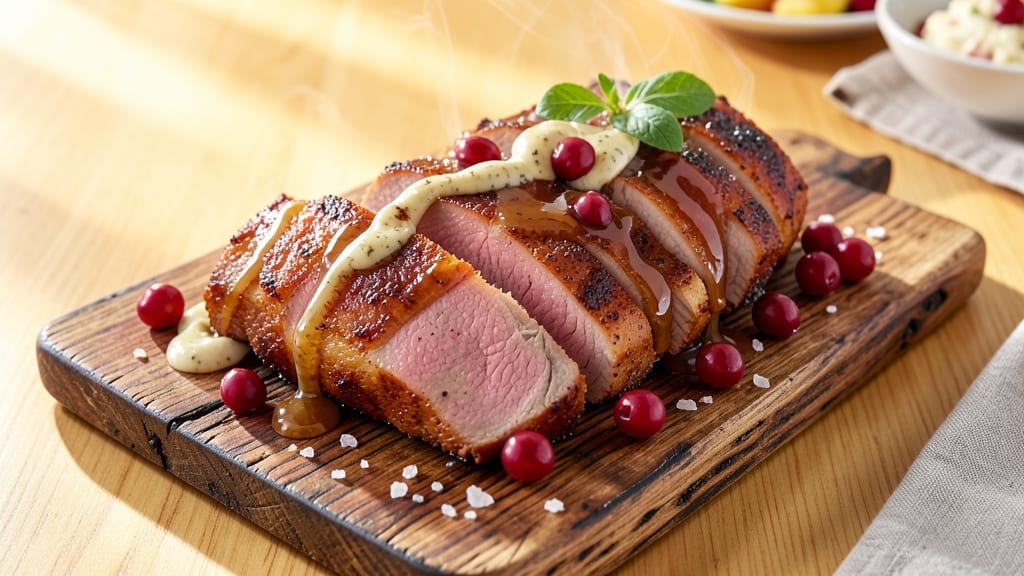
This Cranberry Dijon pork loin roast delivers restaurant-quality results with a sweet-tart glaze that caramelizes beautifully on the meat. 🔥 As someone who's cooked thousands of pounds of pork, I can tell you this combination of cranberry, Dijon, and apple cider creates a flavor profile that's both sophisticated and approachable.
The glaze isn't just a topping—it's the star that transforms simple pork into an elegant centerpiece.
The secret lies in balancing the acidity of cranberry and apple cider with the depth of Dijon mustard, creating a glaze that's both vibrant and complex. We'll start with a well-seasoned pork loin, roasted to perfection, then finish with a glossy glaze that caramelizes slightly at the edges.
This isn't your typical holiday pork—it's a dish that works equally well for Sunday dinners or special occasions.
What makes this recipe truly special is how the glaze interacts with the meat. As it caramelizes, it develops a beautiful amber color while maintaining that perfect balance of sweet and tangy flavors.
The pork emerges tender and juicy, with a crust that's irresistibly crisp. This is the kind of dish that makes you look like a star chef without requiring any complicated techniques.
Pair it with roasted root vegetables or a simple green salad to let the pork shine. The glaze works beautifully as a sauce for leftovers too—just reheat gently and brush on fresh slices. Let's get started on creating this showstopper for your table.
Ingredients for cranberry dijon pork loin roast with apple cider glaze
Sweet-tart glaze meets perfectly seasoned pork for a showstopper roast that's restaurant-quality simple.
| Ingredient | Amount | Notes |
|---|---|---|
| Pork Loin Roast 🍖 | 3 lb | Bone-in, center-cut preferred |
| Cranberries 🍇 | 1 cup | Fresh or frozen, chopped |
| Dijon Mustard 🍯 | ½ cup | High-quality for depth |
| Apple Cider 🍎 | ½ cup | Unfiltered for best flavor |
| Brown Sugar 🍚 | ¼ cup | Light or dark works |
| Balsamic Vinegar 🍷 | 2 tbsp | For extra depth |
| Olive Oil 🫒 | 2 tbsp | Extra-virgin for richness |
| Garlic Cloves 🧄 | 4 cloves | Minced for seasoning |
| Fresh Rosemary 🌿 | ½ oz | Chopped, fresh preferred |
| Salt 🧂 | 1 ½ tsp | Kosher or sea salt |
| Black Pepper 🌶️ | 1 tsp | Freshly ground preferred |
| Honey 🍯 | 1 tbsp | For glaze sweetness |
| Fresh Thyme 🌿 | ¼ oz | Chopped, or dried at 1/3 amount |
The pork loin is non-negotiable here—bone-in, center-cut stays juicier than boneless. Costco or Whole Foods usually have the best quality, but any well-marbled roast works. Look for vibrant color and good fat coverage. I always ask the butcher to trim excess fat—you want enough for flavor but not so much it makes the glaze greasy. The cranberries? Fresh is ideal, but frozen chopped cranberries (no sugar added) save time and work perfectly. For the Dijon, Maille or Whole Foods brand have that perfect balance of tang and richness—avoid the cheap stuff that tastes like vinegar.
No fresh cranberries? Cranberry sauce (unsweetened) works in a pinch, but reduce the apple cider by 2 tablespoons to balance the sweetness. Short on Dijon? Substitute with 3 tbsp regular yellow mustard plus 1 tbsp balsamic vinegar. The honey can be swapped for maple syrup if you're avoiding it, but trust me on the local raw honey—it adds a floral note that's worth the extra dollar. For the apple cider, unfiltered brands like Woodchuck or Strongwood have that perfect balance of tart and sweet. If you can't find them, use regular apple juice with a splash of lemon juice to mimic the acidity. The rosemary and thyme? Fresh is best, but if you're using dried, measure by weight—it's more concentrated than fresh.
This roast reheats beautifully—just slice it and warm in a 350°F oven for 10-15 minutes with a splash of apple cider. The glaze thickens as it cools, so reheat gently and brush on fresh slices. Leftovers keep for 4-5 days in the fridge, but honestly, they disappear faster than that. For make-ahead prep, make the glaze 2 days ahead and store it in the fridge—it actually tastes better after the flavors meld. The pork can be seasoned and refrigerated overnight too, which helps with even cooking. Freeze portions of the glaze for up to 3 months if you're making extra—just thaw in the fridge before reheating.
Why You'll Love This Recipe
- Five-Ingredient Magic: The pantry already has most of this—just grab a pork loin, a jar of cranberries, and the apple cider you’d drink anyway. Honestly, I’ve made it with whatever Dijon was open and still got that perfect tangy-sweet balance.
- Glaze That Sticks: That caramelized apple cider glaze? It doesn’t just drip—it clings like a hug, turning every bite into a mix of smoky pork and bright cranberry bursts. Between us, the first time I tasted it, I nearly licked the plate.
- Holiday Ready, Weeknight Reliable: Slap this on the table for Thanksgiving, but don’t be afraid to serve it up on a random Tuesday when you’re craving something special. The cranberries add that festive pop without requiring a 10-course menu.
- Leftovers That Don’t Suck: Cold slices the next day? Still delicious—just slice thin, toss with a little extra glaze, and wrap in a tortilla for a killer sandwich. I’ve fed a crowd with this roast and still had enough for lunches that actually tasted good.
Step-by-step instructions for cranberry Dijon pork loin roast
Here's how to create a showstopping roast with a perfectly balanced sweet-tart glaze every time.
👨🍳 Step 1: Prep the Pork and Make the Glaze Base
Start by patting the 3 lb pork loin roast completely dry with paper towels—this ensures maximum browning. In a small bowl, whisk together 0.5 cup apple cider, 0.25 cup brown sugar, 2 tbsp balsamic vinegar, 1 tbsp honey, and 1 cup cranberries (chopped if frozen). Let this mixture sit for 10 minutes so the cranberries soften slightly and release their juices.
In a separate small bowl, combine 0.5 cup Dijon mustard, 0.5 oz chopped fresh rosemary, 0.25 oz chopped fresh thyme, 4 minced garlic cloves, 1.5 tsp salt, and 1 tsp black pepper. This herb-packed mustard blend will become your pork's flavor foundation. Real talk: using fresh herbs here makes a noticeable difference in flavor depth.
🍳 Step 2: Sear the Pork for Maximum Flavor
Heat 2 tbsp olive oil in a large oven-safe skillet over medium-high heat until shimmering. Rub the pork roast all over with the mustard-herb mixture, pressing it into the meat so it sticks. Place the roast in the hot skillet and sear for 3-4 minutes per side until it develops a deep golden-brown crust—this is your flavor lock.
Here's the thing—don't move the pork around while searing. Let it develop that crust undisturbed. You'll know it's ready when it releases easily from the pan (that's your signal to flip). The seared exterior will help hold the glaze beautifully during roasting.
🔥 Step 3: Roast to Perfect Medium-Rare
Transfer the skillet to a preheated 400°F oven (use the oven-safe skillet for even heat circulation). Pour the cranberry glaze mixture over the pork, coating it completely. Roast for 25-30 minutes until the internal temperature reaches 145°F (medium-rare) when measured with an instant-read thermometer in the thickest part.
About 15 minutes into roasting, you'll notice the glaze starting to bubble and caramelize—that's when the magic happens. The cranberries will soften and release their juices, creating that perfect sweet-tart sauce. If the glaze looks too thick, add 1-2 tablespoons of water to thin it slightly. Don't open the oven door during this time—you want to maintain that even heat for consistent cooking.
⏰ Step 4: Rest and Glaze for Showstopping Presentation
Remove the pork from the oven and transfer it to a cutting board. Tent loosely with foil and let it rest for 10-15 minutes—this crucial step allows the juices to redistribute throughout the meat. While it rests, return the skillet to the stovetop over medium heat and simmer the glaze for 3-5 minutes until it thickens slightly and becomes syrupy.
Here's where it gets fun—after resting, slice the pork into ½-inch thick medallions and arrange them on a serving platter. Spoon that beautiful caramelized glaze over the top, letting it drizzle down the sides. The contrast of the deep pink meat with the glossy red glaze is what makes this dish so impressive. Serve immediately with roasted root vegetables or mashed potatoes to soak up all that delicious sauce.
Pro Tips For Making Cranberry Dijon Pork Loin Roast With Apple Cider Glaze
- USE A MEAT THERMOMETER: Pork loin hits its sweet spot at 145°F—no guessing. I used to pull it at 150°F, and it came out dry. Trust the thermometer, not the clock.
- SIMMER THE GLaze LOW: The glaze burns faster than you’d think. After adding cranberries and cider, reduce heat to medium-low and let it bubble gently for 10-12 minutes. Skimp on the heat, and you’ll end up with a sad, scorched mess.
- DRY THE CRANBERRIES: Pat them thoroughly with a paper towel before simmering. Wet berries release too much liquid, turning your glaze into a thin, watery sauce. A quick dry = richer flavor and better texture.
- SALT THE PORK LOIN FIRST: Season it generously with salt and pepper 1-2 hours before cooking. This ensures the crust forms properly and the flavor penetrates deep. I learned this the hard way—rushing the seasoning means a bland outer layer.
Regional styles of this cranberry dijon pork loin roast with apple cider glaze
Southern BBQ Style
In the Carolinas, we take this dish to the next level by adding a smoky element. After roasting the pork, I finish it on a charcoal grill over indirect heat at 275°F for 15-20 minutes while basting with extra glaze.
The wood smoke from hickory or pecan chips infuses the glaze with a subtle smokiness that pairs perfectly with the sweet-tart profile. Serve with classic Southern sides like collard greens or cornbread. This method works especially well if you have a grill or smoker available. 🔥
New England Twist
Up north, they lean into the cranberry even more by adding ½ cup cranberry sauce (unsweetened) to the glaze mixture before roasting. The result is a thicker, jam-like sauce that clings beautifully to the pork.
I also swap the rosemary for fresh sage and add a pinch of cinnamon to the glaze for warmth. This version pairs wonderfully with mashed sweet potatoes and roasted Brussels sprouts. The extra cranberry gives it that cozy, autumnal feel that New Englanders love. 🍁
Midwest Comfort Food
In the heartland, this roast becomes a centerpiece for holiday gatherings. I increase the brown sugar to ⅓ cup and add 1 tsp ground ginger to the glaze for depth. The Midwest style also incorporates ½ cup apple cider reduction (simmered down to thicken) into the final presentation.
This version is often served with cream-style corn and buttery dinner rolls. The extra sweetness and ginger make it feel like a hug on a plate—perfect for cold winter months. 🏡
Pacific Northwest Adaptation
Out west, they lighten the glaze by reducing the sugar to ¼ cup and adding 1 tbsp lime zest for brightness. The Pacific Northwest version also includes fresh thyme and rosemary sprigs tucked into the roast before cooking, which adds a beautiful presentation element.
This style pairs beautifully with roasted beets and wild rice pilaf. The lime zest cuts through the richness of the pork, making it feel fresh and vibrant—ideal for summer gatherings. 🌿
Texas-Style BBQ Fusion
In Texas, we take this dish to the next level by wrapping the pork in thin bacon slices before roasting. The bacon adds a smoky, salty crust that complements the sweet-tart glaze perfectly. I also add ½ cup chopped pecans to the glaze for crunch and texture.
Serve with classic Texas sides like baked beans and white bread. This fusion is a crowd-pleaser that brings together the best of both worlds—elegant roast and bold BBQ flavors. 🍖
Modern French Technique
For a restaurant-worthy twist, I use a reverse sear method—roast the pork at 275°F until it reaches 130°F internal temperature, then sear it in a screaming-hot skillet to create a perfect crust.
The glaze gets a touch of white wine reduction (simmer ¼ cup dry white wine until syrupy) mixed in before finishing. This technique ensures an even cook with a stunning presentation. Serve with truffle mashed potatoes and sautéed green beans** for a gourmet touch. 🍷
Nutrition facts
Frequently asked questions
Can I use frozen cranberries instead of fresh?
Frozen cranberries work perfectly—just chop them first to mimic fresh texture. The key is to thaw them slightly before adding to the glaze (about 5 minutes in warm water) so they release their juices properly. Avoid using pre-sweetened cranberry sauce as it will make the glaze too thick and cloying.
What's the best way to reheat leftovers?
Slice the pork and warm in a 350°F oven for 10-15 minutes with a splash of apple cider. For the glaze, reheat in a saucepan over low heat until warm—never microwave as it can make the glaze grainy. Pro tip: Brush fresh glaze on slices right before serving to restore that glossy finish.
Why does my glaze turn out too thick?
This usually happens when the cranberries don't soften enough or the oven dries out the mixture. Add 1-2 tablespoons of water or apple cider while roasting, and simmer the glaze longer after cooking to reduce it to the right consistency. For extra insurance, simmer the glaze base (before roasting) for 5 minutes to pre-reduce it.
Can I make this ahead of time?
Yes! Prepare the glaze 2 days ahead and store it refrigerated—it actually tastes better as flavors meld. For the pork, season it overnight in the fridge for even cooking. On serving day, just sear and roast as directed. The glaze can also be frozen for 3 months—thaw in the fridge before using.
What's the best way to caramelize the glaze?
The secret is patience! Let the glaze bubble undisturbed in the oven for 15-20 minutes—this creates deep caramelization. For extra shine, finish by simmering the glaze on the stovetop for 3-5 minutes after roasting. Avoid stirring constantly as this prevents proper caramelization.