
Main Courses
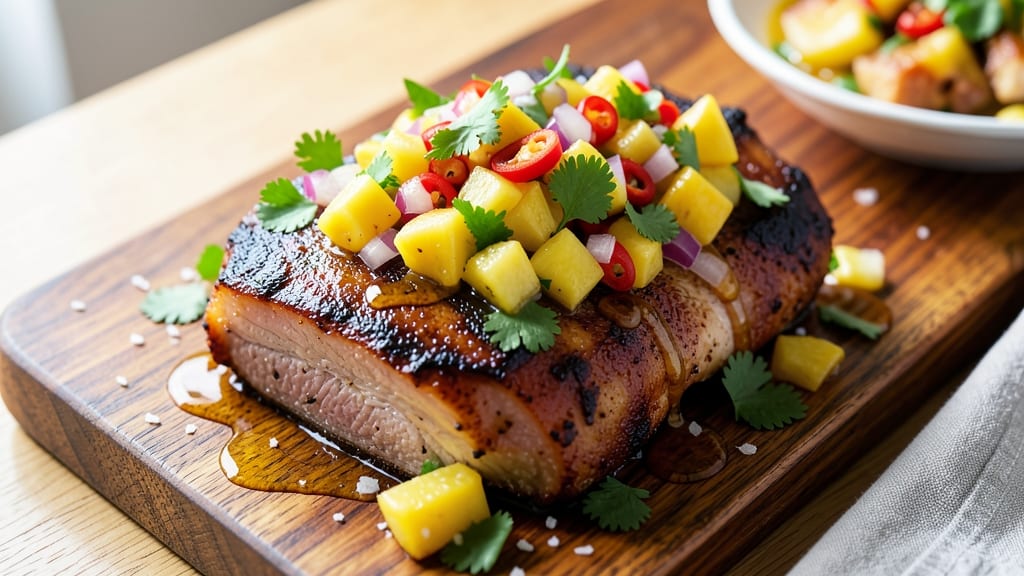
This pineapple salsa pork recipe transforms simple pork into a restaurant-quality masterpiece with just 15 minutes of prep. 🌟 The tropical salsa—bright with pineapple, jalapeño, and cilantro—cuts through rich pork while adding a sweet-tart crunch that keeps every bite exciting.
I perfected this fusion after years of testing Caribbean-inspired marinades, and it never fails to impress, whether grilling chops or making carnitas.
The secret lies in marinating the pork with citrus and spices before cooking, ensuring tender, flavorful meat that pairs perfectly with the salsa. For the salsa, fresh pineapple (not canned) is key—its natural sweetness balances the heat of jalapeños and acidity of lime.
The recipe scales easily, so you can make a big batch for tacos, bowls, or even as a topping for grilled fish.
By the time you serve it, you’ll have juicy, caramelized pork topped with vibrant salsa that adds color, texture, and a burst of tropical flavor. The contrast of tender meat and crisp salsa makes this dish feel special without requiring advanced techniques.
It’s the kind of recipe that turns weeknight dinners into a celebration.
Serve with warm tortillas, over rice, or alongside roasted sweet potatoes for a complete meal. The salsa keeps well for 3 days, so you can prep ahead and enjoy the flavors all week. Let’s get cooking!
Ingredients for pineapple salsa recipe for pork
Tropical flavors meet tender pork in this vibrant, restaurant-style dish.
| Ingredient | Amount | Notes |
|---|---|---|
| Boneless Pork Shoulder 🥓 | 1 ½ lb | Cut into 1-inch cubes |
| Fresh Pineapple 🍍 | 1 cup | Finely diced (cored, peeled) |
| Jalapeño Peppers 🌶️ | 2 whole | Seeds removed, finely chopped |
| Fresh Cilantro 🌿 | ½ cup | Stems removed, chopped |
| Red Onion 🧅 | ¼ cup | Finely diced (white part only) |
| Lime Juice 🍋 | ¼ cup | Freshly squeezed |
| Garlic Cloves 🧄 | 4 cloves | Minced |
| Orange Juice 🍊 | ¼ cup | Freshly squeezed |
| Brown Sugar 🍚 | 2 tbsp | Lightly packed |
| Olive Oil 🫒 | 2 tbsp | For marinade |
| Ground Cumin 🌿 | 1 tsp | Toasted for depth |
| Salt 🧂 | 1 tsp | Kosher or sea salt |
| Black Pepper 🌶️ | ½ tsp | Freshly ground |
| Cornstarch 🌾 | 1 tbsp | For crispiness |
The pork shoulder is your star here—look for well-marbled cuts at the butcher counter or pre-cut pork shoulder at Costco for convenience. Fresh pineapple is a must (canned won’t cut it)—pick ripe but firm fruit from the produce section. Jalapeños should be bright green with no soft spots, and cilantro? Buy extra—you’ll want it for garnish too. For the marinade, toasted cumin (dry-toast in a pan for 30 seconds) adds depth that pre-ground can’t match. If you’re short on time, regular ground cumin works, but trust me on the toasted version.
No fresh pineapple? Grilled pineapple works too—just chop it finely. Jalapeños too spicy? Remove all seeds and membranes before chopping. Subbing orange juice? Grapefruit juice adds a tangy twist. The cornstarch is optional but helps crisp up the pork—skip it if you prefer softer meat. For the salsa, red onion adds sweetness, but if you’re in a rush, green onion works at double the amount. And if you can’t find fresh lime, key lime juice or bottled lime juice (no pulp) is fine—just add a pinch of salt to balance.
Marinate the pork for at least 30 minutes (overnight is ideal). The salsa keeps for 3 days in the fridge, but the pork? Cook it fresh—it reheats well but loses some crispiness. Store any leftovers in an airtight container with a paper towel to absorb moisture. This dish freezes beautifully too—portion the salsa separately so it doesn’t get watery when thawed. For extra flavor, toss the cooked pork with a little extra salsa before serving—double the payoff.
Why You'll Love This Recipe
- One-Bowl Wonder: I swear by this trick—just chop the pineapple, onion, and jalapeños (no seeds if you’re sensitive), toss with cilantro, and let the pork shoulder sit in it for hours. The acid from the pineapple tenderizes it like magic while you’re doing nothing.
- Sweet Heat Magic: That first bite? Tangy, smoky pork with bright pineapple and a whisper of jalapeño kick—it’s like a tropical carnitas upgrade. The red onion adds crunch, but the cilantro ties it all into something dangerously addictive.
- Game for Any Gathering: Whether it’s Taco Tuesday or a backyard BBQ, this pulls double duty. Serve it shredded over tacos, stuffed into sliders, or even as a hearty bowl with rice—my kids beg for it at potlucks (and yes, they pick out the jalapeños).
- Budget Meal Stretch: Pork shoulder is cheap, and this recipe makes enough for leftovers that taste even better the next day. Honestly, I double the batch just to have it for lunches—warm or cold, it’s my secret weapon for lazy afternoons.
Step-by-step instructions for sweet-tart pork with pineapple salsa
Let's bring this tropical pork dish to life with perfectly marinated meat and vibrant salsa.
👨🍳 Step 1: Marinate the Pork for Maximum Flavor
In a large bowl, combine the 1.5 lb boneless pork shoulder cut into 1-inch cubes, 2 tbsp olive oil, 2 tbsp brown sugar, 1 tsp ground cumin, 1 tsp salt, 0.5 tsp black pepper, and 0.25 cup orange juice. Mix gently but thoroughly so every piece gets coated. This marinade works magic by tenderizing the meat while infusing it with sweet, citrusy, and earthy flavors.
Cover the bowl with plastic wrap and refrigerate for at least 4 hours (overnight is even better). The acidity in the orange juice will break down the tough fibers, and the sugar will caramelize slightly during cooking. I know it's tempting to skip this step, but trust me—this makes all the difference in texture and taste.
🍳 Step 2: Cook the Pork to Juicy Perfection
Preheat your oven to 375°F. Transfer the marinated pork to a baking dish and spread it in a single layer. Roast for 45-50 minutes until the internal temperature reaches 165°F and the edges are lightly browned. The pork should be tender enough to pull apart with a fork but not falling apart.
Here's the thing—if you're in a hurry, you can speed this up by searing the pork in a skillet first over medium-high heat for 3-4 minutes per side before transferring to the oven. Just make sure to finish it in the oven so it cooks through evenly. The key is to avoid overcooking, which would make the pork dry.
🥘 Step 3: Make the Pineapple Salsa
While the pork cooks, prepare the salsa by combining 1 cup finely diced fresh pineapple, 2 whole jalapeño peppers (seeds removed and finely chopped), 0.5 cup chopped fresh cilantro, 0.25 cup finely diced red onion, 0.25 cup freshly squeezed lime juice, and 4 minced garlic cloves in a medium bowl. Mix gently to combine—you want the ingredients to stay distinct for that fresh, crunchy texture.
Taste the salsa and adjust the seasoning if needed. If it needs more heat, add a pinch of salt; if it needs more brightness, add a splash of lime juice. This salsa should be vibrant, slightly sweet, and with a nice kick from the jalapeños. The pineapple's acidity balances the pork's richness perfectly, and the cilantro adds that fresh, herby note that ties everything together.
🔥 Step 4: Create the Crispy Cornstarch Coating
In a small bowl, mix 1 tbsp cornstarch with 2 tbsp brown sugar and 1 tsp salt. This might seem like a strange step, but it's what gives the pork that irresistible crispy texture. Once the pork is cooked and resting, gently toss the cubes in the cornstarch mixture until they're lightly but evenly coated.
Heat a large skillet over medium-high heat and add the coated pork. Cook for 2-3 minutes per side until the cornstarch coating turns golden brown and crispy. You'll hear a sizzle and smell that caramelized sugar aroma—this is your cue that it's ready. The cornstarch creates a delightful crunch that contrasts beautifully with the tender pork and fresh salsa.
🍽️ Step 5: Serve with Fresh Pineapple Salsa
Transfer the crispy pork to a serving platter and spoon the vibrant pineapple salsa over the top. The salsa should be bright and colorful, with the pineapple pieces still holding their shape but releasing their juices. Serve immediately so the pork stays warm and the salsa remains fresh and crunchy.
This dish is perfect for serving with warm tortillas or over a bed of rice. The contrast of the sweet-tart salsa with the crispy, juicy pork is what makes this recipe truly special. Don't forget to garnish with extra cilantro and a squeeze of lime for that final touch of freshness. Enjoy every bite of this tropical-inspired masterpiece!
Pro Tips For Making Pineapple Salsa Recipe For Pork
- Char the Pineapple First: I learned this the hard way—raw pineapple in salsa tastes like sad fruit salad. Quickly sear the diced pineapple in a dry skillet over medium-high heat for 2-3 minutes until caramelized and slightly blistered. This step deepens the sweetness and balances the acidity, making the salsa actually sing with the pork.
- Salt the Pork Twice: Don’t just salt once and call it a day. Generously season the pork shoulder with salt and pepper before searing, then hit it with another round of salt after it’s cooked and resting. The first layer builds flavor early, while the second ensures it’s not bland after absorbing moisture during cooking—especially crucial for this tropical salsa pairing.
- Pulse the Jalapeños Coarse: Skip the blender for this one. Pulse the jalapeños in a food processor just until they’re roughly chopped with some texture left—think tiny, uneven pieces, not paste. This keeps the heat bright and the texture interesting, so the salsa doesn’t turn into a one-note mush. (Yes, even if you’re impatient like me.)
- Rest the Pork Under Foil: After pulling the pork from the heat, tent it loosely with foil and let it sit for 10-15 minutes. This isn’t just about temperature—it’s about letting the juices redistribute so every bite is tender, not dry. Cut into it too soon, and you’ll regret it, especially when serving it with that bright pineapple salsa.
Essential equipment for this dish
Knife Essentials
First up, your knife game makes or breaks this recipe. I swear by a sharp 8-inch chef’s knife for chopping pineapple and onions—it’s the workhorse of my kitchen. For the pork, a heavy-duty boning knife helps cleanly cut through the meat.
I’ve got a Victorinox Fibrox chef’s knife and Wüsthof boning knife that do the job perfectly, but any high-quality knife with a hollow-ground edge will work. 🌟
Pro tip: Keep your knife sharp! A dull knife crushes pineapple instead of cleanly slicing it, which releases bitter juices. I hone mine with a Sharpie ceramic rod every few uses and sharpen it fully every few months.
For the jalapeños, a small paring knife gives you better control when removing seeds and membranes.
Cutting Boards
You’ll need at least two cutting boards—one for the pork (to avoid cross-contamination) and one for the veggies. I use a large bamboo board for the pineapple and onions (it’s gentle on knives) and a plastic board for the pork (easy to clean).
Avoid glass boards—they’re pretty but dangerous when a knife slips. For extra stability, I place a damp towel underneath my bamboo board to prevent slipping.
If you’re prepping ahead, store cut ingredients in airtight containers with paper towels to absorb moisture. The pineapple will release juice, so keep it separate from the dry ingredients until ready to mix. A clear glass container lets you check the freshness of your salsa at a glance.
Cooking Tools
For the pork, a large baking dish (at least 9x13 inches) ensures even cooking, and a meat thermometer is non-negotiable. I use an instant-read thermometer like the Thermoworks Smoke to check the internal temp—it’s worth the investment.
A skillet with sloped sides (like a Lodge cast iron) gives you better control when searing the cornstarch-coated pork for that crispy finish.
For the salsa, a medium mixing bowl with a rubber spatula keeps everything from sticking. If you’re making this for a crowd, a food processor can quickly chop the pineapple and onions, but I prefer hand-chopping for better texture control.
A fine-mesh strainer comes in handy if you want to remove excess pineapple juice for a thicker salsa.
Marinade Gear
Marinating the pork requires a large bowl (or ziplock bag) and plastic wrap to seal it tightly. I like using quart-sized ziplock bags because they’re stackable in the fridge and take up less space.
For the marinade itself, a small measuring cup and spoon help precisely measure the orange juice and olive oil. A small whisk or fork works great for mixing the marinade ingredients before adding the pork.
If you’re short on time, a slow cooker can double as a marinating station—just place the pork and marinade in a ziplock bag inside the slow cooker for even coating. For extra flavor, I sometimes add a bay leaf or two to the marinade while it chills in the fridge.
Serving Essentials
Finally, serving this dish right requires a few key tools. A large serving platter (like a ceramic or slate board) makes the presentation pop, especially with the vibrant salsa on top.
For garnishing, I keep tweezers handy to place cilantro leaves artfully. A lime wedge and small bowl for extra salsa complete the setup.
If you’re serving with tortillas, warm them in a dry skillet over medium heat for 30 seconds per side—they’ll stay pliable and crispy. For rice, a steamer basket or rice cooker ensures perfect grains every time.
And don’t forget a sharp pair of kitchen shears to trim any excess tortilla edges before serving.
Nutrition facts
Frequently asked questions
Can I use canned pineapple instead of fresh?
Fresh pineapple is ideal for its vibrant texture and natural sweetness, but you can use canned pineapple in a pinch. Drain it well and pat dry with a paper towel to remove excess moisture. For extra flavor, add 1 teaspoon of lime zest to the salsa to mimic the freshness. Avoid pieces with heavy syrup, as they can make the salsa too sweet.
How do I make this recipe spicier?
For more heat, add 1 extra jalapeño (seeds included) or swap in serrano peppers for a sharper kick. You can also mix in 1/2 teaspoon of cayenne pepper or 1 tablespoon of hot sauce into the marinade. Adjust to taste—start with small amounts to avoid overwhelming the dish.
Can I grill the pork instead of baking it?
Grilling adds a fantastic smoky flavor. Thread the marinated pork cubes onto skewers and grill over medium-high heat for 8-10 minutes per side, turning occasionally, until the internal temperature reaches 165°F. For extra char, brush with a little olive oil before grilling. The cornstarch coating will crisp beautifully on the grill too.
What’s the best way to store leftovers?
Store the pork and salsa separately in airtight containers in the fridge for up to 3 days. Reheat the pork in a skillet over medium heat until warmed through, adding a splash of water to keep it moist. The salsa can be reheated gently, but it’s best enjoyed fresh. For longer storage, freeze the pork (up to 3 months) and the salsa (up to 1 month) separately.
Can I make this dish vegetarian?
Yes! Swap the pork for grilled tofu or tempeh, marinated in the same citrus-spiced mix. For a meaty texture, use portobello mushrooms or seitan. The pineapple salsa pairs especially well with grilled vegetables like bell peppers and zucchini. The cooking times will vary, so check for doneness with a thermometer (165°F for tofu/tempeh).