
Sauces & Condiments
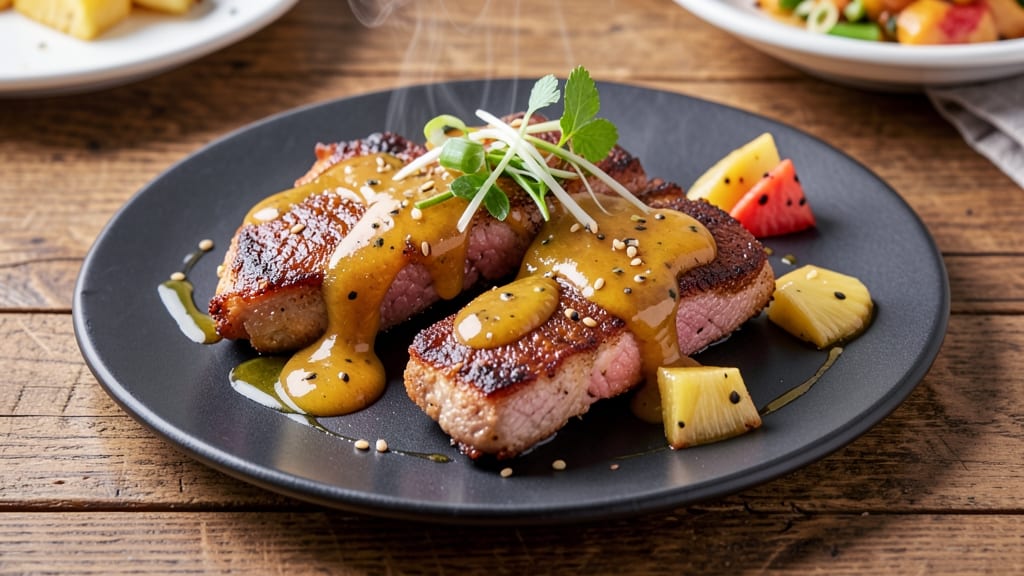
This pineapple pork chops sauce transforms ordinary pork into a tropical masterpiece—where sweet caramelized notes meet tangy brightness. I developed this recipe after years of perfecting the balance between pineapple's natural acidity and pork's rich flavor, creating a sauce that both complements and elevates the meat.
The key lies in simmering fresh pineapple juice with just the right amount of brown sugar and vinegar, allowing the flavors to meld into a velvety glaze that clings beautifully to grilled or pan-seared pork chops.
The process is straightforward yet transformative: blend fresh pineapple chunks with aromatic spices, then reduce the mixture until it reaches a thick, syrupy consistency—perfect for drizzling or basting.
What makes this sauce exceptional is its ability to caramelize slightly when applied to hot pork, creating a glossy finish that's irresistibly sticky and deeply flavorful.
It's the kind of sauce that turns a simple weeknight dinner into something restaurant-worthy, with just a few pantry staples and 20 minutes of active time.
What you'll end up with is a sauce that's bright yet balanced, sweet without being cloying, and tangy enough to cut through the richness of pork. The natural enzymes in pineapple also help tenderize the meat slightly, making each bite more succulent.
This sauce keeps well in the refrigerator for up to a week, so you can make a batch ahead and have it ready whenever pork chops are on the menu.
Whether you're grilling, pan-searing, or slow-roasting pork chops, this sauce will take them to the next level. The versatility doesn't stop there—it works equally well as a marinade, a dipping sauce, or even a glaze for roasted vegetables.
Let's get started on creating this tropical-inspired sauce that will become your new signature dish.
Ingredients for pineapple sauce recipe for pork chops
Nine simple ingredients transform into a velvety tropical glaze that caramelizes pork to perfection.
| Ingredient | Amount | Notes |
|---|---|---|
| Fresh Pineapple Juice 🍍 | 1 ½ cups | From ripe pineapple, strained |
| Brown Sugar 🍚 | ½ cup | Light or dark variety |
| White Vinegar 💧 | ¼ cup | For tangy brightness |
| Fresh Ginger 🌿 | 1 tbsp | Grated, aromatic freshness |
| Garlic Cloves 🧄 | 3 cloves | Minced for depth of flavor |
| Soy Sauce 🍜 | 2 tbsp | For umami balance |
| Honey 🍯 | 1 tbsp | Enhances sweetness |
| Red Curry Paste 🌶️ | 1 tbsp | For subtle spice complexity |
| Extra-Virgin Olive Oil 🫒 | 1 tbsp | For velvety finish |
| Salt 🧂 | ½ tsp | Kosher or sea salt |
The pineapple juice is your star ingredient—look for ripe, vibrant fruit at the grocery store. Trader Joe's or Whole Foods carry excellent pineapples year-round, but if you're using canned juice, opt for brands like Del Monte with no added sugar. Fresh ginger and garlic should smell bright and pungent; if they're musty, skip them. The brown sugar adds depth, but light brown sugar dissolves more smoothly than dark. For the curry paste, Maesri or Thai Kitchen are reliable brands that deliver consistent flavor without overpowering the tropical notes.
No fresh pineapple juice? Coconut water works in a pinch, though it lacks the same acidity. Substitute honey with maple syrup if you prefer, but honey's floral notes complement the pineapple beautifully. The soy sauce can be swapped for coconut aminos for a gluten-free option, though the umami depth will differ slightly. If you're avoiding vinegar, lemon juice at double the amount provides a similar tang. For extra richness, add a splash of coconut milk—just reduce the liquid by the same amount to maintain the syrupy consistency. The sauce's magic lies in the balance, so taste as you go and adjust sweetness or tang to your preference.
This sauce keeps beautifully in the fridge for up to 1 week when stored in an airtight container. For longer storage, freeze in ice cube trays—perfect for single-use portions. The flavors actually deepen over time, so it's ideal for making ahead. When reheating, warm gently on the stove or in the microwave, stirring occasionally to prevent separation. If the sauce thickens too much, a splash of water or pineapple juice brings it back to that perfect glossy consistency. Trust me, a batch made on Sunday will elevate your pork chops all week long.
Why You'll Love This Recipe
- Five-Ingredient Magic: I swear by this combo—pineapple juice, brown sugar, and vinegar cut through the richness of pork chops while ginger and garlic add that warm, spicy kick. The sauce practically makes itself, and the flavors? Chef’s kiss.
- Weeknight Hero: No fancy techniques here—just simmer, stir, and let the flavors meld. I’ve made this on Tuesdays when I’m exhausted, and it still tastes like I slaved over it. (Between us, the secret’s the vinegar—it balances everything.)
- Leftovers That Shine: This sauce doesn’t just taste better the next day—it transforms into a glaze for roasted veggies or a drizzle over rice. I’ve used the last bit to deglaze a pan for stir-fry, and no one ever guessed it was "leftover."
- Sweet-Savory Flex: Take it to a BBQ, serve it with grilled pork at a family dinner, or pack it in a lunchbox—this sauce adapts. Honestly, the only wrong move is not making extra. My kids beg for it on sandwiches now.
Step-by-step instructions for pineapple pork chops sauce
Here's how to craft a velvety tropical sauce that perfectly complements caramelized pork chops.
Bloom the Aromatics in Olive Oil
Heat the 1 tablespoon extra-virgin olive oil in a medium saucepan over medium heat. Add the 3 minced garlic cloves and 1 tablespoon grated fresh ginger, stirring constantly for 1-2 minutes until fragrant but not browned. This step develops the sauce's aromatic foundation—don't let the garlic burn, or it'll turn bitter.
Real talk: The oil should shimmer gently around the aromatics. If it's smoking, reduce heat immediately. Once you smell that bright, zesty aroma, you're ready for the next ingredients. This is where the sauce's complexity begins to build.
Combine Wet Ingredients and Simmer
Add the 1.5 cups fresh pineapple juice, 0.5 cup brown sugar, 0.25 cup white vinegar, 2 tablespoons soy sauce, 1 tablespoon honey, 1 tablespoon red curry paste, and 0.5 teaspoon salt to the pan. Stir well to dissolve the brown sugar completely—you want a smooth base without graininess.
Bring the mixture to a gentle boil over medium-high heat, then immediately reduce to medium-low heat. Let it simmer uncovered for 10-12 minutes, stirring occasionally. You're looking for the sauce to reduce by about one-third—until it thickens slightly and coats the back of a spoon. The color should deepen to a rich amber hue.
Refine the Texture and Balance Flavors
After simmering, taste the sauce and adjust seasoning if needed. I usually add a pinch more salt or a splash of vinegar to balance sweetness and acidity. For extra richness, you can whisk in 1 tablespoon unsalted butter at this stage—just let it melt completely into the sauce.
Strain the sauce through a fine-mesh sieve to remove any curry paste particles if you prefer a silky texture. Return it to the pan and simmer for another 3-5 minutes until it reaches your desired consistency. The sauce should coat the back of a spoon but still be pourable—not syrupy. This is the moment that matters: The tropical sweetness should harmonize with the umami from soy and the subtle heat from the curry paste.
Finish and Prepare for Serving
Remove the pan from heat and let the sauce rest for 5 minutes. This allows flavors to meld and prevents curdling when you add it to hot pork chops. If the sauce thickens too much while resting, whisk in 1-2 tablespoons hot water to loosen it.
Keep the sauce warm in a small saucepan over low heat until ready to serve. For best results, use it immediately over pan-seared pork chops. The sauce's tropical brightness cuts through the richness of the meat, creating a perfect balance. If you have leftovers, store them in an airtight container in the refrigerator for up to 5 days—just reheat gently over low heat, stirring frequently to prevent scorching.
Pro Tips For Making Pineapple Sauce Recipe For Pork Chops
- Simmer Slow and Low: This sauce isn’t a race—keep it at a gentle boil, not a rolling one, or you’ll end up with a thin, syrupy mess instead of a glossy, balanced glaze. I learned this the hard way after rushing it and getting a sauce that clung more like honey than a proper sauce.
- Muddle the Ginger: Skip the grating—muddle the ginger with a pinch of salt and the garlic cloves in a mortar or heavy spoon to release its oils properly. This makes a real difference in flavor depth, and it’s way faster than grating.
- Balance the Vinegar: Add the vinegar last and taste as you go—too much upfront will make the sauce taste harsh before the sweetness can round it out. I was skeptical until I tried it, but now I adjust it in small splashes.
- Strain for Smoothness: Even if you muddle the ginger, strain the sauce through a fine-mesh sieve to avoid any fibrous bits that’ll ruin the texture. It’s not the prettiest method, but it’s the tastiest—trust the process.
Perfect pairings for this pineapple sauce recipe for pork chops
Grilled Pork Chops
This tropical sauce transforms grilled pork chops into a showstopper dish. I recommend using bone-in pork chops (about 1-inch thick) for maximum flavor. Grill them over medium-high heat for 4-5 minutes per side until reaching 145°F internal temperature.
Brush with the pineapple sauce in the final 2 minutes of grilling to create a caramelized glaze. The smoky char from the grill pairs beautifully with the sauce's sweet-tangy profile. 🔥
Pan-Seared Pork Chops
For restaurant-quality results, pan-sear the chops in a cast iron skillet with 1 tablespoon butter and 1 tablespoon olive oil over medium-high heat. Sear for 3-4 minutes per side until golden brown.
Deglaze the pan with 2 tablespoons of the pineapple sauce, then spoon the remaining sauce over the chops. The sauce will bubble and caramelize beautifully, creating a glossy finish. Trust me, this technique makes even weeknight dinners feel special.
Slow-Roasted Pork Chops
For a tender, fall-apart texture, slow-roast pork chops in the oven at 275°F for 2-2.5 hours until reaching 203°F internal temperature. Brush with the pineapple sauce during the last 30 minutes of cooking.
The slow cooking method makes the meat incredibly juicy, while the sauce adds a bright contrast. This method is perfect for special occasions when you want to impress guests with minimal effort.
As a Dipping Sauce
Serve the pineapple sauce warm as a dipping sauce for spring rolls or fried plantains. The tropical flavors complement the crispy textures beautifully. I often double the recipe when making spring rolls—I love the way the sauce clings to the delicate wrappers.
For extra flair, garnish with toasted coconut flakes or fresh cilantro leaves. This makes an excellent appetizer that's always a crowd-pleaser.
With Roasted Vegetables
Use this sauce as a glaze for roasted vegetables like carrots, bell peppers, or sweet potatoes. Toss them with 1 tablespoon olive oil and roast at 400°F for 20-25 minutes. Drizzle with the pineapple sauce in the final 5 minutes of roasting.
The caramelized vegetables paired with the tangy sauce create a perfect balance of sweet and savory flavors. This is a fantastic way to elevate simple vegetable sides into something extraordinary. 💫
Nutrition facts
Frequently asked questions
Can I substitute canned pineapple juice for fresh?
Yes, but choose unsweetened canned juice to avoid altering the sauce's balance. For every 1 cup of fresh juice, use 1 cup of canned juice. The texture will be slightly thinner, so simmer it 2-3 extra minutes to achieve the same consistency. Brands like Del Monte work well, but avoid versions with added sugar.
How do I adjust the sweetness if I prefer less sugar?
Reduce the brown sugar by 1-2 tablespoons and increase the white vinegar by 1 tablespoon to maintain tanginess. For extra depth, add ½ teaspoon of cinnamon or ¼ teaspoon of smoked paprika—both complement the tropical flavors without extra sweetness. Taste as you go and adjust gradually.
Can I make this sauce without curry paste?
Replace the 1 tablespoon curry paste with ½ teaspoon each of ground cumin and turmeric for warmth, or ½ teaspoon of chili powder for mild heat. The sauce will still be delicious—curry paste just adds that signature umami complexity. If you're avoiding all spices, omit it entirely and boost the soy sauce to 3 tablespoons.
Why did my sauce turn out too thin?
This usually happens if you didn't simmer long enough or used too much liquid. To fix it, return the sauce to medium heat and simmer uncovered for another 5-10 minutes, stirring occasionally. For a quicker fix, mix 1 tablespoon cornstarch with 1 tablespoon cold water, stir into the sauce, and cook for 1-2 minutes until thickened.
How can I use this sauce for vegetarian dishes?
This sauce works beautifully with grilled tofu, portobello mushrooms, or eggplant. Marinate the protein for 30 minutes before cooking, then brush with sauce during the last 5 minutes of grilling or roasting. The tangy-sweet profile cuts through the richness of vegetarian dishes perfectly. Try it with crispy baked cauliflower too!