
Main Courses
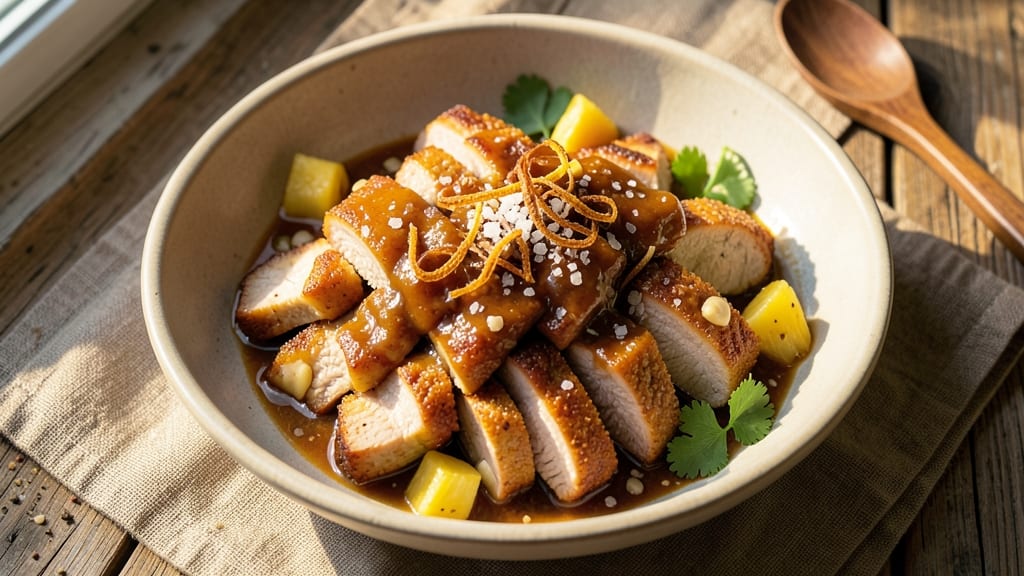
This Filipino-style pork belly pineapple adobo delivers restaurant-quality depth with every bite—crispy skin that shatters, tender meat that falls apart, and a glossy soy-caramelized sauce sweetened just enough by pineapple.
After years of perfecting adobo techniques in Charleston kitchens, I've developed a method that balances the tangy-savory adobo base with tropical sweetness, creating a dish that's both comforting and sophisticated.
The key lies in slow braising, which transforms tough pork belly into melt-in-your-mouth perfection while developing complex flavors through the vinegar-soy marinade.
The beauty of this recipe is its versatility—it's hearty enough for a weekend family dinner but elegant enough for company, all while requiring just a few simple ingredients.
We start with a foolproof marinade of soy sauce, vinegar, and pineapple juice that tenderizes the pork while building the signature adobo flavor profile. The pineapple not only sweetens the dish but also adds a subtle brightness that cuts through the richness of the pork belly.
What makes this version special is the crispy skin, achieved through a high-heat sear before braising, which adds both texture and visual appeal to the finished dish.
By the time you're done, you'll have a dish that's impossible to resist—juicy pork belly with crispy edges, caramelized in a glossy sauce that's sweet, tangy, and savory all at once.
The aroma alone will have everyone gathering around the table, and the first bite delivers on that promise of restaurant-quality comfort food. This recipe serves four generously, making it perfect for feeding a crowd or enjoying leftovers for days.
The sauce, thickened naturally through slow cooking, clings to every bite of pork, creating a harmonious balance that's both familiar and exciting.
Pair it with steamed jasmine rice to soak up every last drop of that caramelized sauce, or serve with atchara (pickled papaya) for a tangy contrast that enhances the pork's richness. The leftovers reheat beautifully, making this an ideal meal prep option for busy weeks.
Whether you're introducing Filipino flavors to your table or perfecting a family recipe, this pork belly pineapple adobo is a game-changer that will become a staple in your rotation. Let's get cooking—your taste buds will thank you.
Ingredients for pork belly pineapple adobo
Crispy pork belly meets tropical sweetness in this Filipino-inspired dish—just eight core ingredients transform into restaurant-quality adobo.
| Ingredient | Amount | Notes |
|---|---|---|
| Pork Belly 🥓 | 2 lb | Skin-on, cut into 1-inch thick slices |
| Soy Sauce 🍶 | ½ cup | High-quality, preferably Japanese |
| Cane Vinegar 🍋 | ⅓ cup | White vinegar works too |
| Pineapple Juice 🍍 | ½ cup | Freshly squeezed preferred |
| Brown Sugar 🍚 | ¼ cup | Light or dark, packed |
| Garlic Cloves 🧄 | 6 cloves | Minced, fresh preferred |
| Fresh Ginger 🌿 | 2 tbsp | Finely grated, peeled |
| Bay Leaves 🍃 | 2 whole | Dried, for depth |
| Black Peppercorns 🌶️ | 1 tsp | Crushed, for heat |
| Olive Oil 🫒 | 2 tbsp | Extra-virgin for searing |
| Fresh Pineapple 🍍 | 1 cup | Chopped, for garnish |
| Green Onions 🧅 | 3 whole | Sliced, for garnish |
| Salt 🧂 | 1 ½ tsp | Kosher or sea salt |
The pork belly is non-negotiable here—look for thick-cut pieces with a good layer of fat. Whole Foods or your local butcher shop will have the best quality, but don't stress if you grab supermarket pork belly (just trim any excess fat). For the soy sauce, Japanese brands like Kikkoman add depth, but any high-quality soy sauce will work. Fresh ginger and garlic are essential for that bright, aromatic base—Trader Joe's carries pre-grated ginger if you're short on time, but freshly grated makes all the difference. The pineapple juice should be fresh, not canned, for that vibrant sweetness that balances the tangy adobo flavors.
No cane vinegar? White vinegar or apple cider vinegar will work in a pinch, though cane vinegar gives that authentic Filipino touch. Short on fresh ginger? Ground ginger at half the amount is fine, but it lacks the same punch. The brown sugar can be swapped for white sugar if needed, though light brown adds subtle molasses notes. For the pineapple garnish, fresh is best, but canned pineapple chunks (drained) will save you time. If you're feeling adventurous, add a splash of calamansi juice (or lime) for extra brightness—it's a game-changer if you can find it.
This dish tastes even better the next day as the flavors meld. Store leftovers in an airtight container in the fridge for up to 5 days, or freeze for 3 months—the sauce thickens beautifully when reheated. For meal prep, double the batch and portion into containers: one for the pork, one for the sauce. Reheat the sauce separately and pour over the pork to keep it crispy. The crispy skin is worth the effort, so don't skip the high-heat sear before braising—it's what makes this dish truly special.
Why You'll Love This Recipe
- One-Pan Magic: I swear by this—just toss the pork belly in a sheet pan, drizzle the soy-cane vinegar mix, and let the oven do the work. No chopping, no fuss, and that sticky glaze? It’s basically self-cleaning.
- Sweet-Savory Balance: The pineapple juice cuts through the richness of the pork belly while the brown sugar caramelizes into a glossy finish. Honestly, the first bite makes me forget I’m cooking—it’s that good.
- Leftover Goldmine: This dish tastes even better the next day. I always make extra because reheating the crispy edges with the tender pork? Pure satisfaction, especially when I’m too tired to cook fresh.
- Budget Stretch: Pork belly feels fancy, but the soy, vinegar, and pineapple juice stretch it into multiple meals. Between us, I’ve fed a crowd for under $20—and no one guessed how affordable it was.
Step-by-step instructions for pork belly pineapple adobo
Here's how to transform simple ingredients into restaurant-quality pork belly with irresistible crispy skin and caramelized sweetness.
Prepare and Season the Pork Belly for Maximum Crisp
Cut the 2 lb pork belly into 1-inch thick slices, keeping the skin intact. Pat each slice completely dry with paper towels—this step is non-negotiable for crispy skin. In a small bowl, combine the 0.5 cup soy sauce, 0.33 cup cane vinegar, 0.5 cup pineapple juice, 0.25 cup brown sugar, 1.5 tsp salt, and crushed 1 tsp black peppercorns. Mix well until the brown sugar dissolves completely.
Place the pork slices in a shallow dish and pour the marinade over them, ensuring each piece is fully coated. Cover and refrigerate for at least 4 hours, preferably overnight. The acid in the vinegar and pineapple juice will tenderize the meat while the soy and sugar create that signature glossy caramelized crust.
Sear the Pork Belly for Irresistible Crispiness
Remove the pork from the fridge and let it sit at room temperature for 30 minutes. Heat a heavy skillet or cast iron pan over medium-high heat until it's very hot. Add 2 tbsp olive oil and let it shimmer for about 1 minute. Place the pork slices skin-side down in the pan, being careful not to overcrowd.
Cook undisturbed for 4-5 minutes until the skin becomes golden brown and crispy. You'll know it's ready when it releases easily from the pan—this is your signal to flip. Cook the other side for another 3-4 minutes until golden. Transfer the pork to a plate and tent loosely with foil to keep warm while you prepare the sauce.
Build the Sweet-Savory Pineapple Adobo Sauce
In the same skillet, reduce heat to medium and add the 6 cloves minced garlic and 2 tbsp finely grated fresh ginger. Sauté for 1-2 minutes until fragrant, being careful not to let the garlic burn. Add the 2 whole bay leaves and cook for another 30 seconds to infuse their flavor.
Pour in the marinade from the pork (about 1 cup) and bring to a simmer. Let it reduce by half, about 5-7 minutes, until it thickens slightly and coats the back of a spoon. The sauce should have a glossy sheen and a balance of sweet, tangy, and umami flavors. If it reduces too quickly, add a splash of water to maintain the consistency.
Finish and Serve with Fresh Garnishes
Return the pork slices to the skillet, skin-side up, and spoon the sauce over them. Cover and simmer on low heat for 5-7 minutes, allowing the pork to absorb the flavors without overcooking. The internal temperature should reach 145°F for medium doneness.
Garnish each serving with 1 cup chopped fresh pineapple and 3 sliced green onions. The contrast of the crispy pork belly with the juicy, slightly acidic pineapple creates a perfect balance of textures and flavors. Serve immediately with steamed rice to soak up every last bit of that luscious sauce.
Pro Tips For Making Pork Belly Pineapple Adobo
- CRISP THE BELLY FIRST: Skip the raw pork belly straight into the sauce—it’ll turn greasy. Sear the skin-side down in a cold pan over medium heat until the fat renders and the skin crisps golden (about 10 minutes). Flip once, then move it to the adobo pot. This locks in flavor and keeps the meat from falling apart later.
- USE THICK PINEAPPLE JUICE: Store-bought juice is watery and dull. Blend fresh pineapple chunks with a splash of water, then strain for a thick, pulpy juice—this adds natural sweetness and depth. If you’re in a rush, use canned pineapple juice but reduce it by half first to cut the thinness.
- DON’T BOIL THE VINEGAR: Cane vinegar burns easily, and if you crank the heat too high, the sauce turns harsh. Simmer it gently at first, then add the pork belly and other ingredients. Let the vinegar mellow into the sauce over 15–20 minutes—this balances the acidity without overpowering the pork.
- SALT THE PORK TWICE: Generously salt the pork belly before searing, then sprinkle another pinch of salt directly into the adobo sauce while it simmers. The first salt seasons the meat, the second boosts the sauce’s umami. I learned this the hard way—under-salted adobo tastes flat, no matter how much soy sauce you add.
Best sauces and condiments for this recipe
Classic Adobo Sauce
Start with the traditional Filipino adobo base: a balance of soy sauce and cane vinegar that creates the signature tangy-savory flavor. For this recipe, I use ½ cup soy sauce and ⅓ cup vinegar to tenderize the pork while building depth.
The key is letting this marinade work its magic—4 hours minimum (overnight is ideal) to break down the meat fibers. I always use Japanese soy sauce like Kikkoman for that rich umami kick that sets it apart from regular soy sauce. 🍶
Pineapple Caramel Glaze
What makes this adobo special is the pineapple caramel glaze that sweetens the sauce without overpowering the pork's natural richness. I combine ½ cup pineapple juice with ¼ cup brown sugar to create a glossy, slightly sticky coating that caramelizes beautifully during braising.
Fresh pineapple juice is best, but if you're in a pinch, use 100% pure pineapple juice from the store—just avoid anything with added sugar or preservatives. This glaze adds a tropical brightness that cuts through the pork's fat perfectly.
Garlic-Ginger Infusion
Fresh garlic and ginger are non-negotiable for that authentic adobo aroma. I minced 6 cloves garlic and grated 2 tablespoons fresh ginger, then sauté them in the pork's rendered fat until fragrant—about 1-2 minutes on medium heat.
The ginger adds a subtle warmth that complements the pineapple's sweetness, while the garlic deepens the umami profile. Pro tip: Toast the garlic just until golden for extra depth, but don't let it burn or it'll turn bitter. 🧄
Bay Leaf and Pepper Depth
Two bay leaves and 1 teaspoon crushed black peppercorns might seem like small additions, but they add layers of complexity to the sauce. The bay leaves infuse an earthy, slightly floral note that elevates the dish, while the peppercorns bring a gentle heat.
I add them during the sauce reduction phase so their flavors meld seamlessly into the final glaze. For extra heat, you could add a pinch of red pepper flakes, but I prefer to let the pineapple and garlic carry the flavor profile.
Crispy Skin Secret
The crispy skin is what makes this dish restaurant-worthy, and it starts with high-heat searing in 2 tablespoons olive oil until the skin is golden and shatters like glass. I use extra-virgin olive oil for its high smoke point, but any good-quality oil will work.
The secret is patience—4-5 minutes undisturbed per side ensures even crispiness without burning. Once seared, the pork finishes in the sauce, where it absorbs those caramelized flavors while staying tender. 🔥
Fresh Garnishes
Finish with chopped fresh pineapple and sliced green onions for a pop of color and freshness that cuts through the richness. The pineapple adds a juicy contrast to the crispy pork, while the green onions bring a mild onion bite that brightens each bite.
I like to garnish just before serving so the flavors stay vibrant. For an extra touch, a sprinkle of toasted sesame seeds adds a nutty crunch that pairs beautifully with the caramelized sauce.
Nutrition facts
Frequently asked questions
Can I substitute chicken or pork shoulder for pork belly?
The crispy skin is what makes this dish special, so pork belly is ideal—but you can use bone-in chicken thighs (skin-on) for a lighter version. For pork shoulder, expect 1.5 hours of braising instead of 30 minutes to tenderize. The sauce will still work, but the texture will be less luxurious.
How do I prevent the pork belly from becoming too fatty?
Pat the pork slices very dry before searing and trim excess fat before cooking. For extra control, place a wire rack over a baking sheet, then roast the seared pork at 375°F for 15 minutes to render fat without steaming. Save the drippings for future cooking!
What if I don't have cane vinegar?
White vinegar or apple cider vinegar work perfectly—they just lack cane vinegar's subtle sweetness. Use the same amount (⅓ cup) and increase brown sugar by 1 tablespoon to compensate. For extra depth, add ½ teaspoon of sugar to the sauce during reduction.
Can I make this in a slow cooker?
Yes! Sear the pork first, then transfer everything (including marinade) to a slow cooker. Cook on Low for 6-7 hours or High for 3-4 hours, adding 2 tablespoons water if the sauce gets too thick. The slow cooker makes the pork extra tender, but the skin won't be as crispy.
How do I store and reheat leftovers?
Store in an airtight container for up to 5 days in the fridge. Reheat the sauce separately and pour over the pork to maintain crispiness. For best results, warm in a skillet over medium-low heat for 5-7 minutes. Freeze for 3 months—thaw overnight in the fridge before reheating.