
Main Courses
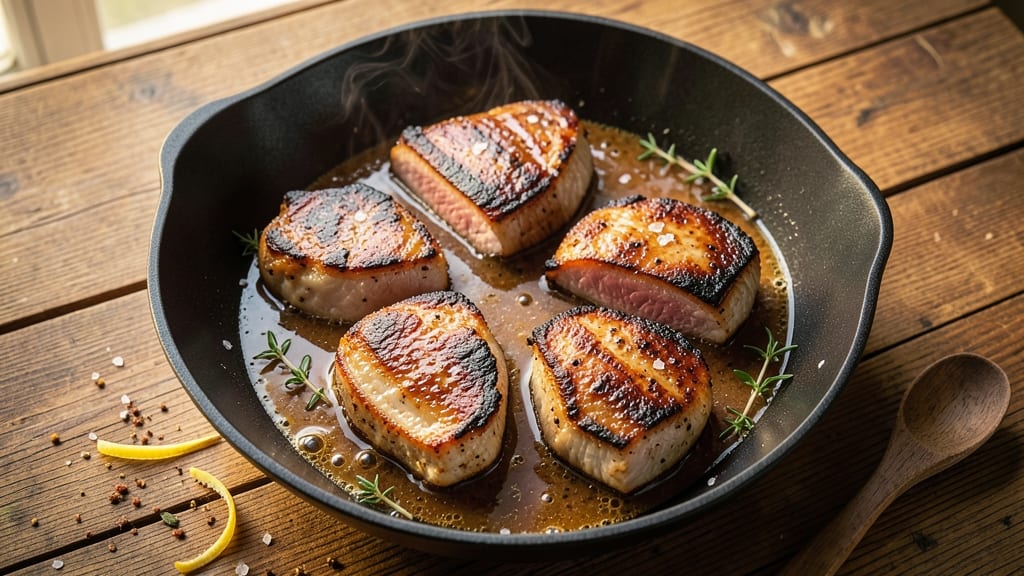
This pork chops recipe with apple cider vinegar delivers restaurant-quality results in just 30 minutes, transforming tough cuts into melt-in-your-mouth perfection. The vinegar's acidity tenderizes the meat while creating a tangy pan sauce that cuts through the richness beautifully.
I first discovered this technique while cooking for my husband Tom's family gatherings, where it became the star of every meal.
The secret lies in the vinegar's dual role: it breaks down muscle fibers for tender pork while adding bright, fruity acidity to the pan sauce. You'll start with bone-in chops for maximum flavor, searing them in a hot skillet until golden, then deglazing with apple cider vinegar and broth.
This method delivers perfectly cooked pork with a sauce that's rich yet balanced by the vinegar's sharpness.
By the time you serve these chops, you'll have golden-brown meat with crisp edges and tender centers, all coated in a glossy sauce that's perfect for drizzling over each portion. The vinegar's tanginess also makes this dish incredibly versatile—pair it with roasted potatoes, sautéed apples, or a simple green salad.
This is comfort food at its finest, with professional results you'd expect from a restaurant kitchen.
What makes this recipe truly foolproof is the vinegar's ability to transform simple ingredients into something extraordinary. No special equipment needed—just a good skillet and patience for the searing process.
The sauce comes together in minutes while the pork rests, ensuring you'll have dinner on the table without the usual fuss. Trust me on this one: once you try vinegar-braised pork chops, you'll never go back to plain pan-seared versions.
Ingredients for pork chop recipe apple cider vinegar
Four bone-in chops, a splash of vinegar, and butter that transforms into golden sauce.
| Ingredient | Amount | Notes |
|---|---|---|
| Bone-In Pork Chops 🍖 | 4 whole | 1-inch thick, rib or loin cut |
| Apple Cider Vinegar 🍏 | ½ cup | Raw, unfiltered preferred |
| Beef Broth 🍲 | 1 cup | Low-sodium preferred |
| Unsalted Butter 🧈 | 4 tbsp | Cold, cut into pieces |
| All-Purpose Flour 🌾 | 2 tbsp | For dredging |
| Kosher Salt 🧂 | 1 ½ tsp | Diamond Crystal preferred |
| Freshly Ground Black Pepper 🌶️ | ½ tsp | Freshly cracked |
| Garlic Cloves 🧄 | 4 cloves | Minced, for sauce |
| Fresh Thyme Leaves 🌿 | 1 tbsp | Chopped, or 1 tsp dried |
| Olive Oil 🫒 | 1 tbsp | For searing |
| Honey 🍯 | 1 tsp | Optional, for balance |
The pork chops make all the difference here—bone-in cuts stay juicier, and 1-inch thickness ensures perfect doneness without drying out. Look for chops with good marbling at Whole Foods or your local butcher shop. If you can't find bone-in, bone-less chops with skin work too, just pat them dry before cooking. The vinegar is non-negotiable: raw, unfiltered apple cider vinegar has the best flavor, but white vinegar in a pinch will work. I always grab mine from Trader Joe's—their organic version has great depth of flavor.
No beef broth? Chicken broth or vegetable broth works just fine—just add a pinch of beef bouillon powder if you want that deeper flavor. Fresh thyme is ideal, but dried thyme at one-third the amount saves you a trip to the store. The honey is optional but adds a lovely balance to the tangy sauce—local raw honey is my go-to, but any variety works. For the butter, cold, cubed butter melts beautifully into the sauce, creating that perfect glossy finish. If you're short on time, melted butter works, but it won't be as rich.
This sauce reheats beautifully—just add a splash of water or broth to loosen it up. Keeps for 3-4 days in the fridge, though honestly, it's even better the next day as the flavors meld. For leftovers, store the pork and sauce separately. The chops freeze well for up to 3 months—just thaw in the fridge overnight. I always make extra sauce because it's perfect for drizzling over roasted veggies or even scrambled eggs the next morning.
Why You'll Love This Recipe
- One-Pan Magic: That’s it—just one skillet, no extra dishes. I sear the bone-in chops in butter, deglaze with apple cider vinegar, and let the beef broth do the heavy lifting while I stir in a quick flour slurry. The best part? No oven, no fuss, no stress.
- Tangy Crispy Perfection: The vinegar cuts through the richness of the butter and pork, giving these chops a bright, almost caramelized crust. That crispy edge with the tender, juicy center? It’s the kind of bite that makes you reach for seconds without even thinking.
- Leftovers That Shine: Between us, these chops reheat like a dream—crispy again in the pan, no soggy edges. I make a double batch on Sundays, pull them out for quick lunches all week, or toss them into salads when I’m craving something different.
- Budget-Friendly Luxury: Bone-in chops stretch further, and the vinegar and broth add depth without costing a fortune. Honestly, it’s the kind of recipe where you feel like you’re serving something fancy, but the grocery bill stays normal. (Yes, even on a Tuesday night.)
Step-by-step instructions for pork chops with apple cider vinegar
Here's how to transform simple pork chops into a restaurant-worthy dish with a bright, tangy vinegar sauce.
Season and Sear the Pork Chops
Pat the 4 whole bone-in pork chops dry with paper towels—this ensures a perfect sear. In a small bowl, mix 1.5 teaspoons kosher salt and 0.5 teaspoon freshly ground black pepper. Generously coat both sides of each pork chop with this seasoning, pressing it into the meat so it sticks.
Heat 1 tablespoon olive oil in a large skillet over medium-high heat until shimmering. Add the pork chops and cook for 4-5 minutes per side until they develop a deep golden-brown crust. Don't move them around—let them sit undisturbed so they brown evenly. You'll know they're ready when they release easily from the pan and the internal temperature reaches 145°F on an instant-read thermometer.
Deglaze with Apple Cider Vinegar
Remove the pork chops from the skillet and set them aside on a plate. Reduce the heat to medium and add 0.5 cup apple cider vinegar to the hot pan. Immediately scrape up all the browned bits from the bottom with a wooden spoon—this is where all the flavor hides. Let the vinegar simmer for 2-3 minutes until it reduces by about half and becomes slightly syrupy.
Here's the thing—this step cuts through the richness of the pork. The vinegar's acidity brightens the sauce and balances the meat's natural fat. If you're using raw, unfiltered apple cider vinegar, you'll notice tiny bits of sediment settling at the bottom—this just adds depth to the flavor.
Build the Tangy Pan Sauce
Add 4 tablespoons cold unsalted butter cut into small pieces to the skillet. Let it melt slowly while stirring, about 1 minute, until it foams and turns golden. Sprinkle in 2 tablespoons all-purpose flour and whisk vigorously for 30 seconds to create a roux. Slowly pour in 1 cup beef broth, whisking constantly to prevent lumps from forming.
Bring the mixture to a gentle simmer and let it cook for 3-4 minutes until it thickens enough to coat the back of a spoon. Stir in the 4 minced garlic cloves and 1 tablespoon chopped fresh thyme leaves, letting them steep for 30 seconds to infuse the sauce with their aromas. If you're using honey, add 1 teaspoon now and stir to balance the acidity.
Finish and Serve
Return the pork chops to the skillet, spooning the sauce over them. Let everything heat through together for 1-2 minutes, allowing the chops to soak up some of that glorious sauce. The sauce should coat the chops beautifully, with a glossy sheen that indicates perfect consistency.
Serve immediately over mashed potatoes, roasted vegetables, or crusty bread to catch every last drop of that tangy, velvety sauce. The contrast between the rich pork and bright vinegar sauce is what makes this dish truly special—don't skip the sauce!
Pro Tips For Making Pork Chop Recipe Apple Cider Vinegar
- SEAR THE BONE FIRST: I learned this the hard way—patting the pork chops dry and searing the bone side down for 4-5 minutes in butter before flipping. That bone renders fat and infuses flavor into the pan, which later gets deglazed with apple cider vinegar and beef broth. Skip this, and your sauce will taste flat.
- USE COLD BUTTER: Cold, cubed unsalted butter tossed with flour for the panade makes all the difference. When the pork chops hit the hot pan, the butter melts slowly, creating a rich crust instead of burning instantly. I used to melt it first—big mistake.
- DEGLAZE HOT: Pour that apple cider vinegar and beef broth into the pan the second the pork chops come out. The residual heat will sizzle the vinegar, cutting through the fond and lifting flavors into the sauce. Let it cool first, and you’ll end up with a thin, dull glaze instead of a glossy reduction.
- REST THE CHOPS UNDER FOIL: Give those pork chops a solid 5-10 minutes under foil after roasting. The bone stays hot, keeping the meat tender, while the juices redistribute. I used to skip this, and the chops always dried out by the time they hit the plate—especially with bone-in cuts.
Serving suggestions for this dish
Classic Pairings
These pork chops shine brightest with creamy mashed potatoes—their buttery texture soaks up the tangy vinegar sauce beautifully. I always make mine with roasted garlic and sour cream for extra richness.
For a lighter option, try sautéed green beans with slivered almonds and lemon zest. The crisp-tender beans contrast perfectly with the tender pork. 🥔
Autumnal Sides
When apple season hits, I pair these chops with roasted apples—toss 2-3 Honeycrisp apples with 1 tbsp olive oil, ½ tsp cinnamon, and a pinch of salt, then roast at 400°F for 20 minutes.
The caramelized apples add natural sweetness that balances the vinegar's tang. Candied sweet potatoes with pecans also work wonderfully, especially if you drizzle them with extra sauce.
Fresh Contrasts
A simple arugula salad with shaved fennel, pomegranate seeds, and a honey-mustard dressing cuts through the richness perfectly. The peppery arugula and citrusy pomegranate create a refreshing contrast to the savory pork.
For something heartier, try crusty sourdough bread—slice it thick and toast it until golden, then serve with extra sauce for dipping. 🍞
Sauce Versatility
Don't let this sauce go to waste! Use leftover sauce to drizzle over roasted Brussels sprouts or creamy polenta. I also love spooning it over scrambled eggs the next morning—add a pinch of salt and a crack of black pepper to make it a brunch star.
The vinegar's tang makes it perfect for balancing richer dishes. 🍳
Wine Pairings
A crisp Pinot Noir from Oregon's Willamette Valley complements the pork's richness while letting the vinegar's brightness shine. For something lighter, try a dry Riesling—its acidity mirrors the vinegar's tang.
If you prefer beer, a Belgian witbier with its citrus notes pairs surprisingly well. I always keep a bottle of Trader Joe's Pinot Grigio on hand for these occasions. 🍷
Nutrition facts
Frequently asked questions
Can I use bone-in or boneless pork chops for this recipe?
Bone-in chops are ideal—they stay juicier and add extra flavor, but boneless chops work too! If using boneless, look for 1-inch thick cuts and pat them extra dry before seasoning. The bone helps regulate cooking time, so boneless chops may cook slightly faster (3-4 minutes per side instead of 4-5).
What if I don't have apple cider vinegar? Can I substitute?
Yes! Use white vinegar in a 1:1 ratio, but expect slightly less depth of flavor. For a fruitier taste, try balsamic vinegar (reduce by 1 tablespoon) or lemon juice (add ½ teaspoon sugar to balance acidity). Raw, unfiltered vinegar has the best flavor, but any vinegar will tenderize the meat.
How do I know when the pork chops are fully cooked?
Use an instant-read thermometer—pork chops are safe at 145°F internal temperature. If you don't have one, cut into the thickest part: juices should run clear, and the meat should feel firm but still tender (not rubbery). Bone-in chops may need 1-2 extra minutes due to the bone's insulating effect.
Can I make this recipe ahead of time?
Cook the pork chops and sauce 1 day ahead, then refrigerate. Reheat gently in a skillet over low heat, adding a splash of water or broth to loosen the sauce. The flavors actually improve overnight as the vinegar and meat meld. Store sauce separately if making extra—it reheats beautifully for 3-4 days.
Why does the sauce get lumpy sometimes?
Lumps happen when flour and broth don't mix smoothly. To prevent this, whisk vigorously for 30 seconds after adding flour, then pour broth in slowly while whisking constantly. If lumps form, strain the sauce through a fine-mesh sieve before serving. For extra silkiness, blend briefly with an immersion blender after cooking.