
Main Courses
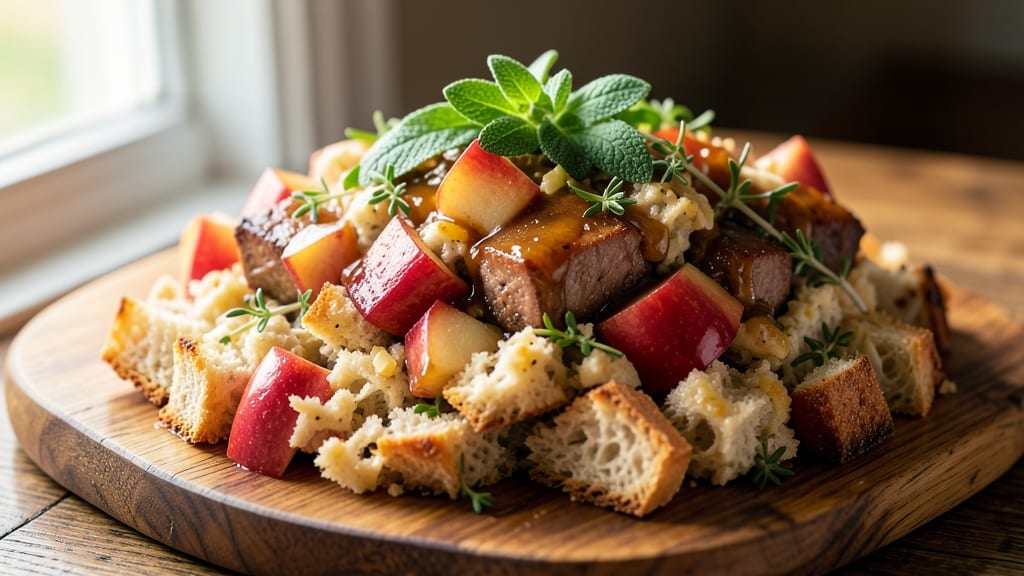
This pork sage apple stuffing recipe transforms holiday tables with its perfect balance of savory pork, aromatic sage, and sweet apple notes—a game-changer for Thanksgiving or Christmas dinners. 🍏✨ I developed it after years of perfecting stuffing textures, ensuring crispy edges and moist centers that hold up to even the juiciest roasts.
The secret lies in slow-cooking the pork with apples until tender, then combining it with toasted bread cubes and fresh herbs for depth.
The recipe begins with searing pork shoulder and apples until caramelized, then simmering them in broth until fork-tender. This creates a rich, flavorful base that infuses every bite of the stuffing.
Toasted bread cubes soak up the pork-apple mixture while staying light and crispy, and fresh sage and thyme add that classic herbed aroma we all love. The result is a stuffing that’s hearty enough to stand alone but designed to complement roasted meats perfectly.
What makes this recipe stand out is its versatility—it works as a standalone side, a stuffing for turkey or ham, or even as a filling for pork tenderloin.
The sweetness of the apples balances the savory pork, while the sage adds an earthy depth that elevates the dish beyond traditional stuffing. It’s the kind of recipe that turns a simple side into the centerpiece of your meal.
Ready in about 1 hour 15 minutes, this stuffing delivers restaurant-quality results without the fuss. The slow cooking ensures tender pork and apples, while the final bake in the oven creates that golden, crispy top layer.
Serve it warm alongside your holiday roast, and watch it disappear from the table. Here’s how to make it—step by step.
Ingredients for pork sage apple stuffing
Pork, apples, and sage—this trio makes the perfect holiday stuffing with crispy edges and juicy centers.
| Ingredient | Amount | Notes |
|---|---|---|
| Pork Shoulder 🍖 | 1 ½ lb | Bone-in, cut into 1-inch cubes |
| Apples 🍎 | 2 medium | Honeycrisp or Fuji, peeled and sliced |
| Day-Old Bread 🍞 | 8 cups | Cubed, crusts removed (baguette or sourdough) |
| Fresh Sage Leaves 🌿 | ½ cup | Chopped, stems removed |
| Fresh Thyme Leaves 🌿 | 1 tbsp | Chopped, stems removed |
| Yellow Onion 🧅 | 1 medium | Diced, about 1 cup |
| Chicken Broth 💧 | 2 cups | Low-sodium preferred |
| Unsalted Butter 🧈 | ½ cup | Cold, cubed for toasting |
| Extra-Virgin Olive Oil 🫒 | ¼ cup | For dredging bread cubes |
| Salt 🧂 | 1 ½ tsp | Kosher or sea salt |
| Black Pepper 🌶️ | ½ tsp | Freshly ground |
| Garlic Cloves 🧄 | 3 whole | Minced, or 1 tsp pre-minced |
| Apple Cider Vinegar 🍎 | 1 tbsp | For brightness |
The pork shoulder is the star here—bone-in gives extra flavor, and cubing it evenly ensures it cooks through without drying out. Costco or butcher shops usually have the best prices for pork shoulder, and it keeps well in the freezer for months. For the apples, Honeycrisp or Fuji hold up best during cooking—they won’t turn mushy. If you can’t find those, Granny Smith adds a nice tartness. The bread? Day-old works best (no soggy stuffing), but if you’re fresh out, toast slices first to mimic that texture. Sage and thyme should be fresh if possible—they make all the difference in that herby aroma.
No pork shoulder? Smoked sausage or bacon works in a pinch, but reduce the amount to 1 lb since it’s already seasoned. Apples too tart? Add 1 tbsp maple syrup to the simmering mixture. Fresh herbs wilt fast, so if you’re prepping ahead, store them separately and add just before baking. The bread cubes can be pre-toasted and stored in an airtight container for up to 3 days. No chicken broth? Vegetable broth or even water with a bouillon cube gets the job done. For extra richness, swap half the broth for white wine—just reduce the amount by 2 tbsp to account for evaporation.
This stuffing reheats beautifully—just cover it with foil and warm in the oven at 350°F for 15 minutes. Keeps in the fridge for 4 days or freezes for 3 months (portion into single servings before freezing). For make-ahead convenience, prep everything up to the baking step, then refrigerate the unbaked stuffing in a loaf pan. Bake straight from the fridge—just add 10 extra minutes to the cooking time. The bread cubes stay crispy if you bake it at 400°F for the last 10 minutes—worth the extra minute for that perfect crunch.
Why You'll Love This Recipe
- No-Fuss Assembly: I swear by this—just tear bread, chop apples, and mix. No measuring cups, no fussing with exact ratios. The pork shoulder adds richness while you’re busy with the rest, and the sage and thyme perfume the whole thing as it bakes.
- Sweet-Savory Magic: That caramelized apple meets tender pork? It’s like a hug for your taste buds. The bread soaks up all the juices while the herbs keep it bright—no dry, sad stuffing here.
- Weeknight to Holiday: Make a big batch on Sunday and reheat for sandwiches all week. Or pull it out for Thanksgiving when you’re drowning in side dishes. Same recipe, zero stress.
- Budget-Friendly Feast: Pork shoulder stretches further than you’d think, and day-old bread? Free money. Apples add freshness without breaking the bank, and herbs make it feel special. Leftovers taste just as good reheated.
Step-by-step instructions for pork sage apple stuffing
Here's how to make this herbed stuffing with sweet apples and savory pork that'll steal the show.
👨🍳 Step 1: Toast the Bread Cubes Perfectly
Preheat your oven to 375°F and line a large baking sheet with parchment paper. Spread the 8 cups day-old bread cubes in a single layer on the sheet. Drizzle evenly with the 0.25 cup extra-virgin olive oil and toss to coat completely.
Spread the bread cubes out again so they're not touching. Toast for 15-18 minutes until they're golden brown and crisp around the edges. You want them dry and crunchy—this is the base of our stuffing. Give them a quick stir halfway through if they're browning unevenly. Don't skip this step—properly toasted bread soaks up moisture without getting soggy.
🍳 Step 2: Cook the Pork and Aromatics
While the bread toasts, heat 0.25 cup extra-virgin olive oil in a large skillet over medium-high heat. Add the 1.5 lb pork shoulder cubes and cook for 8-10 minutes, stirring occasionally, until they're golden brown and starting to crisp. Remove the pork and set aside on a plate.
In the same skillet, add 0.5 cup unsalted butter and let it melt completely. Add the 1 medium yellow onion and cook for 5-6 minutes until softened and translucent. Stir in the 3 whole garlic cloves and cook for 30 seconds until fragrant. Here's where the flavor foundation gets built—don't rush this part.
🥘 Step 3: Build the Stuffing Mixture
In a large mixing bowl, combine the toasted bread cubes, cooked pork, onion-garlic mixture, 0.5 cup fresh sage leaves, and 1 tbsp fresh thyme leaves. Pour in the 2 cups chicken broth and 1 tbsp apple cider vinegar, mixing gently but thoroughly. The vinegar adds a nice tang that balances the sweet apples we're about to add.
Add the 2 medium apples (peeled and sliced) and toss everything together. Sprinkle with 1.5 tsp salt and 0.5 tsp black pepper, mixing just until combined. You want the apples to stay in chunks—they'll soften slightly during baking but still provide that sweet crunch. Let the mixture sit for 5 minutes so the bread can absorb some of the liquid.
🔥 Step 4: Bake to Golden Perfection
Transfer the stuffing mixture to a greased 9x13-inch baking dish. Press down gently but don't pack it too tightly—you want some air pockets for that perfect texture. Bake at 375°F for 30-35 minutes until the top is deep golden brown and the edges are crispy.
Here's the thing—if the top starts browning too quickly, tent it loosely with aluminum foil for the last 10 minutes to prevent burning while it finishes cooking through. The stuffing is done when it's heated through and the apples are tender but still hold their shape. Let it rest for 5 minutes before serving—this helps everything set up nicely.
Pro Tips For Making Pork Sage Apple Stuffing
- CRUMBLE BREAD FIRST: The day-old bread won’t stay crispy if you just tear it up—give it a rough chop or pulse in a food processor until it’s uneven but manageable. This creates more surface area for the pork fat to cling to, so every bite gets that savory punch instead of just soggy cubes.
- SAUTE APPLES UNTIL SOFT: Don’t just toss them in raw—they’ll turn to mush and water down your stuffing. Cook the diced apples in butter with a pinch of salt until they’re fork-tender but still hold shape, about 8-10 minutes. This caramelizes their sweetness and cuts down on moisture later.
- DON’T OVERMIX THE HERBS: Fresh sage and thyme pack a punch, but too much chopping releases bitter oils. Lightly bruise the leaves between your palms or give them a quick pulse in a food processor—just enough to break them down, not pulverize. You want flavor, not a herbal muddle.
- REST THE STUFFING BEFORE BAKING: I learned this the hard way—stuffing packed into a dish straight from the mixing bowl always leaks grease. Let it sit uncovered for 10-15 minutes so the bread absorbs the pork fat and juices. This guarantees a golden crust instead of a greasy mess. (Yes, even if you’re impatient like me.)
Troubleshooting this dish
Soggy Bread Fix
If your stuffing turns out soggy, it’s usually because the bread absorbed too much liquid. I’ve found that toasting the bread cubes properly is key—make sure they’re golden and crisp before mixing. Another trick? Use a 9x13-inch baking dish with a tight-fitting lid or foil tent during baking.
This traps steam and creates that perfect crispy top while keeping the inside moist. If it’s already soggy, pop it back in the oven at 375°F for 10-15 minutes uncovered to crisp it up.
Pork Not Tender Enough
The pork should be fork-tender after cooking, but if it’s still tough, you likely didn’t cook it long enough. I always recommend simmering the pork with apples in broth until it shreds easily—about 45-60 minutes total.
If you’re short on time, swap the pork for pre-cooked smoked sausage or pulled pork to save 1-2 hours of cooking. Just reduce the amount to 1 lb since it’s already cooked.
Apples Too Tart or Mushy
Apples can be tricky—they should add sweetness but not overpower the dish. If they’re too tart, balance them with 1 tbsp maple syrup or ½ tsp cinnamon during cooking. For mushy apples, use Honeycrisp or Fuji varieties and cut them into ¼-inch slices so they cook faster.
If they’re still mushy, add them later in the baking process—right before the final 10 minutes—to preserve their texture.
Stuffing Too Dry
A dry stuffing usually means the bread soaked up all the moisture too quickly. To fix this, add ¼ cup extra chicken broth or apple cider vinegar before baking. If it’s already dry, sprinkle 2 tbsp melted butter over the top and bake for 5-10 minutes to restore moisture.
For next time, try using a mix of baguette and sourdough bread—the sourdough adds a slight tang that holds up better to extra liquid.
Uneven Baking
Stuffing often browns too quickly on top while staying undercooked inside. To prevent this, bake at 375°F and tent loosely with foil for the last 10 minutes if the top is browning too fast.
For even baking, spread the stuffing in a single layer in your dish and press down gently. If you’re stuffing a turkey or ham, use a thermometer to check the center—it should reach 165°F.
Herbs Lose Flavor
Fresh herbs can wilt and lose their aroma if added too early. I always add them right before baking or even sprinkle them on top after the stuffing comes out of the oven.
For extra flavor, make a quick sage-infused oil by simmering ½ cup fresh sage leaves in ½ cup olive oil for 5 minutes, then straining and drizzling it over the stuffing before serving. This keeps the herbs vibrant and amplifies their aroma.
Nutrition facts
Frequently asked questions
Can I make this stuffing ahead of time?
This stuffing actually tastes better the next day. Prepare everything up to the baking step, then refrigerate the unbaked mixture in a greased loaf pan. When ready to bake, add 10 extra minutes to the cooking time. For make-ahead convenience, you can even assemble it the night before and bake straight from the fridge.
What's the best bread to use for this recipe?
Day-old baguette or sourdough works best for that perfect texture—crispy edges with a tender interior. If you're using fresh bread, toast it first to mimic the day-old texture. For extra flavor, try a mix of crusty bread and a soft white loaf. Avoid overly sweet breads like brioche, as they can compete with the apple sweetness.
How do I prevent the stuffing from getting soggy?
The key is proper bread preparation and baking technique. Toast your bread cubes thoroughly until golden and crisp, then press them gently into the baking dish to create air pockets. Use a tight-fitting lid or foil tent during baking to trap steam while keeping the top crispy. If it starts looking dry, add 2 tbsp melted butter before serving.
Can I use this stuffing to stuff a turkey or ham? Yes! This stuffing works beautifully as a stuffing for both turkey and ham. Just
What if I don't have fresh sage?
No problem! You can use 1 tbsp dried sage instead, but reduce the amount by about ⅓ since dried herbs are more concentrated. For even better flavor, make a quick sage-infused oil by simmering ½ cup fresh sage in ½ cup olive oil for 5 minutes, then straining and drizzling it over the stuffing before serving. This preserves the herb's aroma beautifully.