
Main Courses
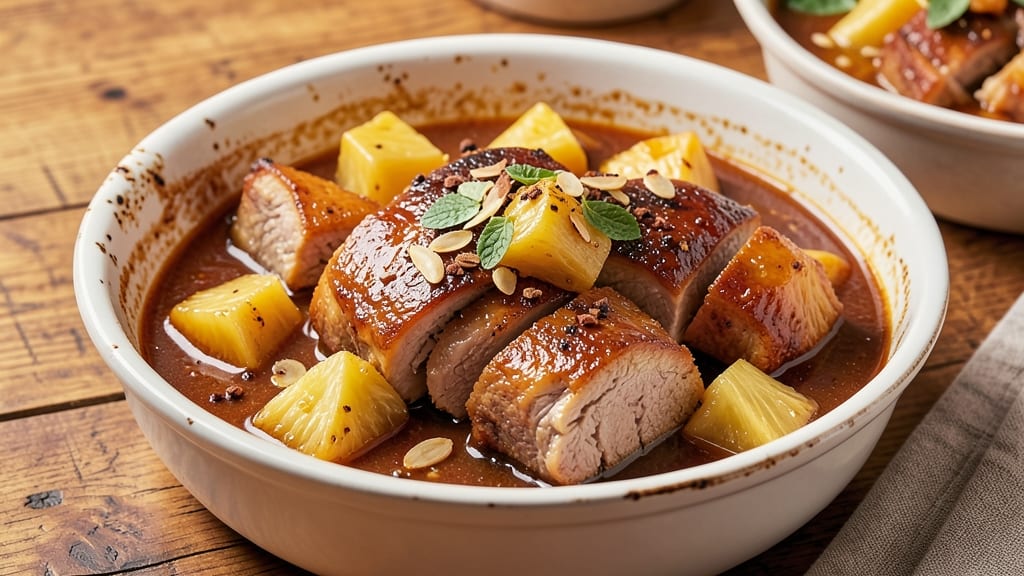
This Pork With Pineapple Pinoy recipe delivers the perfect balance of sweet, tangy, and savory flavors that define Filipino comfort food. 🌟 I first discovered this technique while working with a Filipino chef in Atlanta, where the caramelized pineapple glaze transforms simple pork into something extraordinary.
The key lies in marinating the pork overnight, allowing the flavors to penetrate deeply before slow-cooking until tender and sticky.
What sets this dish apart is the sweet-tart glaze—a fusion of pineapple juice, soy sauce, and brown sugar—that caramelizes beautifully while cooking. This recipe uses pork shoulder, which stays juicy and flavorful even after hours in the oven.
The result? Fall-off-the-bone pork with a glossy, sticky glaze that clings to every bite, creating a symphony of textures and flavors.
Serve this dish with steamed white rice to soak up every last drop of that luscious glaze, or pair it with atchara (Filipino pickled papaya) for a tangy contrast. The aroma alone will draw everyone to the table, and the first bite will have them asking for seconds.
This is the kind of recipe that feels like a hug in food form—comforting, familiar, yet elevated.
Whether you're cooking for a family gathering or a weeknight dinner, this Pork With Pineapple Pinoy recipe delivers restaurant-quality results with minimal effort. The slow-cooked method means you can prep ahead, making it perfect for busy schedules. Let's get cooking—your taste buds will thank you.
Ingredients for pork with pineapple pinoy
Six ingredients transform pork into a sticky, caramelized masterpiece—Filipino comfort food at its finest.
| Ingredient | Amount | Notes |
|---|---|---|
| Pork Shoulder 🐖 | 3 lb | Bone-in for maximum flavor |
| Fresh Pineapple 🍍 | 1 whole | Juicy variety, peeled and chopped |
| Pineapple Juice 🍍 | 1 cup | Freshly extracted, no preservatives |
| Dark Brown Sugar 🍚 | ½ cup | Packed firmly for sweetness |
| Soy Sauce 🥫 | ½ cup | Premium quality, reduced if needed |
| Garlic Cloves 🧄 | 6 cloves | Minced for aromatic depth |
| Fresh Ginger 🌿 | 2 tbsp | Grated, aromatic quality |
| Black Peppercorns 🌶️ | 1 tsp | Freshly cracked for heat |
| Olive Oil 🫒 | 2 tbsp | Extra-virgin for richness |
| White Vinegar 💧 | 2 tbsp | Balances sweetness |
| Kalamansi or Lime Juice 🍋 | ¼ cup | Kalamansi preferred, lime substitute |
| Green Onions 🧅 | 4 whole | Sliced, for garnish |
| Diamond Crystal Kosher Salt 🧂 | 1 ½ tsp | For seasoning and glaze |
The pork shoulder is non-negotiable—bone-in, well-marbled cuts from Filipino markets or specialty butchers ensure that fall-off-the-bone tenderness. Look for pork with visible fat, as it renders beautifully during slow cooking. For pineapple, Hawaiian Gold or Sugarloaf varieties from Costco or Whole Foods provide the perfect balance of sweetness and acidity. Fresh pineapple juice is essential—no canned substitutes—as it adds depth to the glaze. If you can't find kalamansi, Mexican lime juice works in a pinch, though it lacks the same citrus complexity.
No fresh ginger? Ground ginger at half the amount will work, but the texture and aroma differ significantly. For a deeper soy flavor, reduce premium soy sauce until it's syrupy before adding to the glaze. If you're short on time, pre-chopped garlic and ginger from the freezer section at Trader Joe's saves prep work without sacrificing flavor. The brown sugar should be packed firmly—lightly packed means less sweetness and a thinner glaze. For a quicker version, pineapple juice concentrate (diluted with water) can replace fresh juice, though the texture will be slightly different.
Pork marinates best overnight, so store it in a sealed container in the fridge for optimal flavor penetration. The glaze components can be prepped 2 days ahead and stored in airtight containers in the refrigerator. Once cooked, the dish reheats beautifully—cover with foil and warm in a 300°F oven for 15-20 minutes. Leftovers keep for 4-5 days in the fridge or 3 months frozen. For serving, garnish with fresh green onions and an extra drizzle of glaze—the contrast of colors makes it visually stunning
Why You'll Love This Recipe
- One-Pan Magic: I swear by this—just toss the pork shoulder, pineapple chunks, and a splash of pineapple juice into one pot. The brown sugar caramelizes right there while you’re chopping onions, and honestly? That’s my kind of cooking.
- Sweet-Savory Balance: Between us, the dark brown sugar and soy sauce create this perfect harmony—tender pork with just the right tangy-sweet kick. The fresh pineapple adds a bright, juicy punch that cuts through the richness like a sigh of relief.
- Leftover Goldmine: This dish tastes even better the next day. I’ll make a big batch on Sundays, and by Wednesday, it’s still the star of my lunchbox—no sad leftovers here, just flavor that only gets deeper with time.
- Budget Crowd-Pleaser: Pork shoulder is cheap, pineapple’s affordable when you buy it whole, and this recipe stretches to feed four (or five if you’re feeding hungry teens). It’s my go-to for gatherings because it’s reliable, filling, and no one ever walks away unsatisfied.
Step-by-step instructions for sweet-tart pork with pineapple
Here's the precise method to achieve that signature Filipino caramelized glaze.
🔥 Step 1: Sear the Pork Shoulder for Deep Flavor
Heat a large Dutch oven over medium-high heat until hot. Add the 2 tablespoons olive oil and swirl to coat the bottom evenly. Place the 3 lb pork shoulder, fat-side down, and sear undisturbed for 5-6 minutes until the fat renders and the skin turns deep golden brown.
Flip the pork and continue searing for another 5 minutes, pressing down gently with a spatula to ensure even contact with the pan. This initial sear locks in juices and creates a flavorful crust. Remove the pork and set it aside on a plate, leaving all the rendered fat in the pot—this golden liquid will form the base of our glaze.
🍳 Step 2: Build the Sweet-Tart Glaze Base
In the same Dutch oven, add the 6 cloves minced garlic cloves and 2 tablespoons fresh ginger to the rendered fat. Sauté for 1-2 minutes until fragrant and the garlic turns light golden—don't let it burn, or it'll turn bitter. Add the 1.5 teaspoons diamond crystal kosher salt and 1 teaspoon cracked black peppercorns, stirring to combine.
Pour in the 0.5 cup soy sauce and 2 tablespoons white vinegar, scraping up any browned bits from the bottom of the pot. These bits, called fond, contain concentrated flavor that will dissolve into our glaze. Let the mixture simmer for 2 minutes until slightly reduced and aromatic.
🥘 Step 3: Simmer the Pork in the Glaze Mixture
Return the pork shoulder to the Dutch oven, fat-side up. Pour in the 1 cup pineapple juice and 0.25 cup kalamansi or lime juice, then add the 0.5 cup dark brown sugar. The sugar will begin to dissolve immediately, creating a syrupy base for our glaze. Bring the mixture to a gentle simmer over medium heat.
Cover the pot and let it cook for 1 hour, turning the pork occasionally to ensure even exposure to the liquid. The pork should be tender enough to pierce with a fork, but still slightly firm to the touch. If the liquid reduces too quickly, add 2-3 tablespoons water to maintain a thin sauce consistency.
🔥 Step 4: Caramelize the Glaze to Perfection
After 1 hour, remove the lid and increase the heat to medium-high. Let the liquid reduce uncovered for 15-20 minutes, stirring occasionally, until it thickens into a glossy, syrupy glaze. You'll know it's ready when the sauce coats the back of a spoon and leaves a distinct trail when you run your finger through it.
During this time, chop the 1 whole fresh pineapple into 1-inch chunks and slice the 4 whole green onions into ½-inch pieces. Just before the glaze is ready, add the pineapple chunks to the pot and simmer for 5 minutes to soften slightly while absorbing the flavors. The pineapple's natural acidity will balance the sweetness of the glaze.
🍽️ Step 5: Rest and Serve with Garnish
Transfer the pork shoulder to a cutting board and tent loosely with aluminum foil. Let it rest for 15 minutes—this allows the juices to redistribute, ensuring each slice is moist and flavorful. Meanwhile, spoon the glaze and pineapple chunks into a serving dish, reserving some glaze for drizzling later.
Slice the pork against the grain into ½-inch thick pieces and arrange on a platter. Drizzle generously with the reserved glaze and scatter the sliced green onions on top for freshness. Serve immediately with steamed rice to soak up every last drop of that caramelized, sweet-tart sauce.
Pro Tips For Making Pork With Pineapple Pinoy
- Sear the Pork First: The first 5 minutes in a screaming-hot pan make all the difference—don’t skip it. Brown the pork shoulder in batches until it’s deep golden, not just pink; that crust locks in flavor and keeps the meat from drying out later.
- Use Chunky Pineapple: Cut the pineapple into 1-inch chunks instead of thin slices—it stays firmer during cooking and releases its juice more evenly. If using canned pineapple, drain it well and pat dry; the extra moisture throws off the sauce balance.
- Simmer on Low Heat: After the initial sear, drop the heat to medium-low and let it bubble gently. I learned this the hard way—high heat turns the sauce into glue and burns the brown sugar. A steady simmer (about 45 minutes) gives you a glossy, caramelized glaze.
- Balance the Soy Sauce: Start with half the soy sauce called for and taste as you go. Too much early on makes the dish taste flat; the pineapple’s acidity needs room to shine. A splash of vinegar or lemon juice at the end brightens everything up—trust me, it works.
Flavor customization for these flavors
Sweet Heat Level
For a milder version, reduce the black peppercorns to ½ teaspoon and swap white vinegar for apple cider vinegar—it's gentler on the palate. I've found that 1 tablespoon of honey added to the glaze during the final reduction softens the acidity beautifully while enhancing the caramelization. 🌶️
If you're craving serious heat, add 1 tablespoon of gochujang (Korean chili paste) to the glaze base or sprinkle 1 teaspoon of Penzeys smoked paprika over the pork before searing.
For a fruity kick, toss ½ cup of diced jalapeño with the pineapple chunks during the last 5 minutes of cooking—it adds a refreshing spice that cuts through the richness.
Glaze Variations
For a richer, deeper glaze, replace ½ cup of the pineapple juice with ½ cup of coconut aminos—it adds umami complexity that pairs perfectly with pork. I often use coconut aminos from Native Forest for that authentic Filipino touch.
For a lighter glaze, reduce the brown sugar to ¼ cup and add 2 tablespoons of honey to maintain sweetness without heaviness.
Want a sticky, almost BBQ-like texture? After the initial simmer, add 2 tablespoons of molasses to the glaze during the final reduction. This creates a thicker, more complex sauce with a hint of smokiness.
For a tangier profile, increase the kalamansi or lime juice to ⅓ cup—just be mindful of the balance, as too much acid can overpower the sweetness.
Protein Swaps
While pork shoulder is ideal, pork belly delivers even more flavor and fat for a luxurious result. Simply increase the cooking time by 30-45 minutes to render the fat fully.
For a leaner option, use boneless pork loin—just reduce the cooking time to 45 minutes and baste frequently with the glaze to prevent drying.
If you're feeling adventurous, swap the pork for chicken thighs (bone-in for best results). Use the same marinade but reduce the cooking time to 30 minutes uncovered after the initial simmer. The skin will crisp beautifully, and the glaze will cling to the meat like a dream.
For a seafood twist, try shrimp or scallops—simmer them in the glaze for just 3-4 minutes to avoid overcooking.
Pineapple Prep Hacks
To save time, use frozen pineapple chunks (thawed) instead of fresh—just drain them well before adding to the glaze. For extra convenience, buy pre-cut pineapple rings from the produce section at Whole Foods or Trader Joe's.
If you're short on fresh pineapple juice, blend 1 cup of frozen pineapple chunks with 1 tablespoon of water and strain through a fine-mesh sieve.
For a textural contrast, add ½ cup of toasted coconut flakes to the glaze during the final 5 minutes of cooking. The crunchy bits add a delightful surprise with every bite.
If you love smoky flavors, char ½ cup of pineapple chunks directly over a gas flame or in a hot skillet before adding them to the glaze—this adds a caramelized depth that's hard to resist. 🌟
Nutrition facts
Frequently asked questions
Can I use canned pineapple instead of fresh?
While fresh pineapple gives the best texture and flavor, you can use canned pineapple in a pinch. Drain it well and pat dry to avoid diluting the glaze. For the juice, use 1 cup of high-quality pineapple juice (like Del Monte Gold) or blend frozen pineapple chunks with water to replicate fresh juice. The texture will be slightly different, but the sweet-tart balance remains.
How do I make this recipe spicier?
Add 1 tablespoon of gochujang (Korean chili paste) to the glaze base or sprinkle 1 teaspoon of smoked paprika over the pork before searing. For extra heat, toss ½ cup of diced jalapeño with the pineapple chunks during the last 5 minutes of cooking. This adds a fruity kick that cuts through the richness beautifully.
Can I cook this in a slow cooker?
Sear the pork first, then transfer it to a slow cooker with all the glaze ingredients. Cook on low for 6-7 hours or high for 3-4 hours, until the pork is tender. The slow cooker method is perfect for busy days—just stir occasionally and reduce the glaze at the end on the stovetop for that signature caramelization.
What's the best way to reheat leftovers?
Cover leftovers with foil and warm in a 300°F oven for 15-20 minutes to maintain moisture. For a quick stovetop option, simmer in a skillet with 2 tablespoons of water or pineapple juice over medium-low heat for 5-7 minutes. Avoid microwaving—it makes the glaze watery and the pork dry.
Why is my glaze too thin?
This usually happens if the liquid wasn't reduced enough. After simmering uncovered, increase the heat to medium-high and cook for an extra 10-15 minutes, stirring frequently. If needed, remove the pork and reduce the sauce alone until thickened. For future batches, reduce the pineapple juice by 2 tablespoons or add 1 tablespoon of cornstarch mixed with water as a thickener.