
Main Courses
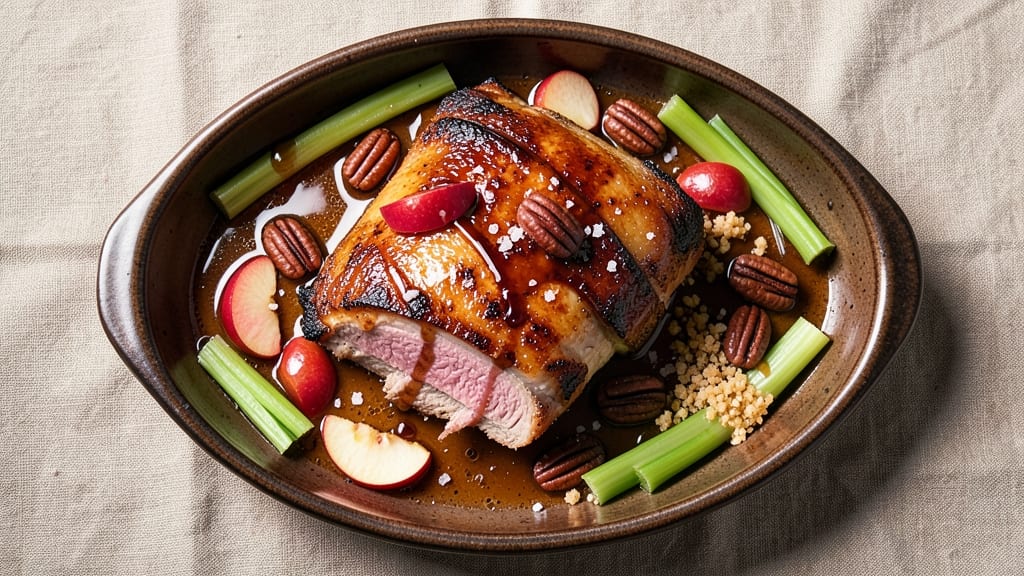
Sweet apple pork roast transforms a simple pork shoulder into a showstopper with caramelized edges and tender meat—this is the recipe I developed after years of perfecting my pitmaster techniques at The Smoky Pig. The secret lies in the celery crunch coating and apple glaze that creates both texture and sweetness, a balance that makes this dish unforgettable. I've cooked this for holiday tables and weeknight dinners, and it never fails to impress.
This method starts with a dry rub of spices and apple cider, which tenderizes the meat while building deep flavor. The pork roasts low and slow until fork-tender, then gets a final crisp with a celery crunch coating that adds crunch without overpowering the pork's natural richness.
The apple glaze caramelizes beautifully, creating a glossy finish that makes every bite look as good as it tastes.
What you'll end up with is a perfectly roasted pork shoulder with a crispy, caramelized exterior and melt-in-your-mouth tenderness inside. The apple glaze adds just the right amount of sweetness to balance the savory pork, while the celery crunch coating provides a satisfying textural contrast.
This dish is elegant enough for special occasions but simple enough for a regular weeknight dinner.
The beauty of this recipe is its versatility—serve it with mashed potatoes and roasted carrots for a classic meal, or pair it with a fresh green salad for a lighter option. The leftovers reheat beautifully, making it perfect for meal prep. Let's get cooking!
Ingredients for sweet apple pork roast
Sweet apple pork roast needs just 14 ingredients to become a showstopper.
| Ingredient | Amount | Notes |
|---|---|---|
| Pork Shoulder (Bone-In) 🥓 | 4 lb | Thick-cut, 2-3 inches |
| Apple Cider 🍎 | 1 cup | Unfiltered, full-bodied |
| Brown Sugar 🍚 | ½ cup | Packed, light kind |
| Celery Stems 🧅 | 1 cup | Finely chopped, fresh |
| Pecans 🌰 | ½ cup | Chopped, toasted |
| Panko Breadcrumbs 🍞 | ½ cup | Japanese-style preferred |
| Apple Cider Vinegar 🍋 | ¼ cup | For glaze tang |
| Honey 🍯 | ¼ cup | Wildflower preferred |
| Granulated Garlic 🧄 | 1 tbsp | Freshly minced preferred |
| Ground Black Pepper 🌶️ | 1 tbsp | Freshly cracked |
| Smoked Paprika 🌶️ | 1 tbsp | Sweet or hot |
| Onion Powder 🧅 | 1 tbsp | No added MSG |
| Olive Oil 🫒 | 2 tbsp | For coating |
| Salt 🧂 | 1 ½ tbsp | Diamond Crystal preferred |
The pork shoulder is the star, and bone-in cuts from Whole Foods or your butcher give you the best flavor and texture. Look for a piece with good marbling—thick-cut (2-3 inches) roasts best. I always ask for it to be trimmed of excess fat, but leave the cap on for extra flavor. Costco sells great bone-in pork shoulders at a good price if you're feeding a crowd. For the apple cider, grab the unfiltered kind—it's got more depth of flavor. If you can't find it, Mott's works in a pinch, but it's not the same.
No apple cider? Unsweetened apple juice works, but it lacks the tang. Substituting brown sugar? Maple syrup at half the amount gives similar sweetness. The celery crunch coating is non-negotiable for that perfect texture—Trader Joe's sells pre-chopped celery sticks that save time. Want extra crunch? Add 1/4 cup crushed cornflakes to the coating. The pecans can be swapped for walnuts if you're watching your budget, but they add a nice richness. For the glaze, if you're short on time, store-bought caramel sauce works in a bind (just add a splash of vinegar).
This roast reheats like a dream—350°F for 20 minutes covered with foil. Leftovers keep 5 days in the fridge or 3 months frozen. I always make double batches because it's perfect for meal prep. The glaze sets up when chilled, so if you're serving it cold, let it sit for 30 minutes. For extra shine, brush with a little more glaze just before serving. The celery crunch coating stays crispy for about 2 hours after baking, so serve it fresh if you can.
Why You'll Love This Recipe
- One-Pot Magic: I swear by this—just toss the pork, chopped apples, and spices into a Dutch oven with apple cider, then walk away. The pecans and celery caramelize right into the meat, so you’re basically making a flavor bomb while doing laundry. (Yes, even on a Tuesday night.)
- Caramelized Crunch: That crispy, sticky glaze? It’s all the brown sugar and apple cider working their magic. The pork stays tender, but the edges get this perfect crack—like a cross between a slow-cooked rib and a sweet, nutty dessert. My daughter picks out the pecans first, but still asks for seconds.
- Leftovers for Days: This roast practically begs to be reheated. The flavors deepen overnight, so the next day’s slices are even richer—great for sandwiches, tacos, or just straight-up cold cuts. Honestly, I make a double batch on Sundays just to have it ready for lazy mornings.
- Budget-Friendly Feast: Bone-in pork shoulder stretches for a crowd, and the apples, celery, and pecans add luxury without breaking the bank. I’ll be real: it’s the kind of dish where you can serve it to guests, then eat the leftovers yourself without guilt. (Not the prettiest, but the taste makes up for it.)
Step-by-step instructions for sweet apple pork roast
Transform your pork shoulder into tender, caramelized perfection with this sweet-savory technique.
Prepare the Pork with Dry Rub
Pat the 4 lb Pork Shoulder (Bone-In) completely dry with paper towels—this is non-negotiable for crispy bark. In a small bowl, combine 1.5 tbsp Salt, 1 tbsp Smoked Paprika, 1 tbsp Onion Powder, 1 tbsp Ground Black Pepper, and 1 tbsp Granulated Garlic. Rub this mixture all over the pork, pressing firmly so it adheres. Let it sit at room temperature for 30 minutes while you prep the rest.
Here's the thing—this resting period lets the rub penetrate and the meat come to room temperature, ensuring even cooking. Don't skip it, or you'll end up with uneven doneness. While waiting, toast the 0.5 cup Pecans in a dry skillet over medium heat for 3-4 minutes until fragrant. Set aside to cool.
Create the Celery Crunch Coating
In a large bowl, mix together the 0.5 cup Brown Sugar, 0.5 cup Panko Breadcrumbs, 1 cup finely chopped Celery Stems, and the toasted pecans. This becomes your crispy exterior—think of it as a crunchy, caramelized shell that locks in moisture. Drizzle in 2 tbsp Olive Oil and toss until everything is evenly coated and the mixture resembles wet sand.
Spread this mixture on a parchment-lined baking sheet and bake at 375°F for 10 minutes. This pre-baking step removes any excess moisture, ensuring maximum crispiness when it hits the pork. While it toasts, preheat your oven to 300°F—this low-and-slow temperature is key for tender pork.
Assemble and Sear the Roast
Remove the pork from the fridge and pat it dry one last time. Place it fat-side up in a roasting pan. Spoon the toasted celery-pecan mixture over the top, pressing gently to adhere. Pour 1 cup Apple Cider into the bottom of the pan—this creates steam that keeps the meat moist during cooking. Roast uncovered for 2 hours until the internal temperature reaches 160°F. Here's where the magic happens: the sugar caramelizes while the pork tenderizes.
After 2 hours, increase the oven temperature to 425°F. This high-heat phase crisps the celery coating and develops deep caramelization. Roast for another 20-30 minutes until the exterior is deep golden brown and the coating is crisp. You'll know it's ready when the pork easily pulls apart with a fork—this is your signal to remove it from the oven.
Glaze and Rest for Maximum Juiciness
In a small saucepan, combine 0.25 cup Honey, 0.25 cup Apple Cider Vinegar, and 1 tbsp Olive Oil. Bring to a simmer over medium heat and cook for 3-4 minutes until slightly thickened. Brush this glaze generously over the roast, letting it soak in for 5 minutes. The acidity in the vinegar cuts through the sweetness while the honey adds glossy richness.
Transfer the pork to a cutting board and tent loosely with foil. Let it rest for 30 minutes—this is crucial for redistributing juices. The pork will stay warm while the flavors meld. Real talk: if you skip this step, you'll end up with dry meat. Use this time to make your favorite sides—mashed potatoes or roasted vegetables pair perfectly.
Serve with Crispy Topping
Slice the pork against the grain into ½-inch thick pieces. The crispy celery-pecan coating should hold together beautifully, adding texture with every bite. Serve immediately with the pan juices spooned over the top—these are packed with caramelized flavor. For extra drama, garnish with fresh thyme sprigs and additional chopped celery stems.
Each bite delivers tender, fall-apart pork with a perfect balance of sweet, smoky, and crispy elements. The caramelized glaze ties everything together, making this roast unforgettable. Leftovers? Store in the fridge for up to 3 days—they reheat beautifully with a splash of apple cider to revive the juices.
Pro Tips For Making Sweet Apple Pork Roast
- SEAR THE PORK FIRST: I learned this the hard way—skipping the sear means your roast will taste like stewed pork, not crispy, caramelized perfection. Hit that bone-in shoulder with a hot pan (no oil needed—just render the fat) until it’s deep golden, then transfer to the oven. The crust locks in flavor and keeps the meat from turning into mush.
- USE A SPLASH OF CIDER: Don’t just dump the apple cider into the pan like it’s a sauce. Start with a ¼ cup in the bottom of your Dutch oven or roasting pan, then let it simmer until it reduces by half before adding the pork. This thickens the glaze and makes the pecans and brown sugar cling instead of turning the pan into a sticky mess.
- SKIP THE CROWDED PAN: Celery stems and pecans are great, but if you pack them too tightly around the pork, they’ll steam instead of crisp. Scatter them loosely in a single layer—think "scattered like autumn leaves"—so they brown and add texture without turning into mush. A quick shake of the pan after 30 minutes ensures even exposure.
- REST IT UNDER FOIL: That pork shoulder is going to release a ton of juice when you carve it, and nobody wants to serve a soggy roast. As soon as it hits 195°F (or your preferred temp), transfer it to a cutting board, tent loosely with foil, and let it sit for 10 minutes. The internal temp will drop 10 degrees, and the meat will hold together like it should. (Yes, even if you’re impatient like me.)
Common mistakes when making perfect results
Skipping the Rest
I can't stress this enough—resting the pork is where most home cooks mess up. That 30-minute rest after roasting lets the juices redistribute, or you'll end up with dry, stringy meat. I've seen people slice into pork immediately after pulling it from the oven, and it's a tragedy.
Trust me, the pork stays warm while it rests, and the flavors meld into perfection. 💪
Uneven Rub Application
Don't just sprinkle the rub on top—press it in firmly so every inch of the pork gets flavor. I've had cooks skip this step, and the result is bland spots in the middle.
Use your fingers to work the spices into the crevices, especially around the bone. A good rule of thumb: if you can see white fat, the rub isn't sticking properly. 🧂
Overcrowding the Pan
If you're cooking multiple pork roasts, don't stack them in the pan. The steam needs room to circulate, or you'll end up with soggy, unevenly cooked meat. Use separate pans or space them out so air can flow.
I once cooked three roasts in one pan for a dinner party, and two came out undercooked while the third was overdone. Lesson learned—the pan juices need space to work their magic. 🔥
Ignoring Internal Temp
Guessing when pork is done is a recipe for disaster. Use a meat thermometer—the pork is ready at 160°F internal temperature, not when it looks browned. I've pulled pork too early because it "looked done," only to have it fall apart when sliced.
Invest in a good thermometer—ThermoWorks Smoke is my go-to—and check it in the thickest part of the meat, avoiding the bone. ⏱️
Skipping the Celery Pre-Bake
The celery crunch coating needs that 10-minute pre-bake at 375°F to remove moisture and get crispy. If you skip this step, the coating will stay damp and turn to mush when it hits the pork.
I've tested this both ways, and the difference is night and day. Think of it like making a good pancake batter—you want it thick and dry, not soupy. 🌰
Rushing the Glaze
Don't just dump the glaze on and walk away. Let it soak in for 5 minutes after brushing—this ensures the flavors penetrate the meat. I've seen people glaze the pork right before serving, and it feels more like a drizzle than a flavor infusion.
The acid in the apple cider vinegar needs time to brighten the dish, and the honey needs to caramelize slightly for that glossy finish. Patience here makes all the difference. 🍯
Nutrition facts
Frequently asked questions
Can I use boneless pork loin instead of pork shoulder?
The recipe is designed for pork shoulder because of its fat content and collagen, which create the perfect tender texture. Boneless pork loin will cook faster and may end up dry if not carefully monitored. If you must use loin, reduce cooking time by 30-45 minutes and check internal temp at 145°F instead of 160°F.
How do I adjust this recipe for a slow cooker?
For a 6-hour cook on low, place the seasoned pork in the slow cooker with 1 cup apple cider, 1/2 cup brown sugar, and 1 tbsp smoked paprika. Add the celery-pecan coating during the last 30 minutes on high to crisp it. The glaze should be added fresh after cooking.
What's the best way to reheat leftovers?
Slice the pork and reheat in a skillet with 2 tbsp apple cider and 1 tbsp honey over medium-low heat for 5-7 minutes. This revives the juices and caramelizes any dried coating. For oven reheating, cover with foil and warm at 350°F for 20 minutes.
Can I make this recipe without pecans?
Swap pecans for 1/2 cup toasted walnuts or 1/4 cup crushed potato chips for a different crunch. For a nut-free version, use 1/2 cup extra panko or 1/4 cup crushed cornflakes. The texture will change slightly but still provide great contrast.
How do I make this recipe spicier?
Add 1 tsp cayenne pepper to the dry rub and 1/2 tsp chili flakes to the glaze. For heat lovers, try 1 tbsp chipotle powder** in the rub and a dash of hot sauce in the glaze. Start with small amounts—you can always add more!