
Sauces & Condiments
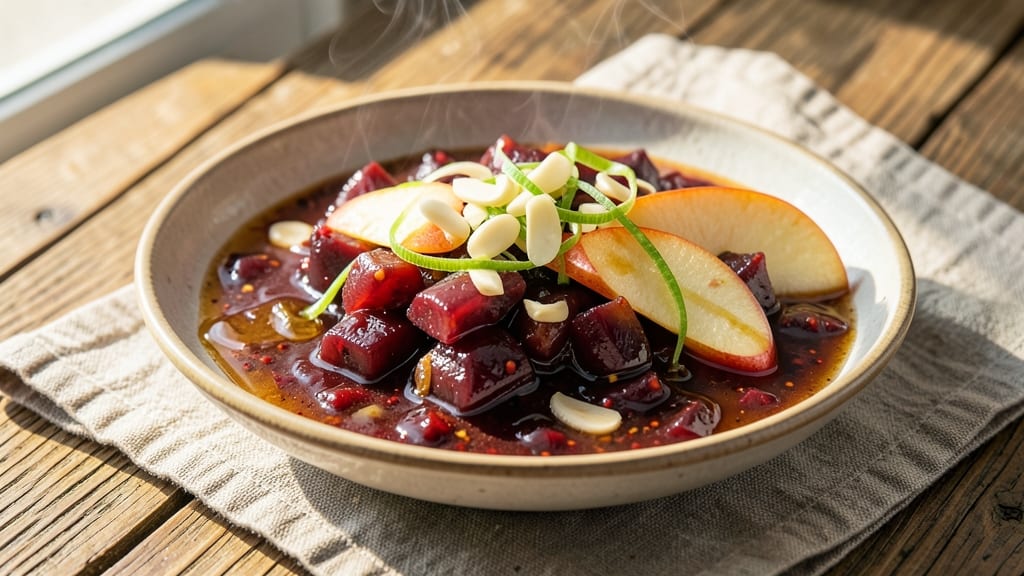
This apple kimchi sauce recipe transforms bold fermented flavors into a versatile, sweet-tart glaze that elevates everything from grilled meats to roasted vegetables. The marriage of tangy kimchi and caramelized apples creates a complex sauce that bridges Korean fermented heat with Western sweetness—perfect for both bold and delicate dishes.
What makes this sauce special is its dual-purpose nature: use it as a marinade for meats, a dipping sauce for dumplings, or a glaze for roasted vegetables.
The process begins with simmering kimchi in apple cider vinegar and honey to balance its sharpness, then blending in diced apples and aromatic spices like ginger and garlic. This 5-ingredient base develops deeper flavor when reduced to a thick, glossy consistency—ideal for clinging to food without overwhelming it.
The result is a sauce that’s rich enough for hearty dishes but bright enough to complement delicate flavors like fish or tofu.
What sets this sauce apart is its adaptability: use it as a marinade for 30 minutes to infuse meats with fermented depth, or reduce it further for a sticky glaze that caramelizes beautifully on roasted vegetables.
The fermentation process (if using fresh kimchi) adds probiotic benefits while intensifying the umami notes. Store it in the refrigerator for up to 2 weeks, or freeze for longer shelf life.
This isn’t just another dipping sauce—it’s a flavor multiplier that transforms ordinary meals into something extraordinary. Whether you’re glazing ribs, drizzling over noodles, or using it as a marinade, the sweet-tart balance will become your new go-to condiment. Let’s make it.
Ingredients for apple kimchi sauce
Five fermented ingredients and four pantry staples—this sauce bridges bold flavors with effortless versatility.
| Ingredient | Amount | Notes |
|---|---|---|
| Kimchi 🥬 | 1 ½ cups | Fresh, packed with juice |
| Apple Cider Vinegar 🍏 | ½ cup | Raw, unfiltered preferred |
| Honey 🍯 | ¼ cup | Raw or wildflower variety |
| Apples 🍎 | 1 medium | Sweet-tart variety, diced |
| Fresh Ginger 🌿 | 1 inch | Peeled, thinly sliced |
| Garlic Cloves 🧄 | 3 cloves | Minced, aromatic |
| Sesame Oil 🫒 | 1 tbsp | Toasted, for depth |
| Soy Sauce 🥢 | 1 tbsp | Light or dark preferred |
| Ground Black Pepper 🌶️ | ½ tsp | Freshly cracked |
| Salt 🧂 | ½ tsp | Diamond Crystal preferred |
Kimchi is the star here, so pick the freshest, juiciest jar—the kind with visible fermentation bubbles. Korean Market or well-stocked Asian grocery stores carry the best quality, but any good kimchi works. If using store-bought, check the ingredients list for added sugars or preservatives. The apple cider vinegar should be raw and unfiltered for that tangy depth—Bragg is my go-to. Honey matters too: raw or wildflower varieties add floral notes. For the apples, Honeycrisp or Fuji hold up best during cooking—avoid Granny Smith unless you want extra tartness. Ginger and garlic? Fresh is non-negotiable here—they bring the aromatic backbone.
No kimchi? Substitute with sauerkraut plus a dash of gochugaru for heat. Running low on honey? Maple syrup works 1:1, though it’ll be less floral. Sesame oil missing? Toasted peanut oil adds a similar nutty depth. The soy sauce can be swapped for tamari if you’re avoiding gluten. For extra umami without soy, mushroom powder at half the amount does the trick. Prefer your apples sweeter? Add 1 tbsp brown sugar to the simmering pot. The key is balancing sweet, tang, and funk—adjust to your taste.
This sauce gets better with time, so make a double batch if you can. Store in a clean glass jar with a lid—keeps in the fridge for 2 weeks or freezes beautifully for 6 months. The flavors meld overnight, so if you’re using it as a marinade, plan ahead. For extra shine, add a splash of water and simmer uncovered for 5 minutes before serving. A drizzle of sesame oil right before eating adds that restaurant-quality finish.
Why You'll Love This Recipe
- Five-Ingredient Magic: I swear by this combo—just blend kimchi, diced apple, ginger, a splash of vinegar, and honey. No fancy techniques, no stress, and honestly? It’s the kind of sauce that makes you feel like you’ve outsmarted a recipe book.
- Sweet-Savory Wake-Up: The tangy bite of kimchi hits first, then the honey softens it into something almost caramel-like, while the apple adds this bright, juicy crunch. Between us, it’s the kind of flavor that turns a boring sandwich into a “why didn’t I think of this sooner?” moment.
- Pantry-to-Table Flex: This sauce is my secret weapon for lazy nights—drizzle it over noodles, mix it into fried rice, or even slather it on grilled chicken. (Yes, even on a Tuesday night.) It’s the kind of thing that makes you realize how much you’ve been missing out on.
- Lasts All Week: Make a big batch—it keeps in the fridge for days without losing its punch. I’ll be real: I’ve had this sauce linger for over a week, and it’s still just as good on the last day as it was the first. Plus, it’s cheap to make, so you’re basically getting flavor on the house.
Step-by-step instructions for apple kimchi sauce
Here's how to balance sweet, tangy, and spicy flavors into a versatile sauce that works with everything from grilled meats to roasted vegetables.
Prepare the Base with Kimchi and Vinegar
In a medium saucepan, combine the 1.5 cups kimchi (including all that juicy goodness) with the 0.5 cup apple cider vinegar. Bring this mixture to a gentle simmer over medium heat, stirring occasionally. You're essentially extracting all those fermented flavors and creating a bright, acidic foundation.
Let it cook for 8-10 minutes until the mixture reduces slightly and the kimchi starts to break down, releasing its deep red color. You'll notice the aroma become more complex—think funky, tangy, and slightly sweet. This reduction step is crucial; it concentrates the flavors without making the sauce too thin. If you see the mixture getting too thick, add 1-2 tablespoons of water to maintain balance.
Add Sweetness and Aromatics
Once the kimchi-vinegar base has reduced, stir in the 0.25 cup honey and let it dissolve completely. The sauce will look glossy and slightly thicken as the honey integrates. This is where the sweet-tart balance begins to develop—trust me, it's worth the wait.
Add the 1 medium diced apple, 1 inch peeled and thinly sliced fresh ginger, and 3 cloves minced garlic. Stir everything together and let it cook for another 5-7 minutes over medium-low heat. You'll see the apples soften slightly and the ginger release its warm, citrusy aroma. The garlic should become fragrant but not brown—this ensures it adds flavor without bitterness. If the sauce starts to stick, add another splash of water to keep it moving.
Build Depth with Soy and Seasonings
Pour in the 1 tablespoon soy sauce and 1 tablespoon sesame oil, stirring to coat everything evenly. The soy sauce adds umami depth while the sesame oil contributes a nutty richness. Let the mixture simmer for 3-4 minutes, allowing the flavors to meld together. You'll notice the sauce becoming more cohesive and aromatic.
Season with the 0.5 teaspoon ground black pepper and 0.5 teaspoon salt, tasting as you go. The pepper adds a subtle heat that complements the kimchi's spice, while the salt rounds out all the flavors. Simmer for another 2-3 minutes until the sauce reaches your desired consistency—it should be thick enough to coat the back of a spoon but still pourable.
Finish and Adjust
Remove the sauce from heat and let it cool slightly. This resting period allows the flavors to settle and deepen. Taste again and make any final adjustments—perhaps a touch more honey for sweetness or a splash of vinegar for tang. The sauce should be vibrant, complex, and perfectly balanced between sweet, tangy, and spicy.
For best results, let the sauce sit at room temperature for 10-15 minutes before serving. This gives the flavors time to fully develop and ensures a smoother texture. Store any leftovers in an airtight container in the refrigerator for up to 5 days, though I promise you won't have any leftovers—this sauce disappears fast!
Pro Tips For Making Apple Kimchi Sauce
- Simmer Slowly: Don’t rush the sauce—let it cook on low heat for at least 15 minutes after adding vinegar and honey. I used to crank the heat and end up with a harsh, vinegary flavor instead of a smooth, balanced one. Patience here makes the difference between a tangy glaze and a fully melded sauce.
- Peel and Grate Ginger: Skip the pre-grated ginger from a jar—freshly grated (peeled) ginger adds brightness and avoids that weird, watery texture. If you’re short on time, thinly slice it instead of grating, but don’t skip the peel unless you want a milder kick.
- Balance the Vinegar: Taste before adding all the apple cider vinegar—some kimchi is already punchy, and you’ll regret overpowering it. Start with half the amount, simmer, then adjust. I’ve ruined batches by assuming "more vinegar = better tang" (it doesn’t).
- Dice Apples Small: Tiny, even dice (about ¼-inch) cook faster and blend into the sauce instead of turning mushy. If you’re lazy and use chunks, they’ll turn to applesauce—trust me, you’ll regret it when the texture goes wrong. A sharp knife and steady hand make this easy.
Common mistakes when making your apple kimchi sauce
Over-Simmering the Sauce
One of the biggest mistakes is letting the sauce reduce too much, especially after adding the apples. When the apples break down completely, they turn mushy and lose their natural sweetness, making the sauce one-dimensional.
I’ve seen this happen when people walk away from the stove—keep a close eye after the apples are added and aim for just 5-7 minutes of simmering. If it looks too thick, add 1-2 tablespoons of water to restore balance. 🌡️
Skipping the Resting Period
Rushing to serve the sauce right after cooking means missing out on flavor development. The sauce needs 10-15 minutes at room temperature to let the flavors meld and the texture smooth out. I’ve tasted sauces served immediately, and they always feel flat compared to the same sauce after resting.
This is especially true if you’re using it as a glaze—patience here makes all the difference. ⏳
Using Low-Quality Kimchi
The quality of your kimchi directly impacts the sauce. If your kimchi is old, watery, or lacks fermentation bubbles, the sauce will taste dull and lack depth. Invest in fresh, vibrant kimchi—look for jars with visible liquid and a strong, tangy aroma.
Store-bought kimchi from Asian markets or well-stocked grocery stores (like H Mart or Korean Market) is your best bet. If you’re using sauerkraut as a substitute, add ½ teaspoon gochugaru for that signature kimchi heat. 🥬
Ignoring the Honey-Vinegar Balance
This sauce relies on a delicate balance between sweetness and tang.
If you skip adjusting the honey or vinegar to taste, the flavors can become either cloyingly sweet or overly sharp. Taste as you go—add honey if it needs more sweetness, or a splash of vinegar if it’s too heavy.
I often start with the recipe amounts, then tweak based on the specific kimchi I’m using. The goal is a sweet-tart harmony, not a one-note flavor. 🍯
Not Straining the Sauce
If you’re using this sauce for delicate dishes (like drizzling over fish or tofu), leaving in the apple chunks or ginger slices can make the texture uneven. Strain through a fine-mesh sieve if you want a silky-smooth consistency.
For a rustic look, leave in some texture—but know that straining will give you a more refined sauce. I usually strain half and leave half chunky for versatility. 🥄
Overlooking Storage Tips
This sauce tastes even better the next day, but if you don’t store it properly, it can spoil quickly. Always use an airtight container (glass jars work best) and refrigerate within 2 hours of cooking.
For longer storage, freeze in ice cube trays—perfect for portion control. I’ve had this sauce last 2 weeks in the fridge and 3 months in the freezer without losing quality. Just
Nutrition facts
Frequently asked questions
Can I make this sauce without fresh kimchi?
Yes! Use 1.5 cups sauerkraut instead, but add ½ teaspoon gochugaru (Korean red pepper flakes) to replicate kimchi's signature heat. For extra depth, stir in 1 teaspoon fish sauce after simmering. The texture will be slightly thicker, but the tangy-sweet balance remains intact.
How can I use this sauce beyond dipping?
This versatile sauce works as a marinade for meats (try it on chicken or pork for 30-60 minutesglaze for roasted vegetables, or even a dressing for salads. Thin it with 1-2 tablespoons water if needed for drizzling. The sweet-tart profile elevates everything from tacos to grilled fish.
Why does my sauce taste too sharp?
Over-reduced kimchi or too much vinegar can make the sauce overly tangy. Balance it by adding 1-2 teaspoons honey or ½ teaspoon brown sugar while warm. For a smoother finish, strain out any apple chunks or ginger slices that may concentrate sharpness. Taste as you go!
Can I make this sauce spicier?
Add ½ teaspoon gochugaru (Korean red pepper flakes) or ¼ teaspoon cayenne pepper during the final simmer. For heat with depth, stir in 1 teaspoon gochujang (Korean chili paste) after removing from heat. Adjust gradually—kimchi already packs fermented spice!
How long will this sauce keep?
Store in an airtight glass jar in the fridge for up to 2 weeks. For longer storage, freeze in ice cube trays (great for portion control) or a sealed container for 3 months. The flavors actually improve over time! Thaw overnight in the fridge before using.